Photo credit: Jonathanfilskov Photography/istock.com
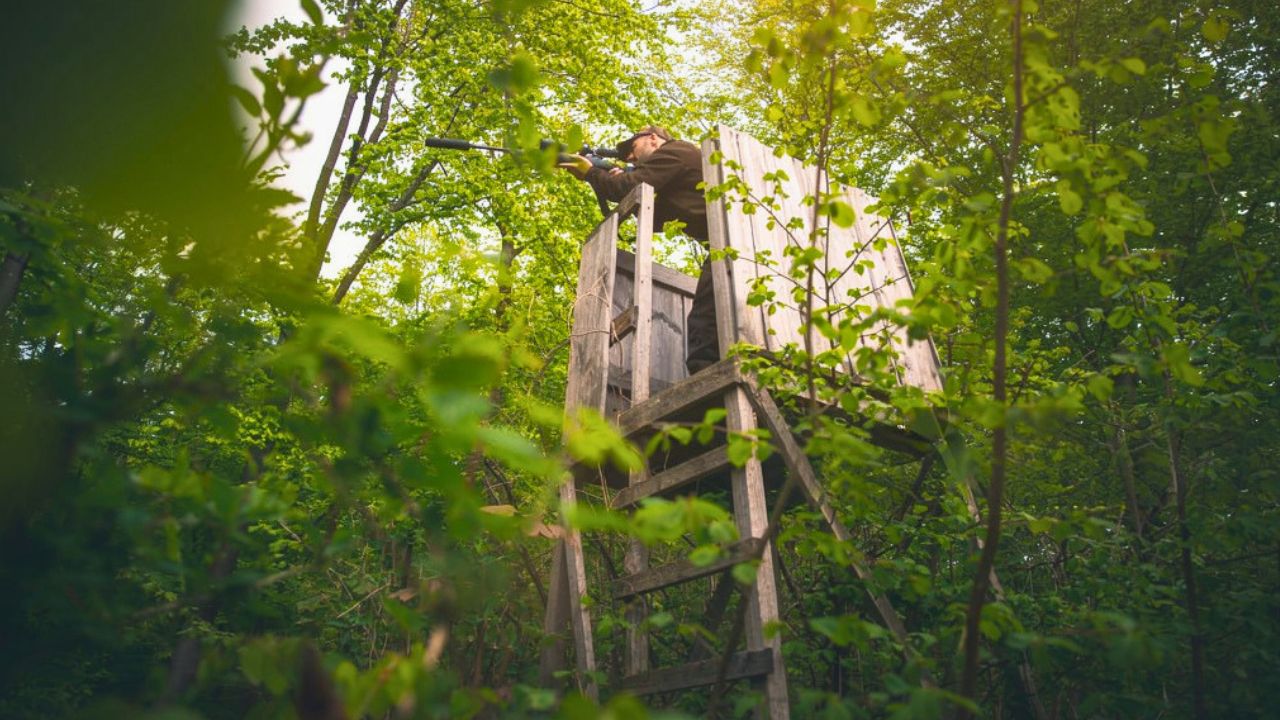
A lot of hunters spend more time convincing themselves a setup is hidden than actually proving it is. They hang a stand in decent cover, brush in a blind, slip a camera into a tree line, and because it feels tucked away from their angle, they start acting like the whole thing has disappeared into the woods. That kind of confidence gets people in trouble. Not only with deer, but with other hunters, trespassers, neighboring landowners, and anybody else who pays attention to how people move on the landscape. A hunting setup does not have to be wide open to be easy to spot. In fact, a lot of the setups that get found the fastest are the ones somebody thought were “hidden enough” because they blended in from one direction and one distance while standing still. Real concealment is harder than that. It has to hold up from multiple angles, in changing light, through leaf drop, across shifting wind routes, and against the kind of human attention that picks up on patterns faster than most deer ever will. The sign your setup is not as hidden as you think usually is not one big obvious mistake. It is that the setup starts attracting attention before it ought to, and once that starts happening, the woods are telling you something you should listen to.
Most of the time, the first real sign is not that somebody physically touches your setup. It is that people or deer start reacting to the area in a way that tells you the place is giving off more human presence than you intended. Maybe deer keep stalling just outside bow range and looking hard at a tree they should be walking past. Maybe another hunter drifts through a pocket that you thought only you had figured out. Maybe a trail camera nearby catches eyes turning toward the exact spot where your stand hangs, even when no one is using it. Maybe a neighbor casually mentions seeing “a setup back in there” when you never told him one existed. Those things matter because hidden setups usually stay quiet in more ways than one. They do not draw curiosity. They do not make animals pause for the wrong reasons. They do not leave a human-shaped answer sitting in the middle of an otherwise natural scene. If something about your location keeps getting noticed, then it is worth asking whether the problem is not the pressure itself, but the fact that your setup is standing out more than you realized.
One of the easiest ways a setup gives itself away is through the route leading to it. Hunters fixate on the stand, blind, or tree and forget that the access path is often the louder signal. You can hang a stand in solid cover and still ruin the whole thing by walking the same line to it over and over, brushing the same limbs, crossing the same low spot, or parking in the same predictable place every time the conditions line up. Other people notice those patterns. So do deer. Boot tracks, bent grass, snapped stems, rubbed bark, drag marks from a stand being hauled in, and repeated scent in one narrow corridor all tell a story. A hidden setup with an obvious approach is not really hidden at all. It is just delayed information. The same goes for blinds that get brushed in too cleanly or trimmed shooting lanes that look just a little too organized for the surrounding cover. The structure may feel concealed because it is hard to see from twenty yards, but the route to it and the unnatural cleanup around it can tell the whole story to anyone paying attention. A lot of hunters are not exposing the setup itself first. They are exposing the fact that something important lies at the end of the path.
Another sign your setup is not as hidden as you think is that it starts looking better to you than it does to the woods around it. That sounds strange, but it happens constantly. Hunters get proud of a neat little hide they built, a stand tucked perfectly into a fork, or a blind trimmed just enough to feel usable, and because it looks sharp to them, they stop asking whether it looks natural. Woods do not care if your setup feels clever. They care whether it matches what belongs there. Straight cut limbs, bright fresh wood, unnatural shadows, a square blind shape, a shiny ratchet strap, or even a backpack hook placed where it creates a clean silhouette can undo a lot of the work you thought you did right. Human eyes pick up order. They pick up contrast. They pick up the one line, edge, or repeated shape that should not be in the middle of rough country. Deer may not identify that shape the same way a person does, but they still notice when something in the scene is off. If your setup looks “good” in a way that makes it stand out from the natural clutter instead of disappearing into it, then it may be more visible than you want to admit.
Light is another thing that exposes setups people swear are hidden. A stand that disappears at noon can light up like a sign at first light or late afternoon if the sun hits the wrong side of it. A blind that blends under overcast skies can suddenly throw a hard edge once the angle changes. A hunter sitting still in shadow may feel invisible until one tiny movement catches a beam through a gap he forgot was there. That is why good concealment cannot be judged from one quick look during setup. You have to think about when the spot will actually be hunted and what the woods do during those hours. Early-season green cover hides a lot of laziness that gets exposed after leaves drop. Frost changes color. Rain changes contrast. Low sun finds outlines. That is one reason people are shocked when somebody spots a setup they thought was buried. The setup was buried under one set of conditions. Hunting season does not hold still for one set of conditions. If your concealment depends on everything looking exactly the way it did the day you hung the stand, then it is thinner than you think.
Pressure from other hunters is often what proves the point, even when folks do not want to admit it. A setup that suddenly gets company, gets hunted around, or starts having fresh sign appear near it is often telling you it was easier to read than you imagined. That does not always mean someone physically saw the stand. Sometimes they read your access. Sometimes they noticed your truck. Sometimes they found your camera route, your trimmed lane, or your favorite crossing. The result is the same. Once another person starts getting warm around a setup you thought was tucked away, the woods have already voted on your concealment. Too many hunters respond by getting angry at other people for “finding” a place when the harder truth is that their own habits and layout helped point the way. Hidden does not mean nobody could ever stumble across it. It means the setup does not advertise itself. If people keep getting close enough to matter, then some part of the setup, the access, or the pressure pattern is talking louder than you want it to.
The clearest sign your hunting setup is not as hidden as you think is simple: it keeps getting noticed by something other than you. Maybe that is a buck staring holes through your tree. Maybe it is another hunter sliding into the same pocket. Maybe it is a landowner asking questions. Maybe it is a trespasser treating your area like he already understands what matters there. However it shows up, attention is information. Good setups stay quiet because they blend physically and because the hunter using them moves in a way that does not spotlight them. That means concealment is never only about camouflage. It is about access, pressure, timing, trimming, light, and your own ability to quit admiring a setup long enough to judge it honestly. If a place keeps getting read, then it is not as invisible as you hoped. The woods are not being unfair. They are just telling the truth before you wanted to hear it. The smart move is not getting defensive about that. It is backing up, looking harder, and fixing the parts of the setup that are speaking louder than the cover around them.
Like The Avid Outdoorsman’s content? Subscribe to our newsletter so you never miss an article.
Here’s more from us: