Photo credit: Dmitri T/Shutterstock.com
A fight over a small but controversial weapon has pushed the Second Amendment back to center stage in the federal courts. A three judge panel of the Ninth Circuit has just heard arguments on whether California can keep treating most switchblades as contraband, or whether those knives count as “arms” that ordinary people have a constitutional right to carry. The answer will ripple far beyond knife collectors, shaping how far states may go when they regulate weapons that sit on the blurry line between tool and threat.
The case that brought California’s knife law back to court
At the heart of the appeal is a challenge brought by the advocacy organization Knife Rights and individual plaintiffs who say California’s switchblade restrictions violate the Second Amendment. In their telling, the state has drawn an arbitrary line that criminalizes a common type of folding knife simply because it opens with a spring, even though the blade itself is no more lethal than many legal alternatives. The group has framed the dispute as a test of whether courts will treat knives the same way they now treat firearms, insisting that the Constitution protects “arms” broadly, not just guns.
The case reached the Ninth Circuit after a federal district judge sided with California and rejected the challenge at the summary judgment stage. According to reporting on the appeal, a federal court granted the state of California summary judgment against Knife Rights in August 2024, concluding that the plaintiffs had not shown that switchblades are commonly used for lawful purposes and accepting the state’s focus on the risk of criminal violence, a ruling Knife Rights now characterizes as “ludicrous” and out of step with Supreme Court precedent, as reflected in coverage of Knife Rights.
What California’s switchblade ban actually does
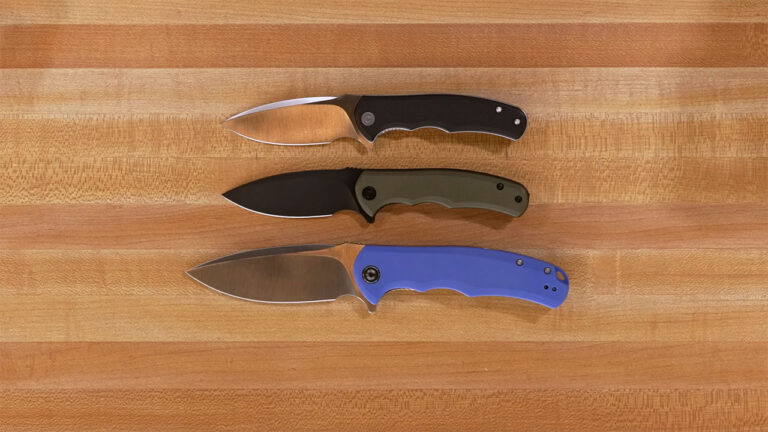
California’s law does not outlaw every automatic knife, but it draws a bright line at blade length that turns many popular models into contraband. Under state rules, automatic knives with blades longer than a specific threshold are prohibited to possess, sell, or carry, while smaller versions remain legal. The statute treats a spring assisted opening mechanism as the key feature, so a knife that can be flicked open with a button or similar device is swept into the “switchblade” category even if its cutting edge is no different from a manual folder.
Industry guidance aimed at consumers captures the rule in blunt terms, noting that for Automatic Knives in California, the rule is simple, the blade must not exceed 2 INCHES and Anything longer is prohibited to possess, sell, or transport, including moving automatic knives across state lines, a summary that underscores how a fraction of an inch can separate lawful gear from a criminal charge, as explained in an overview of Automatic Knives.
How Knife Rights framed the appeal
On appeal, Knife Rights has tried to turn the district court’s reasoning on its head by leaning heavily on the Supreme Court’s modern Second Amendment cases. In a legislative update announcing the appeal, the group urged supporters to Click to read our Opening Brief and argued that the lower court applied the wrong test, focusing on policy judgments about public safety instead of the historical tradition of weapons regulation. They maintain that the Constitution does not allow judges to balance away a right simply because a particular arm might be misused, and they insist that knives are as central to self defense as handguns.
The organization’s briefing, as described in that update, stresses that this is not the standard set forth in Heller, and affirmed in Bruen and Rahimi, and it situates the California case within a broader Knife Rights Unconstitutional Switchblade Bans Chronicles project that tracks similar laws around the country, a framing the group laid out when it linked its Opening Brief.
The district court ruling Knife Rights calls “ludicrous”
The district judge’s decision has become a central villain in the narrative advanced by the plaintiffs, who say the ruling misread both the facts and the law. By granting summary judgment to California, the court effectively held that the state’s interest in curbing knife crime justified a categorical ban on most switchblades, without a trial to test how people actually use these knives. That posture left Knife Rights arguing from a procedural and substantive disadvantage, since the appellate panel must now decide whether the lower court misapplied controlling precedent rather than starting from a clean slate.
In their 2025 brief before the Ninth Circuit, the plaintiffs contended that the district court wrongly imposed a self defense only standard for Second Amendment protection and failed to credit evidence that knives are widely owned and carried for lawful purposes, arguing the decision misapplied precedent and should be reversed, a critique that tracks with descriptions of the case as a Cutting edge dispute in which the Ninth Circuit will decide on California’s switchblade ban and its relationship to the Second Amendment, as outlined in a report on the Ninth Circuit.
Inside the Ninth Circuit’s oral argument
When the case reached the Ninth Circuit, the three judge panel pressed both sides on how far the Second Amendment extends beyond firearms. I read accounts of the hearing that describe a skeptical bench, with judges probing whether a spring loaded knife is meaningfully different from a manual folder and whether the Constitution requires states to tolerate weapons that have long been associated with street crime. The tone suggested a court wrestling with how to apply Supreme Court doctrine written for guns to a category of arms that has its own cultural baggage.
Knife Rights itself highlighted the moment in a legislative update titled Oral Argument Held in California Switchblade Ban Appeal, noting that Oral Argument was held Wednesday in Knife Rights’ Ninth Circuit appeal of the ludicrous District Court decision and cautioning supporters that, while the judges engaged seriously with the issues, they are not holding their breath for a quick or sweeping victory, a tempered assessment captured in the group’s Legislative Updates October.
Bruen, Heller, Rahimi and the Supreme Court shadow
Hovering over the entire argument is the Supreme Court’s recent shift toward a history focused approach to gun rights. In New York State Rifle & Pistol Association v. Bruen, the Court rejected interest balancing and instructed lower courts to ask whether modern regulations are consistent with the nation’s historical tradition of firearm regulation. That framework, layered on top of District of Columbia v. Heller and later refined in United States v. Rahimi, has forced judges to comb through centuries of weapons laws to decide what kinds of modern restrictions can stand.
Reporting on the Ninth Circuit hearing notes that At the heart of Wednesday’s arguments was the 2022 U.S. Supreme Court case, New York State Rifle & Pistol Association v. Bruen, with lawyers sparring over whether California could point to analogous historical limits on knives or whether switchblade bans that emerged in the mid twentieth century are too recent to qualify, a tension that shaped the questions judges asked about how to treat this particular arm under the Supreme Court standard.
History, tradition and the 1950s switchblade panic
One of the most striking aspects of the case is how much turns on the mid century politics of crime and youth culture. The plaintiffs have argued that California’s switchblade ban is a product of the 1950s, when lurid headlines and Hollywood imagery turned automatic knives into symbols of juvenile delinquency, rather than a continuation of any founding era tradition. If that characterization holds, it could be fatal under Bruen, which directs courts to look to 1791 or 1868, not the Eisenhower years, when assessing whether a modern law fits within a historical pattern.
They also emphasized that switchblade bans originated in the 1950s, well outside the relevant constitutional framing period, and contrasted those relatively recent enactments with older, more targeted rules on knives and other arms, arguing that California cannot rely on a mid twentieth century moral panic to justify a categorical prohibition today, a point that goes directly to the requirement that modern regulations be grounded in a longstanding tradition, as described in the plaintiffs’ account of how They framed the history.
Judicial skepticism about self defense with a switchblade
Even as the plaintiffs leaned on history, some Ninth Circuit judges appeared unconvinced that switchblades occupy the same constitutional space as handguns. Accounts of the argument describe pointed questions about whether ordinary people truly rely on automatic knives for self defense, or whether these blades are more closely associated with intimidation and surprise attacks. That line of inquiry matters because Heller and Bruen both stress weapons “in common use” for lawful purposes, especially personal protection, as the core of the Second Amendment’s shield.
One report on the hearing notes that Switchblade Use for Self Defense Doubted by Ninth Circuit Judges, recounting how members of the panel cited decisions like a ruling from The Massachusetts Supreme Judicial Court upholding a ban on possession of switchblade knives and openly questioned whether it is really true that the switchblade is a typical choice for someone seeking to defend themselves rather than an offensive weapon, a skepticism that could shape how the court applies the “common use” test, as reflected in coverage of Switchblade Use for Self.
What happens next at the Ninth Circuit
For now, the case sits with the three judge panel, which will decide whether to affirm the district court, reverse it, or send the dispute back for further factual development. The Ninth Circuit has not yet signaled when a decision will arrive, and the judges’ questions at argument cut in both directions, with some focused on the breadth of California’s ban and others on the practical risks of loosening it. Whatever the outcome, the ruling is likely to be cited in other challenges to knife laws and could invite further review within the circuit.
The court’s own public docket of en banc matters underscores how fluid that next step can be, listing multiple high profile cases with the notation Status: Not yet calendared; order filed on October 30, 2025, providing that the three judge panel’s administrative stay remains in effect while the full court considers whether to rehear, a reminder that even after a panel speaks, the Ninth Circuit can revisit contentious questions, as reflected in its summary of cases that are Not yet calendared.
Why this knife fight matters beyond California
However the Ninth Circuit rules, the implications will extend well beyond one state’s penal code. A decision that treats switchblades as protected arms could invite challenges to similar bans across the country and force legislatures to revisit long standing assumptions about which weapons they can prohibit outright. It would also test how far Bruen’s history and tradition test reaches into categories of arms that were not central to the Supreme Court’s original analysis, potentially opening the door to litigation over everything from stun guns to collapsible batons.
Knife Rights has already signaled that it views the California case as part of a broader campaign, describing in another update how Oral Argument was held Wednesday in Knife Rights’ Ninth Circuit appeal of the ludicrous District Court decision and warning that, while they are cautiously optimistic, they are not holding their breath for a quick fix, a posture that suggests they are prepared to keep pressing until either the Ninth Circuit or the Supreme Court draws a clearer line on knives, as the group recounted in its detailed account of the Oral Argument.
Supporting sources: ‘Knife Rights’ group takes a stab at the Second Amendment at …, Ninth Circuit to decide on California’s switchblade ban …, ‘Knife Rights’ group takes a stab at the Second Amendment at …, Ninth Circuit to decide on California’s switchblade ban, Second …, Ninth Circuit to decide on California’s switchblade ban …, ‘Knife Rights’ group takes a stab at the Second Amendment at …, Legislative Updates – Knife Rights, California Knife Laws (2025) – Tekto Knives, Status of Pending En Banc Cases, Oral Argument Held in California Switchblade Ban Appeal, Appeal Filed Re: Absurd Court Decision on Switchblades in CA, Switchblade Use for Self-Defense Doubted by Ninth Circuit Judges.
Like The Avid Outdoorsman’s content? Be sure to follow us.
Here’s more from us: