
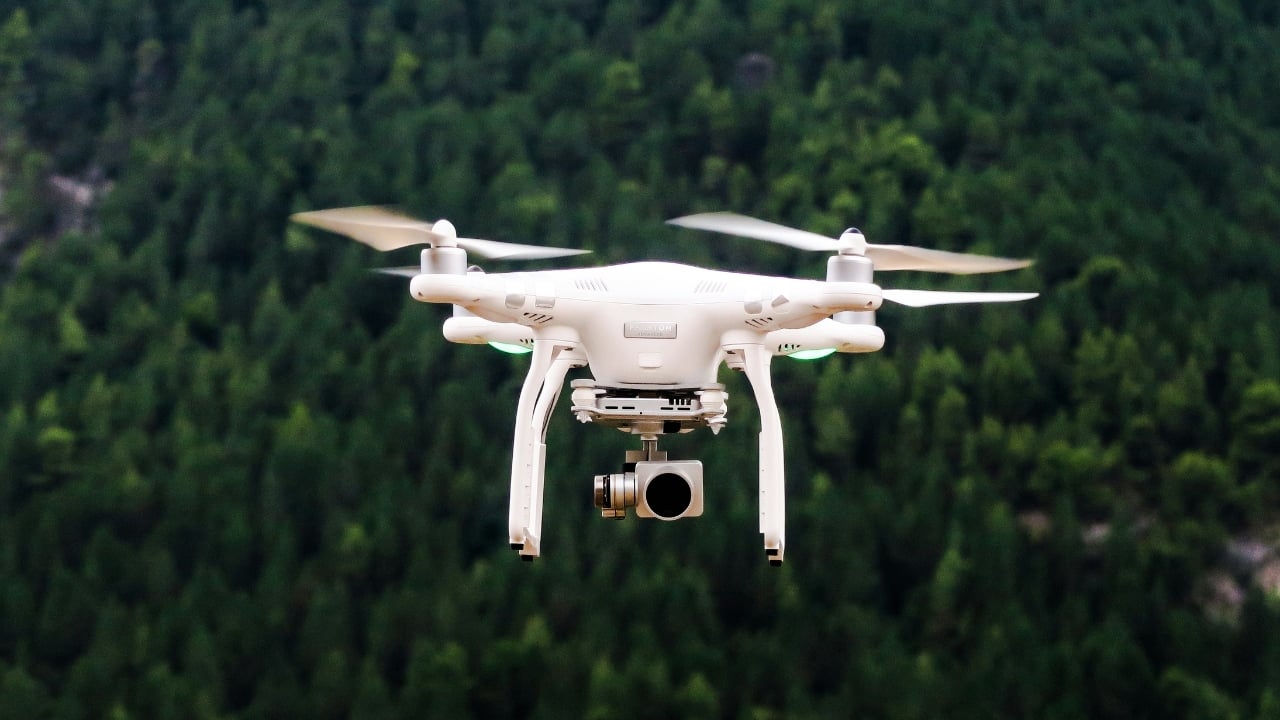
Photo credit: Jason Mavrommatis/Unsplash
Illinois conservation officers are spending more time than ever explaining that your drone is not a magic loophole in the hunting code. As small aircraft and thermal cameras get cheaper, you might assume they are fair game for tracking wounded deer or scouting from the sky. Game wardens say the opposite is true, and the same myths keep getting people cited, separated from their gear, and pulled into hearings they never expected.
If you hunt in Illinois or fly drones near hunting ground, you are now on the front line of a fast changing enforcement push. Understanding what wardens actually enforce, and why they are so blunt about “no drones,” can save you from fines, forfeiture, and a hard lesson in what “fair chase” means in state law.
Myth 1: “Recovery drones are different from hunting drones”
The first misconception you hear in parking lots and online forums is that using a quadcopter only after the shot somehow puts you in a separate legal category. You might tell yourself that once the trigger is pulled, the hunt is over and the drone is just a high tech blood trailing tool. Illinois game wardens point you back to the same statute that covers the entire pursuit, from first sighting to final recovery, and they treat aerial tracking as part of the hunt, not a separate hobby.
Officials with the Illinois Department of Natural Resources have been explicit that the use of unmanned aircraft is prohibited for hunting purposes, and that warning has been repeated as the firearm deer seasons open in Dec firearm weekends. When you launch a drone to locate a downed or wounded animal, you are still using an aircraft to aid in taking or recovering wildlife, which is exactly what the Illinois Department of Natural Resources, often shortened to IDNR, says falls under the ban. From the warden’s perspective, there is no clean line between “hunting drone” and “recovery drone,” only legal and illegal use.
Myth 2: “If I am not armed, I can fly wherever I want”
Another popular theory is that you can sidestep the rules by leaving your rifle or bow in the truck while you fly. Some hunters believe that as long as they are unarmed, they are just a recreational pilot, even if the drone is hovering over a blood trail or grid searching a bedding area. Game wardens in Illinois treat intent and effect as the key questions, not whether you happen to be holding a firearm at the exact moment the drone is in the air.
State reminders about technology in the field make it clear that the prohibition covers using drones for recovering wildlife, not only for the initial shot, and that unlawful use can lead to citations and even forfeiture of unlawfully used equipment. If you tell a conservation officer that you left your gun at home but launched a drone to track a buck for your buddy, you have just admitted that the aircraft was part of the hunt. The law does not give you a free pass simply because the weapon and the controller are not in the same hand.
Myth 3: “The law only bans drones during the shot, not for tracking”
You also hear a narrower claim, that the statute only covers using drones to drive, herd, or shoot at animals in real time. Under this reading, once the deer is hit and runs off, the hunt is supposedly over and the law no longer cares how you find it. Illinois game wardens are pushing back on that interpretation, because the text they enforce treats the entire process of locating, pursuing, and recovering game as one continuous activity.
The Illinois Department of Natural Resources has circulated guidance that lumps drones, e bikes, and artificial intelligence together as tools that cannot be used for hunting or recovery, and that message has been repeated in Nov technology advisories. When IDNR warns hunters that drones are prohibited for hunting, it is not carving out a special exception for the last hundred yards of a track. From the officer’s point of view, if the drone is helping you find an animal you intend to tag, it is part of the hunt, and the ban still applies.
Myth 4: “Game wardens will just give a warning for a ‘harmless’ recovery flight”
Because drone recovery feels humane, many hunters assume wardens will quietly look the other way, or at worst hand out a friendly warning. That belief ignores how aggressively Illinois has started to talk about enforcement. When an agency spends weeks telling the public that a practice is illegal, officers in the field are under pressure to back that up with real consequences, not just lectures at the trailhead.
Recent public statements have stressed that using DRONES, BIKES, or AI in violation of hunting rules can result in your equipment being seized and potentially forfeited, a point that IDNR has highlighted in Dec enforcement warnings. When a conservation officer hears a hunter say the drone flight was “harmless,” the officer hears an admission that the pilot knew the aircraft was part of the hunt. In that context, a confiscated drone and a citation are not outliers, they are exactly what the agency has been promising.
Myth 5: “Thermal drones are fine because they only find carcasses”
Thermal imaging has created its own subculture of myths. You might hear that a drone equipped with an infrared camera is acceptable if you only use it to locate dead deer, not wounded ones. The problem for Illinois game wardens is that they cannot easily verify whether the animal was already dead when you launched, and the same technology that finds carcasses can just as easily locate a live, bedded buck that you then stalk on foot.
Advocates for change have argued that thermal drones could reduce waste by helping hunters recover animals that would otherwise be lost, and petitions have framed the issue in stark terms, saying that Every unrecovered deer signifies a lost opportunity for both the hunter and the state. For now, though, IDNR has not carved out a thermal exception, and wardens are left to enforce a simple rule: if the drone is being used to locate game, whether dead or alive, it falls under the same prohibition.
Myth 6: “Fair chase is just a suggestion, not something you can be cited for”
Some hunters treat “fair chase” as a philosophical slogan, something for ethics panels and banquet speeches, not a standard that shows up in a ticket book. Illinois game wardens are working from a different script. They see fair chase as the backbone of the regulations they enforce, and they point out that the drone ban is not just about noise or airspace, it is about preserving a level playing field between hunter and animal.
When The Illinois Department of Natural Resources, identified in law as IDNR, reminded the public that the use of unmanned aircraft for hunting is unlawful under section 520 ILCS 5/1.20, it tied that rule directly to the idea of fair pursuit in Dec legal guidance. In a separate statement, an Illinois official underscored the point by saying, “The use of drones for hunting is unlawful in Illinois, but it also goes against the spirit of fair chase and ethical hunting practices,” a line that shows up verbatim in Dec ethics statements. When you fly a drone to tip the odds in your favor, you are not just bending etiquette, you are stepping into territory that wardens are explicitly told to police.
Myth 7: “Everyone is doing it, so IDNR cannot really crack down”
Peer behavior is a powerful rationalizer. If you see social media clips of thermal recoveries or hear buddies brag about drone assisted tracking, it is easy to conclude that enforcement is rare and the risk is low. Illinois game wardens counter that perception with a simple reality: the more visible the practice becomes, the more pressure IDNR faces to make an example of someone, and the more likely it is that “everyone is doing it” turns into “someone just lost a very expensive rig.”
Recent coverage has described how IDNR is clamping down on the use of AI, drones, and e bikes in the field, with reports noting that Axios reported that the Illinois Department of Natural Resources sees these tools as tilting the odds too far in the hunter’s favor and removing the sporting element. When an agency is publicly described as cracking down, officers on the ground are unlikely to shrug off violations as “what everyone does.” Instead, they are more likely to treat visible drone use as a priority enforcement target.
Myth 8: “If I only use AI or e bikes, the drone rules do not apply to me”
Some hunters focus so narrowly on drones that they miss the broader pattern Illinois game wardens are watching. The same enforcement push that targets unmanned aircraft also covers electric bikes on closed trails and artificial intelligence tools that promise to decode regulations or predict game movement. If you assume that avoiding drones keeps you safe while you lean on other high tech shortcuts, you are misreading the mood inside IDNR.
In public advisories, IDNR has grouped DRONES, BIKES, and AI together as prohibited aids for hunting, and those warnings have been repeated as firearm seasons open in Dec firearm reminders. A separate statewide notice from SPRINGFIELD emphasized that IDNR reminds hunters to be mindful of technology use in the field, reinforcing that the agency is looking at the entire suite of digital and motorized aids, not just what flies. From the warden’s perspective, if your setup relies on any of these banned tools, you are in the same enforcement bucket as the drone pilot.
Myth 9: “Wardens secretly support drone recovery and will look the other way”
Finally, there is a more sentimental myth, the idea that conservation officers personally like the concept of drone recovery and will quietly ignore it until the law catches up. You might hear that wardens hate to see deer wasted and privately cheer for any tool that finds them. While many officers do care deeply about reducing loss, their public statements show that they see drone recovery as crossing a line they are sworn to hold, not as a gray area they can bless off the record.
Coverage of the crackdown quotes IDNR law enforcement director Jed Whitchurch saying that using drones “Undermines the principles of fair chase” and removes the sporting element, a phrase that appears in Dec comments from IDNR. At the same time, petitions urging change have tried to rally support by telling hunters that their voices need to be heard by the IDNR, and that reform could balance ethics and recovery. Until that policy debate results in new rules, game wardens are bound by the current law, which treats drone assisted recovery as unlawful. If you bank on a sympathetic wink instead of the written code, you are betting against the very officers who have been told, in capital letters, that IDNR WARNS HUNTERS about DRONES and BIKES in Dec enforcement alerts, and who know that a 55 minute warning on the radio does not carry much weight if it is not backed up in the field.
Like The Avid Outdoorsman’s content? Be sure to follow us.
Here’s more from us:


