Photo credit: RagnarRagnarson/Shutterstock.com
For a long time, most hunters treated rifle noise as something you simply put up with. A loud shot was part of the deal, and the usual conversation stayed focused on velocity, energy, and trajectory instead of how much blast a rifle produced in the field. That mindset is starting to shift in 2026. A new round of subsonic rifle ammunition launches, paired with the current suppressor boom, is pushing more hunters to think about noise as part of overall field performance rather than just a side effect of pulling the trigger.
The change is not just theoretical. Ammo makers are now releasing subsonic loads built specifically for hunters, not only for range use or novelty shooting. That matters because older skepticism around subsonic ammo usually came down to one big issue: hunters did not trust it to expand reliably or hit hard enough at lower velocities. In 2026, manufacturers are clearly trying to answer that problem head-on.
Ammo companies are building subsonic loads for hunting on purpose
The clearest sign of the shift is the way companies are talking about these products now. Federal’s new 2026 Subsonic line was introduced not as a niche curiosity, but as a hunting-focused ammunition family built around “peak noise reduction” and “effective low-velocity expansion” through suppressors. The initial lineup includes Fusion .30-30 Winchester 170-grain, Fusion .45-70 Government 300-grain, Fusion Tipped .308 Winchester 190-grain, and 300 Blackout 190-grain loads. Federal says those bullets were modified specifically for low-velocity use, which tells you the company knows old subsonic complaints are exactly what it has to overcome.
Remington is pushing the same idea from another direction. American Hunter reported this month that Remington is launching three new subsonic rifle loads for 2026: 360 Buckhammer 250-grain, .308 Winchester 190-grain, and .45-70 Government 300-grain. Guns.com also described quiet rifle rounds as “making big noise this year,” which is a pretty good snapshot of where the category sits right now. This is no longer just about .300 Blackout shooters or suppressor hobbyists tinkering with specialty setups. Mainstream rifle calibers and straight-wall hunting cartridges are now part of the conversation.
Hunters are starting to think about sound as part of field performance
That broader product push is changing the way hunters frame the question. Instead of asking only, “What hits hardest?” more of them are asking, “What gives me enough terminal performance without the full blast penalty?” Federal’s own product language says its new Subsonic line is meant to give hunters the expansion and accuracy of conventional centerfire rifle ammunition with much quieter suppressed performance. Whether every hunter will fully agree with that claim in real-world use remains to be seen, but the pitch itself is important. Noise reduction is now being marketed as part of serious hunting performance, not just comfort.
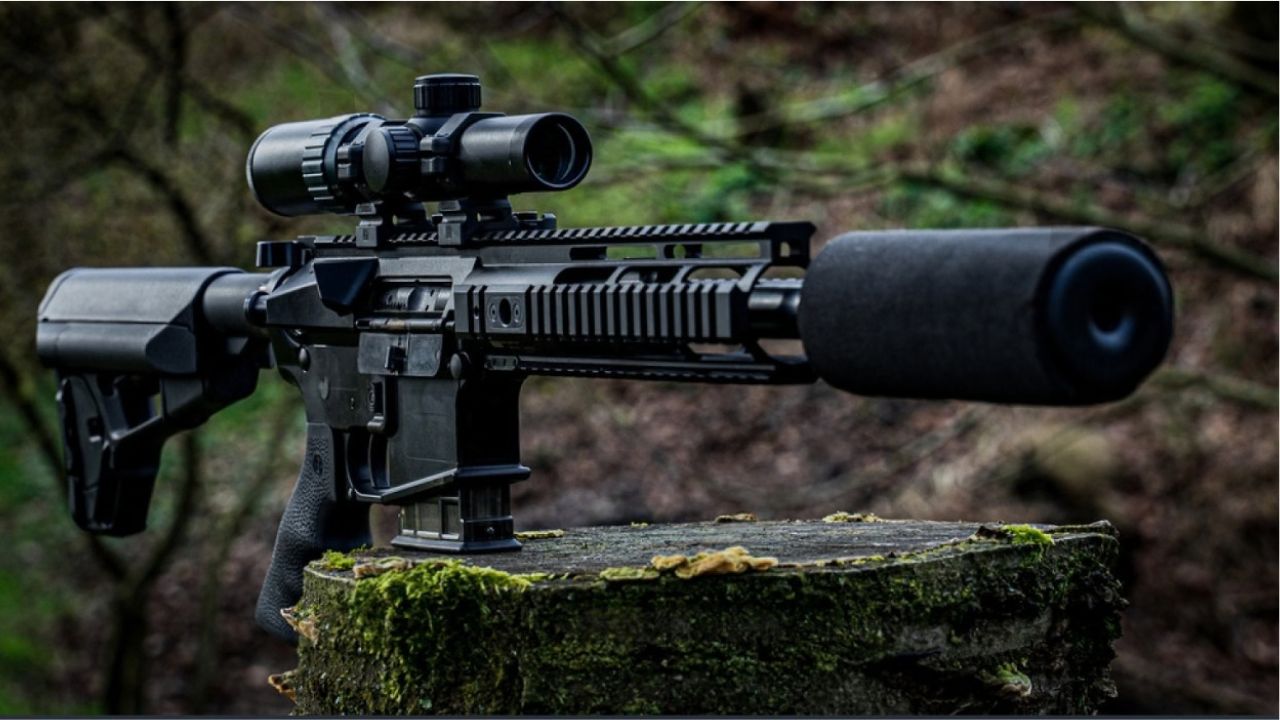
That change also lines up with the bigger suppressor moment in 2026. With the federal suppressor tax stamp dropping to $0 on Jan. 1, more hunters have started looking at suppressed rifles as normal field setups rather than specialty builds. Once suppressors became easier to justify financially, subsonic ammo became more interesting too, because it offers the kind of noise reduction that suppressed supersonic ammo cannot fully match. American Hunter explained in a 2024 hunting piece that true subsonic ammunition eliminates the sonic crack by staying below the speed of sound, which can produce a much more noticeable reduction in overall report through a suppressor.
The old tradeoff has not disappeared, but companies are trying to shrink it
There is still an important qualifier here. Subsonic hunting ammo does not magically erase the performance tradeoffs that come with lower velocity. American Hunter noted in 2024 that subsonic velocity usually reduces power and bullet performance substantially, which is exactly why many hunters remained skeptical for so long. That concern has not vanished just because the packaging got better in 2026. Physics is still physics. A slower bullet gives up trajectory and energy compared with a faster one, and that matters a lot once distances stretch or game gets tougher.
What has changed is that ammunition makers are now trying much harder to design around that limitation instead of pretending it is not there. Federal says its Fusion and Fusion Tipped bullets were modified specifically for low-velocity expansion. Remington’s new subsonic loads use boat-tail hollow-point designs, another sign that companies are focusing on making subsonic rounds behave more predictably on impact instead of relying on standard bullets that were never really built for those speeds. The industry seems to understand that subsonic hunting only grows if hunters trust terminal performance enough to use it on real animals, not just steel or paper.
This trend is bigger than just .300 Blackout now
One reason the conversation feels different in 2026 is that subsonic rifle hunting is no longer tied almost exclusively to .300 Blackout. Field & Stream’s recent review of the best .300 Blackout ammo still shows how important that cartridge remains for short-range hunting, especially on hogs and deer inside about 150 yards. But the new 2026 product launches show manufacturers are now trying to spread the subsonic idea into calibers hunters already know well, including .30-30, .308, .45-70, and 360 Buckhammer.
That matters because it changes how hunters encounter the category. A deer hunter who never planned to buy a .300 Blackout may still stop and think if his familiar .30-30 or .45-70 now has a hunting-specific subsonic option from a major ammo maker. That does not guarantee mass adoption, but it absolutely broadens the audience. The industry is no longer asking hunters to enter a totally separate cartridge ecosystem just to try quieter shooting. It is starting to offer quieter options inside cartridges and platforms many hunters already own.
Noise is becoming part of the hunting-gear conversation
The bigger takeaway is that noise itself is moving closer to the center of hunting gear decisions. For years, hunters mostly talked about recoil, trajectory, and brand loyalty while accepting rifle blast as a fixed cost. The 2026 wave of subsonic launches suggests the industry thinks that old assumption is weakening. Between new hunting-focused suppressors, faster suppressor adoption, and subsonic ammo lines built specifically around low-velocity expansion, manufacturers are betting that more hunters now care about quieter shooting than they did even two or three seasons ago.
That does not mean every hunter is about to swap to subsonic loads. Many will still prefer the flatter trajectory and broader margin of traditional supersonic hunting ammo. But the conversation has clearly changed. In 2026, subsonic rifle ammo is no longer being treated as a quirky side lane. It is being presented as a serious answer to a question more hunters are finally asking out loud: how much noise do I really need to live with to get the job done?
Like The Avid Outdoorsman’s content? Subscribe to our newsletter so you never miss an article.
Here’s more from us: