Photo credit: The Avid Outdoorsman
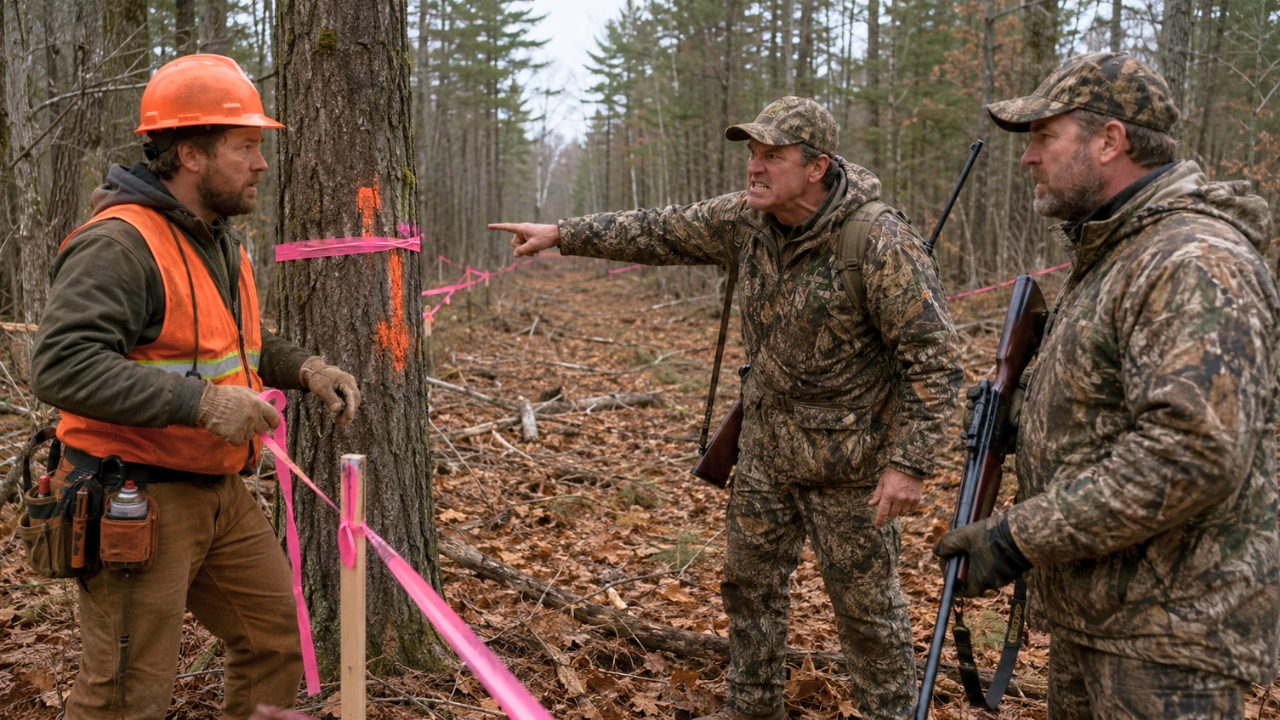
The forester was not hunting.
He was working.
That is probably what makes the whole thing even more ridiculous. He was out marking a right-of-way during rifle season, doing the kind of boundary and land work that has to be done whether hunters like the timing or not. He was not sneaking around someone’s stand. He was not trying to mess up a hunt. He was there because that was his job.
Then the hunters showed up.
The story came up in a Reddit thread where hunters were sharing the scariest things they had seen in the woods. One commenter said he had been working as a forester and marking a right-of-way when two hunters pulled up and confronted him.
They were not calm about it either.
According to the story, the hunters accused him of faking the property line. That is one of those accusations that would sound almost funny if the men saying it were not holding guns. The forester was out there doing professional land work, and these guys seemed to think he had somehow invented a boundary just to mess with them.
That kind of confrontation gets tense fast because property lines already bring out the worst in people. Add deer season, loaded firearms, and the belief that someone is taking away “their” hunting ground, and suddenly a basic workday can feel dangerous.
The commenter said the hunters had loaded guns.
That detail changes the whole scene. If two people pull up angry during rifle season and start accusing you of lying about a property line while holding loaded guns, you are not thinking about how to win the argument. You are thinking about how to keep everyone calm enough to get through the next few minutes.
A lot of people who do land work know this kind of tension. Surveyors, foresters, utility crews, timber workers, and right-of-way crews can all end up in awkward spots with landowners, neighbors, hunters, or leaseholders who do not want to hear what the map says. People get attached to land in ways that do not always match the deed. They hunt a piece for years and start thinking of it as theirs. They remember old fence lines, family stories, and handshake deals. Then someone shows up with paint, flagging tape, maps, GPS equipment, or survey records, and suddenly the truth is inconvenient.
That may have been what happened here.
The hunters apparently did not like where the line was being marked. Maybe it cut off access they had been using. Maybe it showed they had been hunting closer to the boundary than they thought. Maybe they believed the line was somewhere else because that is what someone had told them. But instead of stepping back and checking records, they confronted the forester like he was pulling a scam.
There is a special kind of nerve in accusing a professional doing his job of faking a boundary, especially when you show up armed.
For the forester, the safest move was probably to stay calm and avoid feeding the anger. People can be wrong and still be dangerous. A hunter who believes he is being cheated may not be easy to reason with in the moment, especially if he is already embarrassed, defensive, or worried about losing access.
That is what makes these situations so uncomfortable. The forester may have had the facts on his side, but facts do not automatically calm down angry men with rifles. You can explain maps, right-of-way boundaries, property ownership, and marking procedures all day long. If the other person is too wound up to listen, you are mostly trying to keep the encounter from becoming physical.
And during rifle season, “physical” has a whole different meaning.
The story is also a reminder that not everyone in the woods during hunting season is hunting. There may be land managers, foresters, farmers, surveyors, pipeline crews, utility workers, conservation staff, hikers, horseback riders, or people checking fences. Hunters have to be aware of that. A rifle season tag does not turn the woods into a private bubble where every person who appears is interfering.
If anything, it should make people more careful.
The hunters in this story seemed to do the opposite. They saw someone marking a line, got angry about it, and showed up with loaded guns like that was the right way to settle a property question.
It was not.
A property-line disagreement belongs in records, surveys, calls to the landowner, and, if needed, court. It does not belong in a roadside confrontation with loaded rifles in hand. That is how a misunderstanding becomes a police report, or worse.
For the forester, the scary part probably was not the accusation itself. People argue about lines all the time. The scary part was realizing the men making the accusation were armed, angry, and convinced he was lying.
That is a bad combination anywhere. In the woods during rifle season, it is even worse.
The thread had a lot of hunting scares, but this one stood out because it involved people acting like a property dispute could be solved by intimidation.
Several commenters understood right away why the forester considered it scary. A stranger yelling at you is one thing. A stranger yelling at you while holding a loaded rifle is another. Even if the gun is never raised, the presence of it changes the whole encounter.
A few people said hunters need to remember that being armed comes with responsibility beyond safe shooting. You also have to control your temper. If you are angry enough to confront someone, then you need to be especially aware of where your gun is pointed, whether it is loaded, and how your behavior looks to the person on the other end.
Others focused on property-line confusion. Several hunters said they have seen people rely on old assumptions, bad maps, fence lines, or what a neighbor told them years ago. When an official line gets marked, it can upset people who have been using land they may not actually have rights to. But commenters were clear that frustration does not justify threatening or intimidating the person doing the marking.
Some said the forester should have reported the encounter, especially if the hunters were aggressive or handling the guns carelessly. A report creates a record, and if those same hunters cause problems later, there is already documentation that they confronted a worker over the line.
There was also a broader reminder for hunters: if you disagree with a boundary, take it up with the landowner or get a survey. Do not argue with the person holding flagging tape in the woods. He may not be the decision-maker, and he definitely is not the person to threaten.
The common-sense takeaway was pretty simple. Loaded guns do not belong in arguments. If a hunter is mad about a property line, the rifle needs to stay pointed in a safe direction, the finger stays off the trigger, and the conversation needs to happen like adults. Anything else makes the hunter look like the problem, even if he started out with a legitimate question.