Photo credit: The Avid Outdoorsman
The hunter was already where he was supposed to be.
He had permission to hunt the property, he knew the area, and he had his own stand set up. From his side, there was nothing confusing about it. He was not wandering around public land. He was not guessing at boundaries. He was using a spot he had access to hunt.
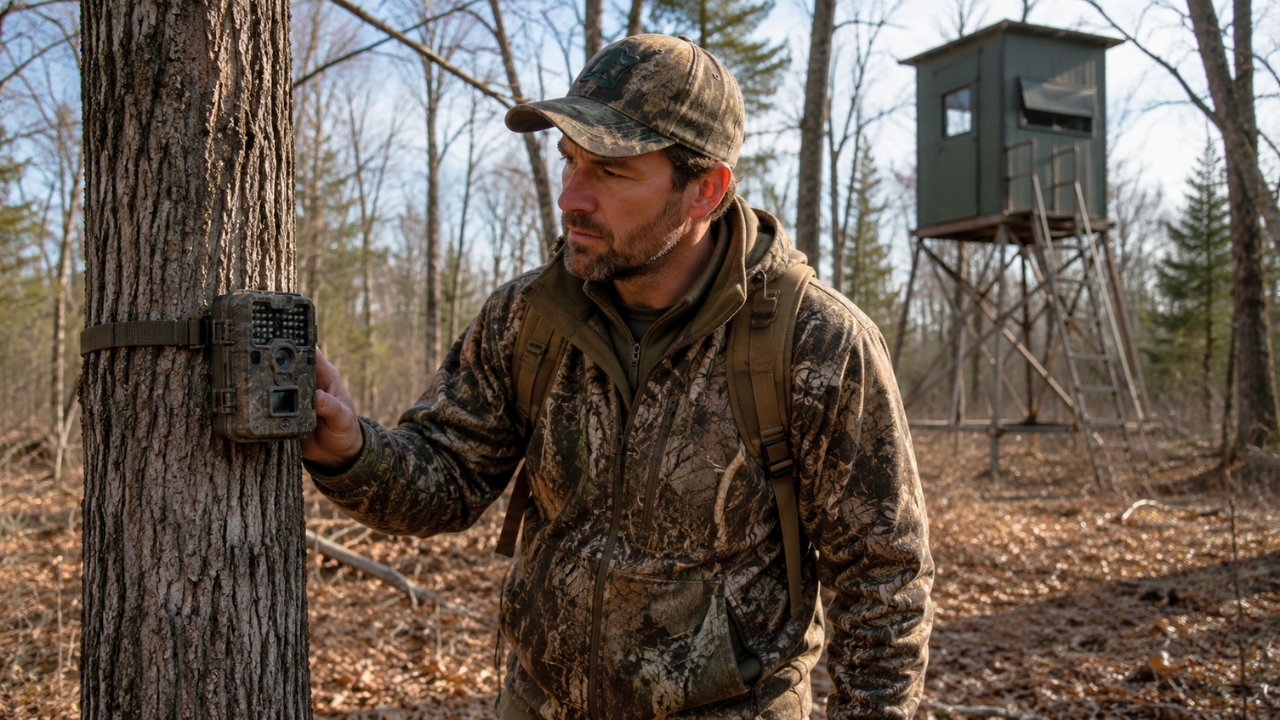
Then he noticed a trail camera that did not belong to him.
In a Reddit post, the hunter said he found a camera near his stand and immediately had the same question a lot of hunters would have: what should he do with it?
That may sound simple at first. It was not his camera. It was sitting near his hunting setup. Whoever placed it there clearly had some reason to watch that spot. But the answer gets more complicated once you start thinking through what a trail camera actually means.
A trail camera is not a random piece of trash. Somebody had to walk into that area, pick that tree or post, strap the camera up, aim it, and leave it there. They probably checked the angle. They probably had a reason for choosing that exact spot. And if it was near the poster’s stand, that reason may have been pretty obvious: someone else was watching the same deer, the same trail, or the same setup.
That is where the situation starts feeling less like misplaced gear and more like a sign that another person may be hunting the property.
The poster did not seem sure if the camera belonged to someone with permission, someone who got turned around, or someone who had no business being there at all. That is the annoying part about finding mystery gear. It leaves you with too many possibilities, and none of them feel great.
Maybe the landowner gave someone else permission and forgot to mention it. That happens more than hunters like. A landowner may tell one guy he can hunt the back field, tell another guy he can hunt the timber, and not realize both of them are now working the same area. That can create tension fast, especially if one hunter thinks he has the spot to himself.
Maybe it belonged to a neighbor who crossed a line by mistake. Property boundaries can be messy in the woods, and some people trust map apps more than they should. A camera near a stand could be the result of someone being off by 50 yards and not realizing it.
But it could also be someone sneaking onto land where he knows he does not have permission.
That is the option that makes a hunter’s blood pressure rise. Because if someone put a camera near your stand, that person may know the stand is there. He may know when you are hunting. He may be checking the card to see deer movement, pressure, and maybe even your activity. He may be using your work to decide when to slip in.
The poster asked whether he should keep the trail camera. That question is understandable, because a lot of hunters have the same gut reaction when they find unauthorized gear on land they have permission to hunt. Part of you thinks, “Well, you shouldn’t have left it here.” Another part of you knows that taking somebody’s camera, even if they were wrong to put it there, can create a whole new argument.
There is also a safety issue that goes beyond the camera itself. If another hunter is sneaking around the same stand location, the poster needs to know. Nobody wants to climb into a stand before daylight and later find out someone else is walking in from another direction with a rifle or bow. Nobody wants overlapping shooting lanes with a person who is not supposed to be there. Nobody wants to discover during season that “his spot” is being treated like shared ground by a stranger.
That is why the camera mattered. It was not just equipment. It was evidence that someone else had been in the area, probably more than once.
The smartest move in a situation like this is usually not the most satisfying one. It is tempting to pop the card, look through the photos, take the camera, or leave a note that says exactly what you think of the person who put it there. But if the hunter has permission rather than ownership, the better first step is usually to call the landowner.
The landowner needs to know there is unauthorized gear near a stand. He may know exactly whose camera it is. He may say another hunter has permission too. Or he may be just as surprised as the hunter and want it removed immediately. Either way, the person who owns the land should be part of that decision.
That seemed to be the heart of the Reddit discussion. The poster had found something that did not feel right. He wanted to handle it without making himself the bad guy. But the camera’s presence raised the bigger question: who else is walking that property, and do they have any right to be there?
What Commenters Said
Commenters were divided on the “keep it” part, but most agreed the hunter should not ignore it.
Some people told him to take the camera down, especially if he had confirmed nobody else should be hunting there. To them, a camera placed near another hunter’s stand was not innocent. It looked like someone was either scouting the same deer or watching the poster’s activity. Several said they would not leave it there and let the mystery person keep gathering information.
Others warned him not to jump straight to taking it. If he was not the landowner, they said the landowner needed to make the call. Permission to hunt does not always mean permission to confiscate another person’s property, even if that property is in the wrong place. A few commenters said the cleanest move was to take photos, mark the location, and call the owner of the land.
A lot of hunters suggested using another camera to watch the first one. That advice came up because whoever placed the camera would probably come back to check it. If the poster or landowner wanted to know who it belonged to, catching the person on camera would be better than guessing.
Some commenters said to leave a note. Something simple like, “You are on private property. Contact the landowner.” That gives an honest-mistake person a chance to explain and gives a trespasser notice that someone has seen the camera. But others said a note only warns a poacher to get smarter and move his gear deeper.
There were also people who pointed out that trail cameras have gotten expensive. That made some commenters more cautious about damaging or keeping it. Even if the person was wrong to put it there, destroying the camera could pull the poster into a separate problem. Documenting it and getting the landowner involved was the safer route.
The strongest comments focused less on the camera and more on access. If someone else is using the property, the hunter needs to know before he sits that stand again. It affects safety, deer movement, and trust with the landowner. A mystery camera near a stand is rarely just a mystery camera.
For the poster, the camera was the first clue. The bigger issue was figuring out whether he had found a harmless misunderstanding, another authorized hunter, or someone quietly hunting land that did not belong to him.