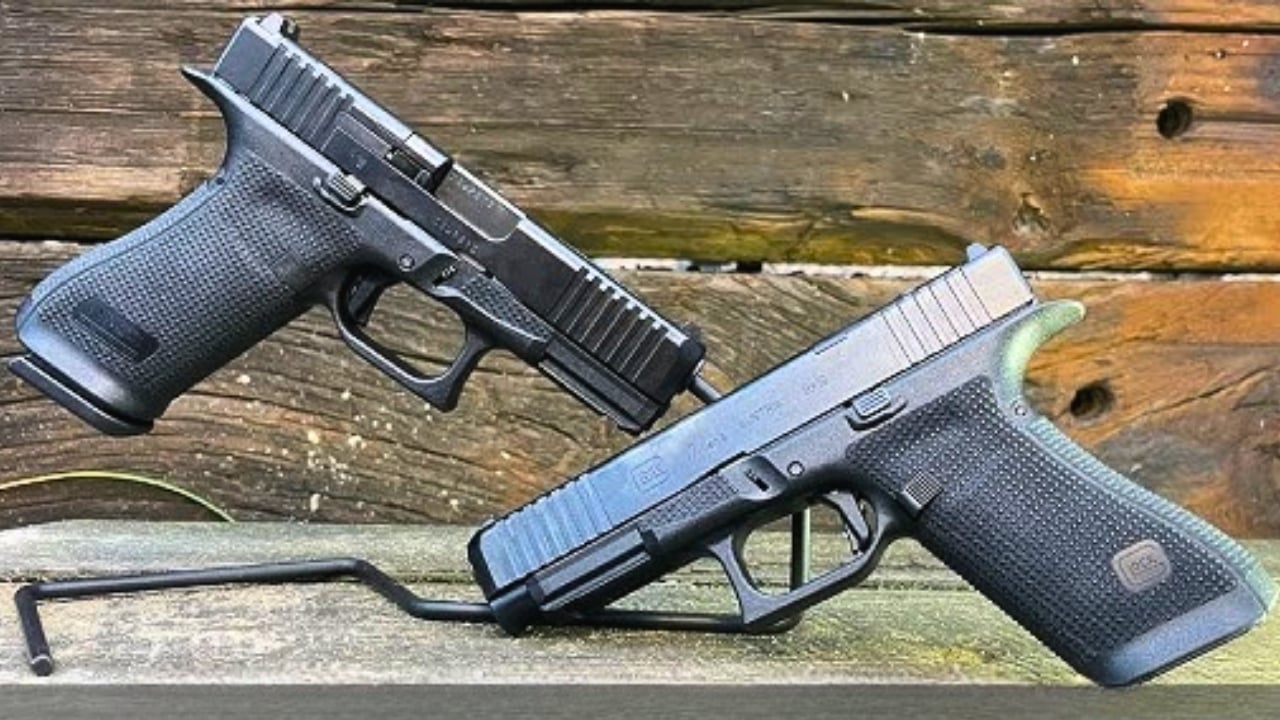
Photo credit: Anatomia Broni Palnej/YouTube
The sixth generation of Glock pistols arrives with a clear message from the company: you are not getting a radical redesign, you are getting a series of targeted upgrades to how the gun fits your hand, manages recoil, and carries optics. If you already run a Gen5, the question is not whether Gen6 looks different, but whether the factory changes are meaningful enough to justify a switch. To answer that, you need to look closely at what Glock itself says it improved and how those claims line up with early independent testing.
From the first announcement of the new line to detailed breakdowns of the frame, slide, and trigger, the pattern is consistent: Glock is leaning into ergonomics, optics integration, and incremental refinements rather than chasing flashy features. You see that in the way the company describes the new Generation of GLOCK pistols and in how reviewers describe the G17, G19, and G45 after live‑fire sessions. The result is a Gen6 that feels familiar to Gen5 owners but behaves differently in your hands once you start shooting fast strings or working from concealment.
How Glock Frames the Jump From Gen5 to Gen6
Glock is explicit that Gen6 is an evolution of its existing formula, not a clean break from Gen5. In SMYRNA, GA, GLOCK, Inc used its official launch to present the 6th Generation of GLOCK pistols as a continuation of the brand’s long running focus on reliability and simplicity, while highlighting that the new line is engineered with purpose around user feedback rather than marketing trends. The company’s own language about the new Generation of GLOCK emphasizes that the Gen6 family, including the G17, G19, and G45, is intended to refine how the pistols handle and carry without abandoning the core operating system that made earlier generations so widespread in law enforcement and civilian use, as reflected in the formal Gen6 announcement.
That positioning matters if you already own a Gen5, because it tells you what not to expect. Glock is not promising a lighter polymer frame, a new caliber, or a different fire control system. Instead, the company stresses that the Gen6 line, chambered in 9mm Luger, keeps the same basic footprint and magazine compatibility while layering in ergonomic and optics‑ready changes that are supposed to show up in your draw stroke, grip consistency, and sight picture. The official description of the highly anticipated Gen6, chambered in 9mm Luger, underscores that you are buying into a familiar platform that has been tuned rather than replaced, which is exactly how Glock presents the new GLOCK rollout.
Gen6 Models and Where They Fit Beside Gen5
For now, Glock is focusing its sixth generation on the core duty and carry sizes that already anchor the Gen5 lineup. The company’s own materials and early coverage make clear that the initial Gen6 wave centers on the G17, G19, and G45, the same trio that defines many agencies’ Gen5 inventories. That means if you are currently running a Gen5 G17 or G19, you can look at the Gen6 equivalents as direct replacements in the same roles, with the same general dimensions and capacity, rather than as experimental offshoots. The emphasis on these workhorse models is reinforced in reporting that describes how GLOCK Announces Generation 6 and gives the G17, G19, and G45 an ergonomic overhaul while keeping them squarely in their traditional full‑size, compact, and crossover niches, a point highlighted when GLOCK Announces Generation coverage compares them directly to prior generations.
On the calendar, Glock is also signaling that Gen6 is not a distant concept but an imminent option for your next purchase cycle. Glock officially announced the imminent arrival of its Gen6 pistols in early December, with reporting that the first public availability would be February 21, 2026, giving you a clear window to plan agency trials or personal upgrades. Other coverage notes that Glock unveils 6th Generation Pistols, with ergonomics taking center stage, and lists the models as Gen6 G17, Glock 19, and Glock 45, with an MSRP of $ 745. This positions them slightly above many Gen5 street prices but still in line with premium duty pistols. If you are budgeting for the coming year, those details on the Release Date and Models, including the Glock 19 and Glock 45, are already laid out in the Glock Unveils coverage.
Ergonomics: What Glock Says It Fixed in Your Grip
The headline change from Gen5 to Gen6 is how the pistol meets your hand. Glock’s own framing and independent testing both stress that the new grip is designed around real hands rather than a one-size-fits-all block, with subtle contouring and undercuts that are meant to lock in your master grip without adding bulk. Analysis of the Glock Gen 6 materials describes how Glock’s philosophy is one of refinement over reinvention, emphasizing improved ergonomics without added bulk, with a focus on cleaner breaks and enhanced control under recoil. If you have ever felt that a Gen5 grip was serviceable but not quite tailored, the Gen6 approach is to keep the same general circumference while reshaping the contact points so the gun settles more naturally when you drive it out of the holster, a theme that runs through the Improved Ergonomics Without Added Bulk discussion.
Texture is another area where Glock is quietly acknowledging past criticism. The Gen 6 ergonomic updates, including the new grip texture, are described as combining the best elements of Glock’s earlier RTF2 and RT textures, giving you more purchase without shredding cover garments or your hands during long training days. Reporting notes that this texture is designed to maintain a solid master grip even when your hands are wet or gloved, which is a practical upgrade over the relatively mild Gen5 pattern. If you have ever had to tape or stipple a Gen5 frame to get the traction you want, the Gen6 texture aims to deliver that performance out of the box, a point underscored when The Gen 6 ergonomic updates and Glock’s texture lineage are broken down in detail in the Gen 6 ergonomic updates overview.
A Grip Designed Around Real Hands, Not Just Dimensions
Beyond texture, Glock is reshaping how your hand sits behind the bore. Coverage of Glock Gen 6 Explained notes that the grip has been designed around the human hand, with particular attention to how different palm sizes and thumb positions interact with the frame under recoil. The reporting on A Grip Designed Around Real Hands highlights that the new contouring and beavertail geometry are meant to accommodate both smaller hands and aggressive grip techniques, reducing the likelihood of slide bite while still letting you get as high as possible behind the gun. If you have ever had to compromise between comfort and control on a Gen5, the Gen6 grip profile is intended to narrow that gap, which is why the phrase A Grip Designed Around Real Hands is central in the A Grip Designed Around Real Hands analysis.
Distance to the trigger is another subtle but important change. There is also now less distance between the tang of the grip and the trigger face, which means you can get more finger on the trigger without overreaching, especially if you have smaller hands. That adjustment can translate into a straighter press and less lateral movement, particularly in rapid-fire strings where Gen5 shooters sometimes struggled to keep shots from drifting. Reporting that focuses on this reduced distance notes that it is one of the details that make this generation really special, because it directly addresses a common ergonomic complaint without forcing you into backstrap swaps or aftermarket frames. If you have ever felt like you were stretching for the trigger on a Gen5, the description that There is also now less distance between the tang and trigger face is a key takeaway in the There is also now less breakdown.
Trigger and Internals: Subtle Changes With Real Effects
Glock’s trigger has always been a point of debate, and Gen6 is the first time the company is standardizing a flat‑faced design across the line. Reporting on Trigger and Internals notes that all Gen6 models now feature a flat‑faced trigger as standard equipment, combined with an undercut trigger guard that lets you get your hand higher on the frame. That combination is intended to give you a more linear press and better leverage, which can translate into cleaner breaks and shorter perceived travel compared with the curved Gen5 shoe. If you have been installing aftermarket flat triggers on your Gen5, Glock is effectively baking that preference into the factory configuration, as highlighted when coverage states that All Gen6 models now feature a flat‑faced trigger and that this change is part of a broader ergonomic overhaul, a point detailed in the Trigger and Internals section.
Internally, Glock is not abandoning the proven striker‑fired system, but it is refining how the parts interact. Early technical breakdowns describe minor changes to the trigger bar geometry and connector interface that are meant to smooth out stacking and reduce the gritty feel that some shooters reported on earlier generations. At the same time, Glock is careful to preserve the drop safety and overall simplicity that define the platform, which is why coverage of the final thoughts on Gen6 emphasizes that the pistols still maintain the reliability and simplicity that define the platform even as they incorporate user-driven feedback. If you are evaluating whether the Gen6 trigger is enough of an upgrade over a well broken-in Gen5, the key is that Glock is offering a more modern flat face and slightly cleaner break without asking you to learn a new system, a balance that is underscored in the Final Thoughts commentary.
Optics and Slide Changes: A New Mounting System
If you are running a red dot, the Gen6 slide is arguably the most consequential change over Gen5. Glock’s new Optic Ready System does away with the traditional optics mounting plates that defined the MOS approach on earlier generations, replacing them with a direct mounting interface that lets certain footprints bolt straight to the slide. Reporting on the Gen6 Slide notes that because Glock’s new Optic Ready System eliminates the extra plate layer, Gen6 slides tend to sit optics lower, which can improve your co‑witness and reduce the height over bore of the dot. The same coverage points out that the rectangular areas ahead of the ejection port, which house the new mounting bosses, do not affect Glock holster fitment, so you can keep using many Gen5 rigs with a Gen6 pistol, a detail spelled out when the Slide and Because Glock Optic Ready System are examined in the Slide review.
Other technical coverage goes further, describing the optics change as the most substantial single update in the Gen6 line. Detailed first look reporting notes that the optics-ready design now uses screws that drive directly into the slide, rather than into a removable plate, which can increase durability and reduce the chance of fastener failure under heavy use. That same analysis emphasizes that the new system is still backward compatible with standard Glock magazines and core slide dimensions, so you are not trading reliability for modularity. If you have hesitated to cut a Gen5 slide or rely on plates, the description of OPTICS READY as a total redesign of the optics mounting system, with screws that drive directly into the slide, is a clear signal that Glock expects you to run a dot on Gen6, a point made explicit in the OPTICS READY breakdown.
Frame Undercuts, Bore Axis, and Recoil Control
Gen6 also refines how the frame positions your hand relative to the bore, which is a key factor in how the gun tracks under recoil. At a restricted media and distributors meet-up event held at the GLOCK U.S. HQ in Smyrna, coverage of GLOCK GEN 6 Deep Dive notes that engineers walked attendees through the new undercuts and contouring on the front strap and trigger guard, explaining how they incorporated detailed user-driven feedback from competitive shooters and duty users. Those changes are meant to let you choke up higher on the gun without discomfort, which in turn can reduce muzzle flip and speed up your return to sights compared with a stock Gen5 frame. The emphasis on Smyrna and the closed-door nature of the event underscores how seriously GLOCK is treating this GEN 6 Deep Dive, as described in the GLOCK GEN 6: Deep Dive report.
Independent technical analysis backs up the idea that the frame and slide geometry are working together to lower the effective bore axis. A deep dive on the new Glock Gen 6 models notes that all standard frame Gen6 Glocks maintain a consistent height over the bore axis that is slightly optimized compared with earlier generations, contributing to flatter shooting behavior. That same report points out that while the Gen6 may look remarkably like previous generations by design, it is quite different when it comes to ergonomic feel and how the gun sits in your hand under recoil. If you are used to the way a Gen5 flips and settles, the Gen6 changes are subtle but noticeable when you run controlled pairs or bill drills, a distinction that is laid out in the discussion that The Gen6 may look remarkably similar but all standard frame Gen6 Glocks share a refined height over the bore axis, as detailed in the The Gen6 may look remarkably analysis.
Real‑World Shooting Impressions Versus Gen5
On the range, early testers are reporting that the Gen6 changes are more than cosmetic when you compare them directly to Gen4 and Gen5 pistols. One detailed range report describes how the author flew to Glock headquarters and tested the new Gen6 G19, G45, and G17, finding them to be much improved in terms of controllability and comfort. That same account notes that firing the guns side by side, the Gen6 models felt more stable and easier to keep on target than comparable Gen4 and Gen5 pistols, particularly when running fast strings or shooting one-handed. If you are wondering whether the ergonomic tweaks translate into measurable performance, the description that firing the guns, the Gen6 felt much improved compared with Gen 4 and Gen 5 pistols is a strong indicator that the changes are not just theoretical, as laid out in the Firing the guns range report.
Holster compatibility and carry feel are also part of the real world equation. A brief review of the new models notes that the rectangular areas ahead of the ejection port, which are part of the new optics system, do not affect Glock holster fitment, so you can transition from a Gen5 to a Gen6 without overhauling your duty or concealment rigs. That same review points out that the forward areas on the frame and slide give you more purchase for press checks and manipulations without snagging on gear, which can be a small but meaningful upgrade in daily carry. If you are already invested in a stable of Glock holsters, the reassurance that these new rectangular areas do not affect Glock holster fitment is a practical advantage of Gen6 over some competitors’ optics ready designs, as emphasized in the Forward on the Frame coverage.
Where Gen6 Leaves Gen5 Owners
When you step back from the individual features, the Gen6 story is about Glock leaning into its reputation for incremental improvement rather than chasing radical change. Coverage that frames the Gen6 arrival as the latest step in ergonomic refinement notes that Glock announced its Generation 6 pistols with availability starting in January and that the company is positioning the new line to better accommodate diverse shooters through grip and control updates. The same analysis, laid out in a Table of Contents style breakdown, emphasizes that the changes are cumulative: a slightly different grip angle here, a new trigger face there, a revised optics system on top, all adding up to a pistol that feels more modern without alienating long time users. If you are comfortable with your Gen5 but curious about what is next, the description that Glock announced its Generation 6 to better accommodate diverse shooters is a concise summary of the company’s intent, as presented in the Table of Contents overview.
At the same time, Glock is careful to reassure you that the fundamentals have not changed. Reporting that Glock introduces the Gen 6 notes that the pistols still feed from standard Glock magazines and that the new undercut in the trigger guard is there to let users get a higher grip without compromising reliability. That continuity means your existing mags, many of your holsters, and your basic manual of arms carry over from Gen5 to Gen6, which lowers the barrier to adoption for both individual shooters and agencies. If you are weighing whether to stick with Gen5 or move to Gen6, the fact that it still feeds from standard Glock magazines while adding a new undercut in the trigger guard is a strong argument that you can upgrade ergonomics and optics readiness without rebuilding your entire ecosystem, a point made clearly in the technical overview.
How to Decide If Gen6 Is Worth the Upgrade
Ultimately, the decision to move from Gen5 to Gen6 comes down to how much you value factory ergonomics and optics integration over aftermarket solutions. If you are already running a Gen5 with a milled slide, a flat trigger shoe, and grip tape or stippling, the Gen6 may feel like a factory version of what you have built, with the added benefit of a fully supported Optic Ready System and a grip designed around real hands from the outset. On the other hand, if your Gen5 is stock and you have been considering upgrades, the Gen6 offers a way to get those improvements in a single package that is backed by GLOCK, Inc and aligned with the company’s official Generation of GLOCK evolution. The fact that Glock officially announced the imminent arrival of its Gen6 pistols with a clear timeline, noting that the first public date would be February 21, 2026, gives you a concrete horizon to plan around, as detailed when Glock officially announced the imminent arrival and the February 21, 2026 date in the Glock officially announced report.
If you are starting from scratch, the calculus is simpler. The Gen6 line, centered on the G17, G19, and G45, gives you Glock’s latest thinking on ergonomics, optics, and trigger feel in a package that still looks and runs like the pistols that built the brand’s reputation. You get the benefit of a grip texture that blends RTF2 and RT influences, a flat‑faced trigger, a redesigned optics mounting system, and a frame that has been undercut and contoured based on detailed user feedback from events in Smyrna and beyond. For many shooters, that combination will make Gen6 the default choice over Gen5, especially as more holsters and accessories are explicitly labeled for the new generation. If you value staying current with Glock’s incremental but deliberate evolution, the Gen6 represents the next logical step, and the company’s own Generation of GLOCK messaging makes clear that this is the platform it expects you to carry into the coming decade.
Like The Avid Outdoorsman’s content? Be sure to follow us.
Here’s more from us: