Photo credit: Texas Plinking/YouTube
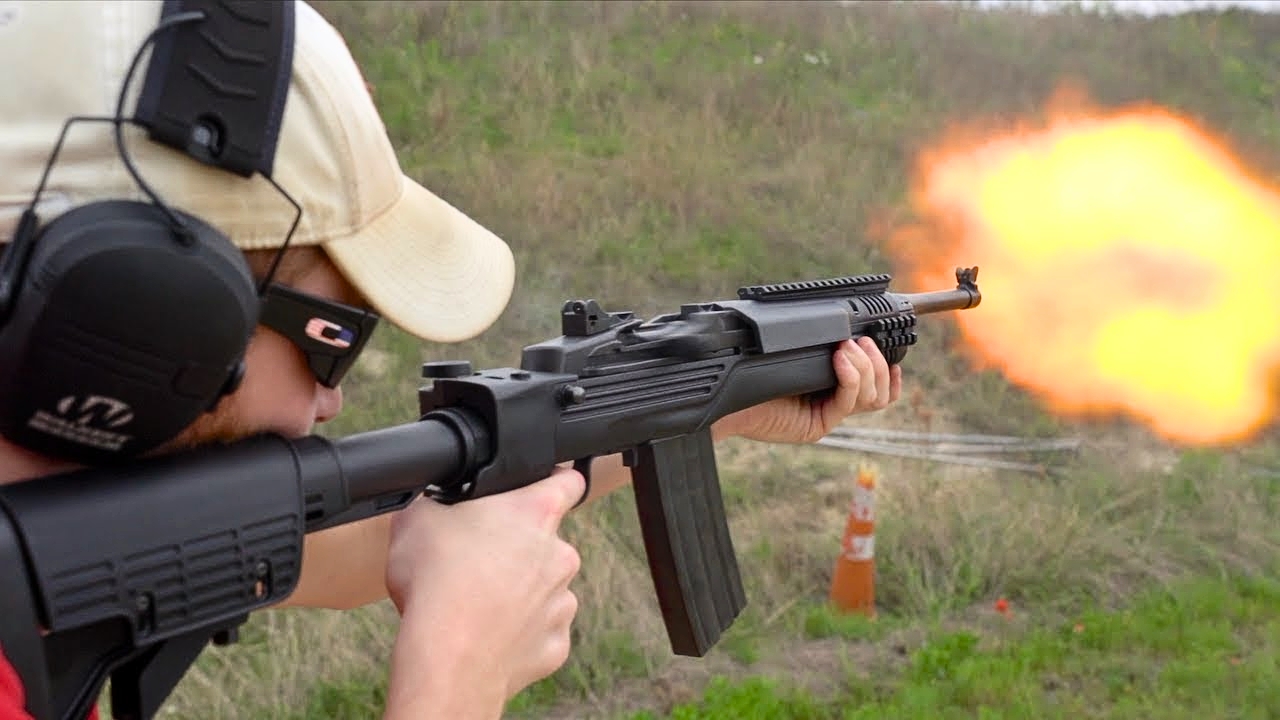
There are a lot of “shortcuts” shooters take when they’re chasing tighter groups. Some are harmless. Some are just a waste of money. And one of them quietly chews up barrels faster than most people want to admit: overheating the barrel through fast strings, then “confirming” accuracy while the bore is heat-soaked. Guys do it because it feels efficient. They want to get zeroed quickly, they want to test loads quickly, they want to prove the rifle is “sub-MOA,” and they don’t want to spend all day waiting on a barrel to cool. So they shoot a bunch, the barrel gets hot, and they keep going anyway. That’s the shortcut. It gives you fast feedback and a false sense of productivity, but it accelerates throat erosion and it trains you to evaluate your rifle under conditions that don’t match how you actually need it to perform.
Barrels don’t wear out evenly from the muzzle back. They wear where heat and pressure are worst: right at the throat, just ahead of the chamber. That’s the area that takes the flame cutting, the high-pressure gas, and the heat spikes. If you run a barrel hot over and over—especially on higher-velocity cartridges—you’re spending barrel life like it’s free. The gun might still shoot “fine” for a while, but you’re shortening the window where it shoots its best. And then guys act shocked when their pet load stops grouping, their velocity spreads widen, and their cold-bore performance gets weird. The barrel didn’t betray them. They cooked it.
Why overheating is the most common “accuracy shortcut”
A lot of shooters don’t think of heat as wear. They think of heat as comfort—“it’s hot, I’ll let it cool so I don’t burn my hand.” But the barrel doesn’t care about your hand. It cares about repeated thermal stress and erosion. Every shot is a little cutting torch. When the steel is hotter, it’s more vulnerable. When you stack shots quickly, you’re stacking heat on top of heat, and the throat area doesn’t get a chance to recover. Even if you’re not doing full mag dumps, you can still heat-soak a barrel by shooting “pretty quick” through multiple three- and five-shot groups with short pauses. That’s the routine most guys do when they’re sighting in and testing, and it’s exactly how you quietly speed up wear.
This is especially brutal on light hunting barrels. They heat quickly and they cool slowly relative to their mass. A lot of guys buy a lightweight rifle, then treat it like a heavy range gun for an afternoon of “load testing” and “zero confirmation.” They’ll shoot ten groups in a row, wondering why the groups open up, then they’ll adjust things based on that heat-soaked performance. They’re not only burning barrel life; they’re making decisions off a moving target. Heat changes point of impact. Heat changes harmonics. Heat changes how a thin barrel behaves. So you’re wearing the barrel faster while also collecting data that lies to you.
The throat erosion reality most people don’t want to talk about
The throat is the first place accuracy goes when a barrel is getting tired. You don’t always notice it right away. What you notice first is that your rifle gets pickier. A load that used to be a consistent performer starts throwing a flyer here and there. You start chasing seating depth. You start blaming the scope. You start thinking your technique got worse. Meanwhile, the throat is stretching and roughening, and the bullet’s jump is changing. The hottest part of the system is the first part to suffer, and rapid fire under heat accelerates it.
If you’ve ever looked at throat erosion under a borescope, it changes how you shoot. You see cracking, roughness, and that burned-out look that comes from high-temp gas and pressure. Some cartridges are harder on throats than others, and barrel steel and finish matter too, but the big factor you control is heat. If you keep a barrel in a high-temp state for long periods through repeated strings, you’re increasing the rate of wear. That’s not opinion. That’s how steel behaves under heat and erosion.
The “accuracy shortcut” also makes you chase the wrong fixes
Overheating barrels doesn’t just wear them out faster—it also creates problems that look like mechanical issues. Heat can cause point-of-impact shift, especially in light barrels. It can cause groups to string. It can cause the rifle to “walk” shots as the barrel warms. Then the shooter decides the bedding is bad, the scope is bad, the stock is flexing, the mount is loose, the ammo is inconsistent. Sometimes those things are real. But a lot of times, the rifle is just hot. And if you’re making changes while the barrel is heat-soaked, you’re adjusting the rifle to a condition you’ll never hunt in and you’ll rarely shoot in if you’re being smart.
This is where guys start adding “upgrades” that don’t help. They change muzzle devices. They change stocks. They buy heavier barrels. Or they start doing aggressive cleaning routines to “bring the accuracy back.” Some of those decisions might be valid long-term, but a lot of them are just reactions to a self-created problem. The shortcut made the data messy, and messy data makes people spend money.
How to shoot for accuracy without cooking your barrel
If you want to preserve barrel life and get honest accuracy data, you have to pace yourself. That means shooting slower than your impatience wants. It means spacing groups out. It means letting the barrel cool to a reasonable temp between strings—especially if you’re shooting a thin hunting barrel or a hot cartridge. A simple rule that works for most hunting rifles is: if the barrel is too hot to comfortably hold near the fore-end, you’re pushing it. That’s not a perfect metric, but it keeps most people from doing the worst damage.
It also means doing your accuracy testing with cold-bore behavior in mind. Most hunting shots are cold-bore shots. You don’t need to know how the rifle shoots on its twelfth shot in two minutes. You need to know where the first shot lands and whether it repeats. So a better practice routine is often: shoot one cold-bore shot at the start, log it, then shoot a small group at a reasonable pace, then let it cool. Repeat across days, not just across minutes. That gives you data that matters and it preserves the barrel’s best life.
The hard truth: barrel life is a budget, not a myth
People act like barrel wear is something that only happens to guys who shoot thousands of rounds a year. That’s not true. Barrel wear happens faster when you shoot in a way that accelerates it. You can shorten a barrel’s prime years with a few “productive” afternoons if you’re constantly heat-soaking it and running fast strings. You don’t need to be a competition shooter to do damage. You just need to be impatient and convinced that faster testing equals better testing.
The real shortcut—the one that actually helps—is slowing down. It feels counterproductive in the moment, but it saves you money, preserves accuracy, and gives you better information. If you’re serious about accuracy, you treat the barrel like the consumable it is and you don’t burn it up just to feel like you accomplished something in one range trip.
Like The Avid Outdoorsman’s content? Subscribe to our newsletter so you never miss an article.
Here’s more from us: