Photo credit: Dmitri T/Shutterstock.com
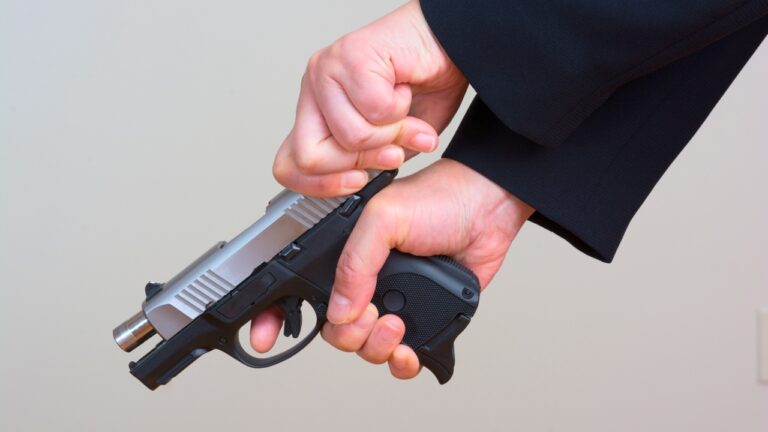
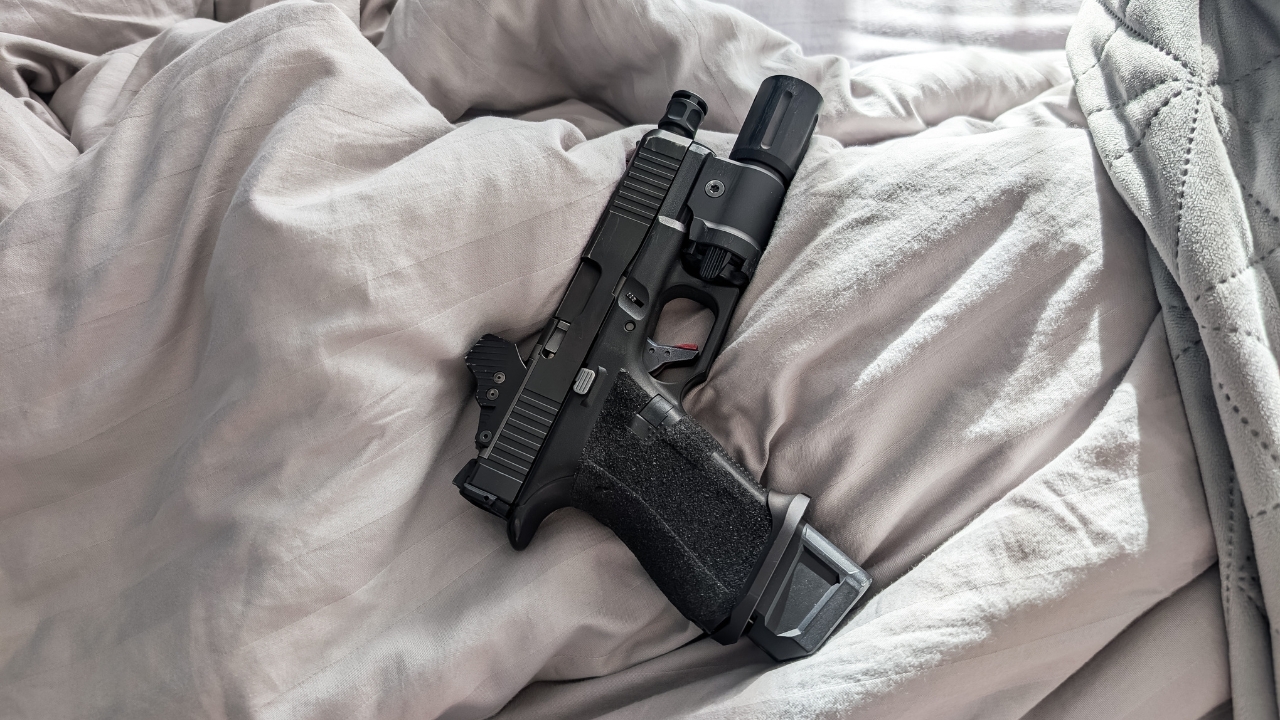
A Reddit post in r/CCW described a nighttime mistake that hit readers hard because it did not start with some wild stunt or macho nonsense. The poster said he was in bed with his partner, messing with a Glock 19-style handgun while winding down for the night. According to his account, he dropped the magazine, cleared the chamber, reinserted the magazine for the weight, aimed at the wall, and dry-fired. Then, almost without thinking, he racked the slide again out of habit to reset the trigger, chambered a live round, aimed at the wall, and fired. He wrote that the shot went through the wall and into a cabinet.
That is what made the story land so hard. It was not only that a gun went off in the bedroom. It was that the poster’s explanation sounded horribly familiar to anyone who has ever let administrative gun handling blur into absent-minded routine. He was not describing a dramatic argument, a drunken stunt, or some internet dare. He was describing a few casual motions in a quiet room that turned into a live round getting launched through a wall because his brain stayed in “dry fire” mode one second too long.
The replies came back with the same kind of anger and relief these posts usually bring. A lot of commenters were furious that he was handling a gun in bed at all, especially with another person right there. Others focused less on piling on and more on the ugly lesson behind it: once you mix a loaded magazine back into dry-fire handling, the margin for error disappears fast. Several commenters warned that “just checking” a carry gun is exactly how people talk themselves into mistakes, because the process feels casual right up until it is not.
What really gives the story its bite is the habit loop at the center of it. The poster said he cleared the gun, clicked it on an empty chamber, then absentmindedly racked the slide to reset the trigger. That detail is the whole nightmare in miniature. He had already mentally labeled the gun safe. Once that label got stuck in his head, one more rack of the slide did not register the way it should have. Instead of reading it as “you just chambered a live round,” his brain apparently treated it like just another step in a familiar sequence. That is the kind of mistake that scares readers because it does not sound exotic. It sounds human.
The comments also turned toward the bigger rule a lot of experienced carriers kept repeating: stop handling guns for no reason. If the day is done, holster it or secure it and leave it alone. If you are going to dry fire, strip all live ammo out of the room, check again, and make that its own separate event instead of something you do half-distracted while lying in bed. People were not only reacting to one bad outcome. They were reacting to how many small decisions had to line up before a round ever hit that wall, and how many of those decisions are the kind people make when they get too comfortable.
There is also a reason bedroom negligent-discharge stories tend to get such strong engagement. Readers instantly start imagining the invisible damage around the hole in the wall. A partner a few feet away. Neighbors. Kids in another room. A round taking one slightly different angle and turning a humiliating mistake into something much worse. The original post did not need to describe gore or catastrophe to make that clear. The setting alone did the work. When a gun goes off in bed, nobody has to work hard to picture what could have been on the other side of that wall instead of a cabinet.
What makes this one especially clickable is that the poster did not sound like he was trying to act tough after the fact. He sounded sick about it. That matters, because stories like this do not spread because readers want a lecture from someone still making excuses. They spread because the mistake feels close enough to ordinary that people can imagine how easily a familiar routine can turn into a disaster the second the mind goes on autopilot. That is why these threads fill up so fast. Half the audience is angry, and the other half is rattled because they can feel how simple the error path really was.
And that is really why this post sticks. It was not only about a negligent discharge in a bedroom. It was about the exact kind of casual, repetitive handling that makes people think nothing bad is about to happen. The loud part lasted an instant. The ugly part was realizing the shot happened during what the shooter probably thought was just another normal moment with a gun he had handled too many times to feel afraid of anymore.