Photo credit: The Avid Outdoorsman
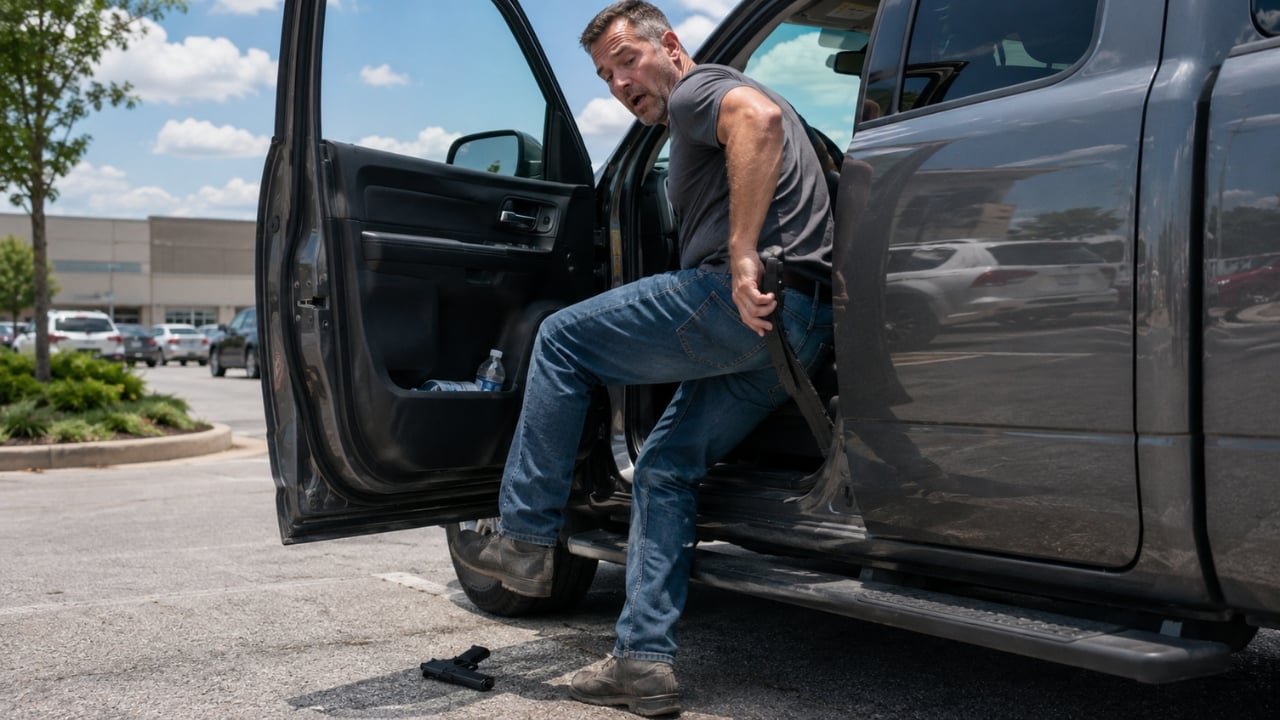
A concealed carrier in Reddit’s r/CCW described a moment that seems small until you picture how quickly it could have gone much worse. He said he had been carrying a Glock 43 for about a year in a Vedder tuck holster on a Hanks CCW belt and generally felt good about the setup. Then one day, while doing work around the yard, he climbed into a vehicle he only needed to move briefly. It was an odd vehicle with a roll bar and no real seat, just a crate to sit on, and the awkward entry turned out to matter. In the original Reddit thread, he explained that as he climbed in, the butt of the pistol caught on the door bar and pulled the gun out of the holster. You can read the post here: https://www.reddit.com/r/CCW/comments/4coa3f/gun_fell_out_of_holster_todayand_carrying_problems/.
What happened next is the part that clearly stayed with him. He wrote that when he looked down, the barrel was pointed up toward his torso and there was wiring nearby that could easily have snagged the trigger. That detail changed the whole tone of the post. This was no longer just a complaint about a holster shifting or a shirt printing. It was a man looking down at a loose pistol in a cramped space and realizing how little separated him from a negligent discharge into his own body. He said it “really freaked me out,” grabbed the gun, and carried the rest of the day without a round in the chamber.
The vehicle setup made the incident worse in a very specific way. He was not just sitting down in a normal sedan where the carry position might press a little awkwardly into the seat. He was climbing over a bar into a cramped machine with odd geometry and exposed hardware. In that kind of movement, gear gets tested differently. The way he told it, the gun did not simply shift or print. The grip caught, the holster lost control of the pistol, and suddenly the firearm was out and pointed in a direction that made the whole situation feel dangerous enough to shake his confidence right away.
That one moment spilled into a broader frustration he had already been having with carry. He said the last few weeks had felt like a hassle because he could not get comfortable with the gun concealed in lighter clothes. Walking around was one thing. Real movement was another. He wrote that getting in and out of cars and crouching down to do work kept flipping his shirt over the butt of the gun and exposing it. He also gave an example from a store, where an older man asked him to grab something off a high shelf and he felt like raising his arms normally would have exposed the pistol, so he had to turn his body to hide it. In other words, the vehicle incident did not come out of nowhere. It was the worst version of a carry setup that had already been bothering him.
He sounded frustrated in a way that a lot of carriers probably understand. He wanted to carry as much as possible, but he was starting to feel like the reality of doing it comfortably and discreetly did not match the idea of it. He described himself as tall and skinny and said that did not help. The way he framed the post, he was not asking whether carrying was worth it in principle. He was asking how to make it work without spending the whole day fighting the gun, the holster, the shirt, the car seat, or every little movement that could expose or dislodge the setup.
The comments immediately turned practical. One of the first stronger replies told him to think less in terms of one-size-fits-all carry and more in terms of matching the gun to the day. That commenter said he carries different pistols depending on whether he is mowing, gardening, running to the corner store, or visiting family in Memphis, and the point was obvious: not every gun and holster combination makes sense for every activity. Another commenter agreed and said people often get stuck in exactly that one-rig-for-everything mentality.
Others focused directly on his setup. A fellow skinny carrier suggested canting the pistol more aggressively and said that for his own frame, carrying behind the hip only worked if the cant was adjusted just right so the grip tucked into his side. The same commenter also pushed hard for appendix carry, saying that for him it made concealment easier, stopped the shirt from catching on the pistol, and reduced worries about the firearm being exposed. He even shared that he carried a P938 Equinox appendix and included photos of his own rig to show what he meant. The original poster later replied that he had tried more aggressive forward cant and tightening the belt, saying it was less comfortable when sitting but felt much more secure and lower profile.
Another detailed reply got even more direct about the hardware and positioning. That commenter told him to check retention first — unloaded, over a soft surface — and see whether the holster was really holding the firearm the way it should. He also said the posted carry setup looked wrong for his body type because the grip and magazine were sticking out enough to catch on obstructions and print badly. His advice was to move the gun farther back or switch to appendix, depending on what worked best with the poster’s build. He also recommended a defensive or CCW class if he had not taken one yet.
Not all of the replies were sympathetic. One skeptical commenter used the incident as a chance to take a shot at carrying in general, saying the poster had “almost darwinned himself getting into a car” and suggesting that maybe carrying was not for everyone. That response drew pushback from others who treated it as shallow and unhelpful, but it did highlight something that hovered over the whole thread: once a gun comes loose in public or semi-public movement, the mistake starts feeding every criticism people already have about concealed carry. The original poster did not really engage with that side of it. He seemed much more focused on trying to fix the problem than defend the concept.
What makes the whole post linger is how narrow the miss was. He did not actually shoot himself. Nobody nearby was hit. The gun did not go off. But the description of the barrel pointing up at his torso with wiring close enough to snag the trigger was enough to make the danger real without any blood in the story. That is probably why the incident rattled him so badly. He was not recovering from damage. He was recovering from the very clear picture of what the damage could have been if the angle or the snag had gone one step farther.
By the end of the thread, he was still working through solutions rather than declaring one magic fix. He had already tried more cant and more belt tension and was open to changing the setup further. The post reads like a guy realizing that “comfortable enough most of the time” is not the same thing as secure under awkward real-life movement. A carry rig can feel fine walking across a room and still fail when a door bar, roll bar, shelf edge, seatbelt, or weird body angle catches exactly the wrong part of it. That was the real lesson he seemed to be learning in real time, and it came from a split second where the gun stopped being a concealed tool and became a loose hazard inches from his own torso.