Photo credit: www.kaboompics.com/Pexels.com
He was excited to shoot the new gun.
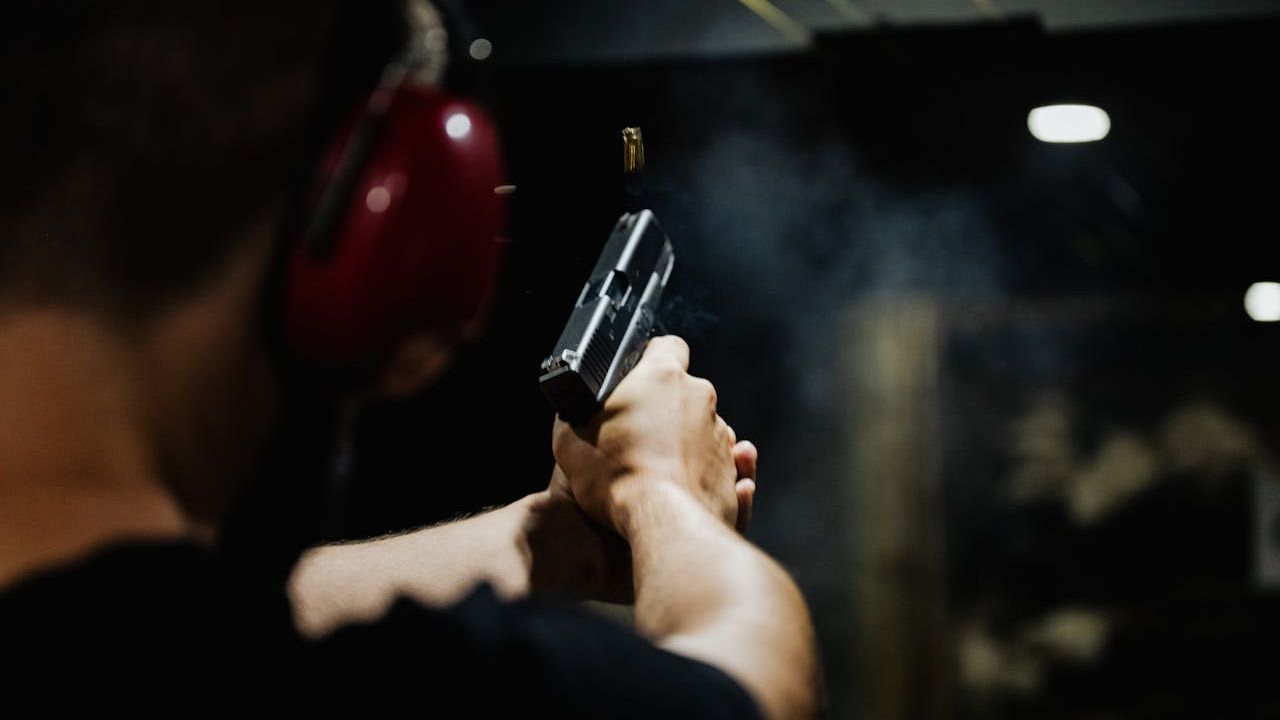
That is how the whole thing started. Brand-new SIG P365, fresh range trip after work, and the kind of anticipation every gun owner knows. You finally get the pistol you’ve been looking forward to. You load it up, get to the lane, settle in, bring the sights up, and wait for that first shot to tell you what the gun feels like.
Instead, he got a click.
In a Reddit post, the gun owner said he took his new P365 to the range with 147-grain Federal Premium HST, the same defensive ammo he used in his other everyday-carry gun. He had carried the pistol all day before the range trip, then stepped into the lane expecting to break it in.
The first round did not fire normally.
At first, he thought it was a misfire. That is already annoying with a brand-new carry gun and defensive ammo, but it is also something shooters are trained to handle carefully. He kept the pistol pointed downrange and waited. Then he noticed smoke coming out of the frame.
That is when the situation stopped feeling like a simple dud.
Smoke after a click is one of those details that makes your brain run through every bad possibility at once. Maybe the primer went off. Maybe there is a delay. Maybe something is wrong inside the gun. Maybe the round is not safe. He said he thought the primer might be cooking and that the gun might blow, so he quickly dropped the magazine and tried to clear it.
An empty shell popped out.
Then he looked into the barrel and saw the real problem.
The bullet was stuck.
It was a squib.
That is one of the nastier ammo failures because it does not always look dramatic at first. A squib happens when a round does not have enough force to push the bullet all the way out of the barrel. Sometimes there is little or no powder. Sometimes the primer alone moves the bullet just far enough to lodge it in the bore. If the shooter does not catch it and fires another round behind it, the gun can be destroyed and the shooter can be badly hurt.
That is why the first-round click mattered so much.
If the pistol had cycled differently, if he had cleared it carelessly, or if he had simply racked in another round and fired, the brand-new P365 could have turned into a very expensive and dangerous failure. Instead, he slowed down enough to notice something was wrong.
But the part that bothered him most was not only the range-day inconvenience.
It was the realization that he had carried that gun and ammo all day.
That changes how a person thinks about the whole setup. A carry pistol is supposed to be the thing you trust when everything else has already gone wrong. If the first round in that gun is a squib, then the gun can become useless immediately. Worse, the shooter may have a blocked barrel and no easy way to fix it in the moment.
The poster said he was furious at the ammo and mad at himself because he could imagine needing the gun in the worst moment of his life and having that happen on the first shot. That is a pretty sobering thought. Defensive ammo is expensive for a reason. People buy it because they expect better consistency, better quality control, and better terminal performance than range ammo. When a premium defensive round fails that badly, it shakes trust fast.
A range officer tried to push the bullet out with a rod, but it would not budge at first. The poster planned to use oil and work it out later. Then he contacted Federal.
According to his updates, Federal took the issue seriously. They asked him to send back the remaining rounds from that batch for testing, said replacement ammo would be sent, and told him to keep gunsmith receipts for clearing the barrel. Later, he said replacement rounds finally arrived, along with extra boxes for the trouble. He also said Federal raised the point that repeated cycling can cause setback and other issues, though he noted this particular round was fresh from the box.
That detail matters because carry ammo often gets chambered, unloaded, and rechambered over time. Repeated cycling can damage cartridges or push bullets deeper into the case, depending on the round and gun. But in this case, he said the problem round had not been repeatedly cycled, which made the failure feel even more like an ammo issue.
The whole experience left him rethinking more than one box of ammo. In a comment, he realized he had the same batch number in another everyday-carry gun and in a home-defense pistol. That is a rough realization. It is one thing to have a bad round in a range box. It is another to realize the same lot may be sitting in every gun you trust most.
That is probably the real lesson here.
A carry gun is not proven because it is new. Carry ammo is not proven because the box is expensive. The whole setup needs to be tested together. Gun, magazines, carry load, point of impact, reliability, recoil, and how the pistol behaves when something goes wrong.
He went to the range excited to feel the new P365’s first shot.
Instead, the first trigger press turned into a lesson about why every carry setup needs to earn trust before it rides around all day.
Commenters were concerned right away because Federal HST is widely trusted defensive ammo, and a squib in a carry round is the kind of failure that gets people’s attention.
Several people told him to contact Federal and save the lot number. One commenter said there had been another similar issue with the same type of ammo and asked him to share the lot number because many people carry the same load. That concern made sense because a bad lot of defensive ammo is not just a range inconvenience. It could affect people relying on those rounds every day.
Others focused on how dangerous a squib can be if the shooter does not recognize it. A few shared their own squib stories, including one who found a bullet stuck in an AR barrel later while cleaning and realized it could have ended much worse.
Some commenters talked about break-in and testing. One said he would never trust a new carry gun after only a small number of rounds because if something fails in real life, you get the rest of your life to regret not testing it more. The original poster agreed that the incident reinforced the need for backup tools and redundancy.
A few people discussed whether a shooter could feel a powder-free round by weight or sound before loading it. Most agreed that with small powder charges compared with the total weight of a cartridge, it would be very hard to notice without careful measuring.
The strongest takeaway was simple: premium ammo is not magic, and a new carry gun should not be trusted blindly. Test the exact ammo you carry, save lot numbers when something goes wrong, and stop immediately if a round sounds, feels, or behaves wrong.