Photo credit: The Avid Outdoorsman
He didn’t start carrying at work because he wanted to make a point.
The man said he actually didn’t like carrying on the job at all. But after nearly being mugged outside a previous workplace, he changed how he thought about the walk to and from work. That kind of close call has a way of sticking with you. Even if nothing happens the next hundred times, the one time that almost went bad is still sitting in the back of your head.
So at his new job, he carried anyway.
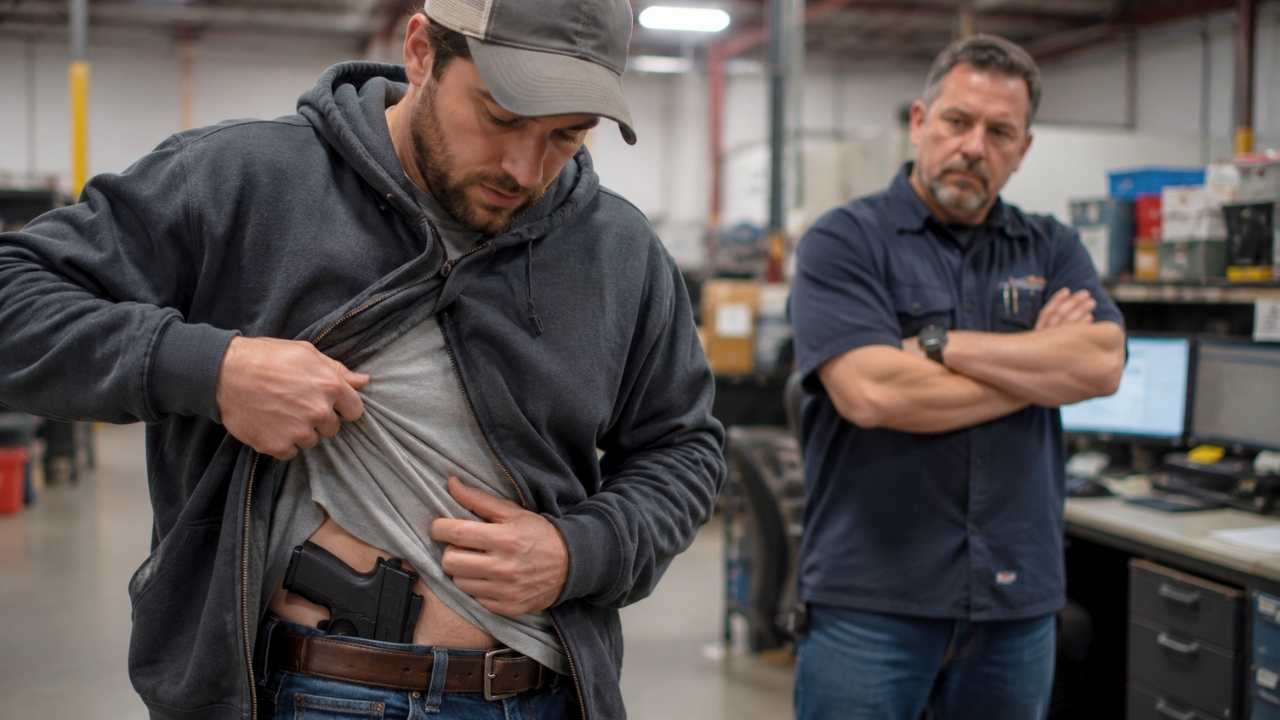
In a Reddit post titled “Probably messed up carrying at work today,” he said the problem happened near the end of his shift. He went to the bathroom, came back toward his office, and later realized his hoodie had snagged on the grip of his pistol. For a concealed carrier, that is the stomach-drop moment. One second you think everything is covered, and the next you realize the one part that should never show may have been out in the open while you were walking through work.
He didn’t know who saw it.
That uncertainty made it worse. If someone clearly called him out, at least he would know where he stood. Instead, he got back to his office, noticed the problem, fixed it, and hoped nobody had caught the glimpse. Then, while he was leaving, the service manager kept looking right at his waistband.
Not once. Not casually. The poster said the manager kept darting his eyes toward it.
That was enough to make him wonder if the whole thing was about to blow up. Maybe the manager had seen the grip. Maybe someone else had mentioned it. Maybe there was video. Maybe he was about to walk into work the next day and get pulled into an office by management or HR.
The man admitted he was freaking out a little. He also said he was not planning to carry the next day. That detail matters because the post was not written like someone trying to argue with company policy or dare anyone to confront him. It was written like someone who knew he may have made a mistake and was waiting to see what it would cost him.
He was also realistic about the consequence. If he got fired, he said that would be on him. He even admitted he didn’t care that much about the job, which gave the whole post a weird mix of worry and resignation. He didn’t want the trouble, but he also seemed to know he had accepted some risk by carrying there in the first place.
The tension in the story is not a parking-lot shootout or a masked stranger jumping from behind a car. It is quieter than that, but still ugly in its own way. A gun that stays concealed may never become anyone else’s business. A gun that flashes in a workplace can become everyone’s business in seconds, especially if the workplace has rules against weapons or if coworkers are uncomfortable around firearms.
And that is where this kind of mistake gets messy. The poster was carrying because he had a real fear tied to something that happened before. But the workplace was not just his space. It had managers, coworkers, cameras, policies, and people who may not have cared why he had the gun in the first place. If someone saw it and reported it, the reason might not matter much.
The next day was the unknown. Would the manager say something? Would HR pull camera footage? Would nobody mention it at all? The poster didn’t have an answer when he wrote it. He only had that image of his hoodie caught on the grip and his manager’s eyes dropping toward his waistband on the way out.
That is often how bad carry mistakes feel in real life. Not dramatic. Not cinematic. Just one piece of clothing in the wrong spot and a long night wondering who noticed.
The comments split between jokes, damage control, and hard advice. Some people told him to deny it unless the company had clear proof. Others suggested the old “cell phone holster” excuse, with one commenter saying he should buy a belt phone clip so if anyone asked, he could lift his shirt and act confused about what they thought they saw.
Not everyone liked that approach. Several commenters said that kind of aggressive denial or counter-accusing could make him look worse, especially if a manager was only asking an honest question. A few pointed out that if he didn’t care much about the job, he still needed to decide what mattered more: keeping that workplace or staying armed because of what happened near his last one.
The more serious comments came back to the same point. If he was going to carry at work, he needed better concealment habits, better clothing, and more awareness before walking around common areas. A hoodie snagging on a grip is the kind of small mistake that can turn into a big problem fast.
Like The Avid Outdoorsman’s content? Subscribe to our newsletter so you never miss an article.
Here’s more from us: