Photo credit: The Avid Outdoorsman
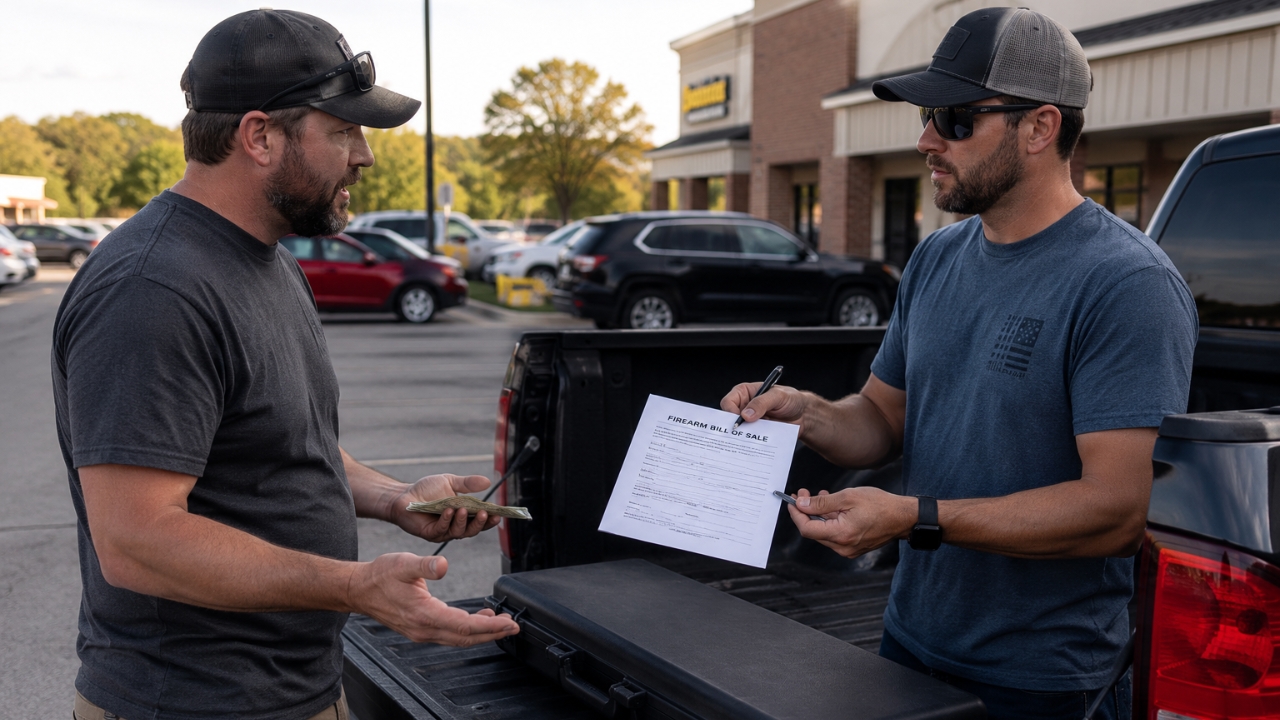
A gun owner in Reddit’s r/guns brought up one of those private-sale questions that sounds simple until you realize how much trust it asks two strangers to extend to each other. He wanted advice about liability in a face-to-face firearm sale and, more specifically, whether a buyer refusing to sign a bill of sale should be treated like a serious warning sign or just part of the reality of private gun culture. In the original Reddit thread, the discussion quickly turned into a much bigger debate over what people owe each other in a cash sale once a gun changes hands: https://www.reddit.com/r/guns/comments/mm9e4n/private_sale_advice_and_liability_concerns/. (reddit.com)
The reason this kind of story gets tense so quickly is that a private gun sale is not only about money and the item itself. It is also about the long tail of what happens after the buyer drives away. A seller can tell himself the deal is over the second the cash lands in his hand, but a lot of people do not really believe that. They think about what happens if the gun later shows up in a police trace, gets used in a crime, or lands in the hands of someone who never should have had it. That is where the bill-of-sale question comes from. It is not really about paper for its own sake. It is about whether the seller walks away with something to point to later if the gun’s history ever circles back toward him.
From the seller’s point of view, that concern makes a lot of sense. A bill of sale can feel like the only thin layer separating “I sold this legally to another adult” from “good luck proving anything later.” It gives a date, names, and some record that the gun left his possession. Even if it is not magic legal armor, it at least feels like better protection than a handshake in a parking lot. That is why sellers who ask for one often do so with a very practical kind of anxiety. They are not necessarily trying to invade the buyer’s privacy just to be difficult. They are trying to avoid being the last easy name attached to the gun if something ugly happens down the road.
The buyer’s side, though, is just as easy to understand once you sit with it. A lot of gun buyers do not want to sign paperwork in a private transfer precisely because they see privacy as one of the main reasons to do a private transfer at all. They are comfortable showing identification long enough to prove residency or age in a state where that matters. They may even be fine with meeting at a gun store or police-station lot. But signing a bill of sale means leaving behind a name, maybe an address, maybe a phone number, maybe a signature, and all of that in the hands of a stranger who now has a permanent record tying the buyer to the gun. For some people, that crosses the line from a private sale into something that no longer feels private.
That tension is exactly what drove the replies in the thread. One group of commenters essentially told the seller that if a buyer refuses to sign a bill of sale, the seller has every right to walk away. To them, the refusal is not automatically proof that the buyer is a criminal, but it is still a red flag because it shows the buyer wants the gun while resisting even minimal accountability in the transaction. They see the bill of sale as cheap insurance. Maybe not perfect insurance, maybe not a legal shield, but enough of a paper trail to matter if the gun ever comes back into public view in the wrong way.
Another group of commenters pushed back hard against that view. To them, a buyer refusing to sign is not shady at all. It is normal. Their argument was basically that a private sale is private because there is no ongoing record beyond the lawful exchange itself. If a seller wants paperwork, they argued, then the cleaner answer is to stop pretending it is a casual private deal and run it through an FFL. That side of the thread treated the bill of sale less like prudent caution and more like a seller trying to recreate a formal transfer halfway while still keeping the convenience of a private meetup.
That split makes the whole question harder than it first sounds. It would be easier if one side obviously had the smarter, cleaner answer. But the truth is that both sides are guarding against different risks. The seller is thinking about future liability and traceability. The buyer is thinking about present privacy and unnecessary records. Neither of those fears is imaginary. They just point in opposite directions. That is why these discussions always get heated. Each side tends to think the other is minimizing the one risk that feels biggest to them personally.
A lot of the more practical replies landed somewhere in the middle. Some commenters said they would agree to a bill of sale, but only with limited information. Others said they would let a seller inspect ID but not write down more than was absolutely necessary. A few suggested the most obvious compromise of all: if either party feels strongly enough about documentation to make it part of the deal, then the transaction probably belongs at an FFL where the paperwork, recordkeeping, and legal expectations are not being improvised between two strangers in a parking lot. That advice may not be exciting, but it keeps showing up in threads like this because it is the only option that cleanly answers both the seller’s fear of future exposure and the buyer’s fear of handing personal data to a random person.
What gives the story its real weight is the question underneath the bill of sale itself. The paper is not the issue so much as what the refusal means. Does a buyer who balks at signing look like someone with something to hide? Or does he look like someone who simply understands that private sales are one of the few places left where not every lawful gun transaction has to create a paper trail? The replies never fully settled that question, and maybe they never could. A refusal can mean a lot of things. It can mean criminal intent. It can mean healthy skepticism. It can mean the buyer has been burned before. It can mean he just does not want his name on one more piece of paper. That ambiguity is what makes it so frustrating for sellers. They have to decide whether the refusal is ordinary caution or the first sign they are about to make a bad deal.
There is also a social component in these face-to-face sales that gets overlooked. Once you are standing there, in person, the pressure to keep the deal moving can make people ignore doubts they would have listened to over messages. If the buyer has the cash, if the gun is already out, if the handshake has practically started, a disagreement over a bill of sale can feel suddenly awkward and confrontational. That is exactly why sellers who care about it usually need to set the expectation before they ever meet. A buyer who refuses at the last minute may not only be raising a privacy objection. He may be testing whether the seller is too invested, too embarrassed, or too eager to back out at that stage.
That is why the strongest advice in threads like this usually has less to do with winning the argument and more to do with clarity. Decide your rule before the meeting. Tell the other person before the meeting. If you want a bill of sale, say so up front. If you will never sign one, say so up front. The deal usually gets sketchier when either side tries to renegotiate the basic comfort level in person with the gun and money already there. Once that happens, even a totally legal transaction starts to feel off because nobody is sure anymore whether the other person is cautious, difficult, or trying to get away with something.
That is where this story lands. A seller wanted to know whether a buyer refusing to sign a bill of sale should make him walk away. The replies did not hand him one universal answer, because the fight was never really about paper. It was about what each side thinks a private gun sale is supposed to protect. For some people, it protects the seller from the future. For others, it protects the buyer from leaving a trail in the present. And right in the middle of those two instincts is the seller, trying to decide whether “I don’t sign bills of sale” sounds like ordinary gun culture or the last warning he should listen to before the deal is done.