Photo credit: The Avid Outdoorsman
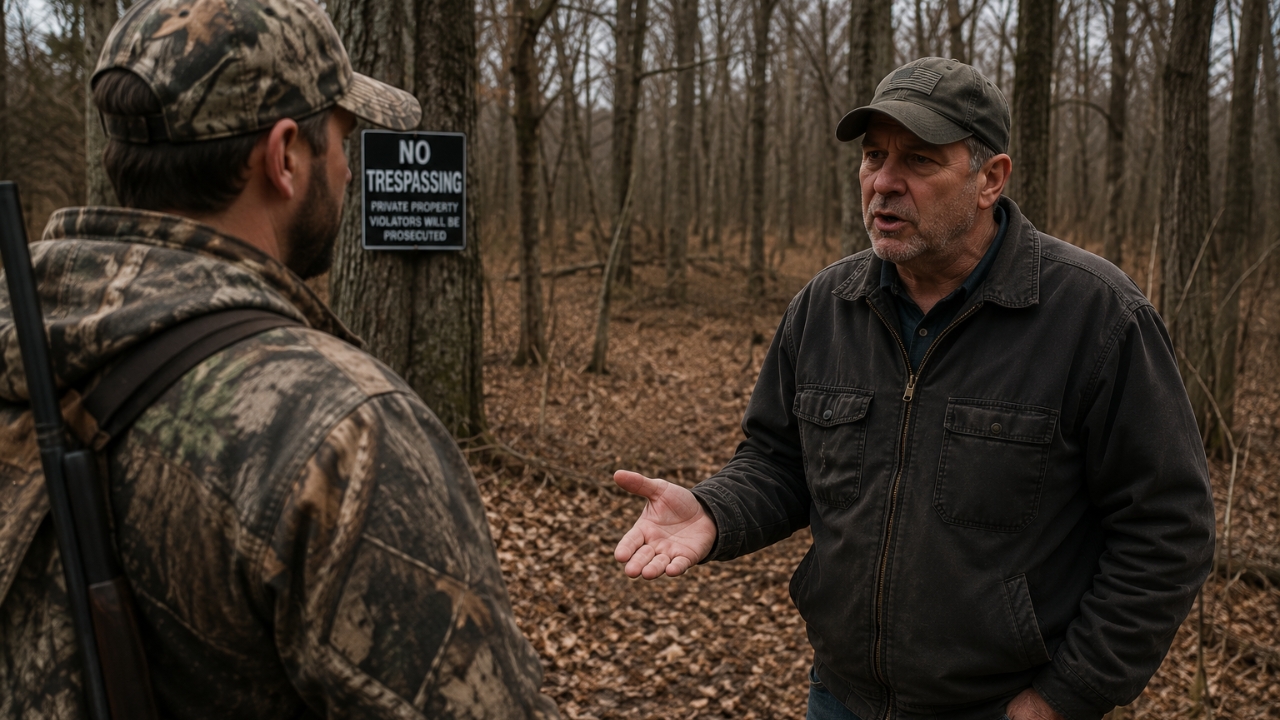
The hunter was already dealing with the kind of thing every private-land hunter hates: someone else showing up where he did not belong.
Private land is supposed to remove some of that uncertainty. You know who has permission. You know where the stands are. You know where people park, walk in, and hunt. At least, that is how it is supposed to work.
Then a stranger walked in.
The story came up in a Reddit thread where hunters were talking about the things that bother them most in the woods. One commenter described a situation where a man walked onto private land and claimed he had permission to be there.
But not from the landowner.
He claimed he had permission from the owner’s son-in-law.
That is one of those excuses that instantly makes everything messier. Maybe it is true. Maybe the son-in-law really did tell him he could hunt there. Maybe the landowner forgot to mention it. Maybe there was a family arrangement nobody explained. But maybe it is also the kind of convenient line a trespasser uses when he gets caught and needs to sound connected to someone.
Either way, the hunter standing there has a problem.
You cannot always tell in the moment who is lying and who is caught in a bad communication chain. The guy may be a straight-up trespasser. He may be a friend-of-a-friend who got sloppy permission. He may have hunted there years ago and assumed the old deal still held. Or he may be leaning on a relative’s name because he knows it buys him a few minutes.
That is why private land access needs to be clean.
If the owner allows one person to hunt, but a relative lets another buddy hunt, and nobody tells the person already using the property, now you have armed people crossing paths in the woods without a plan. That is not only annoying. It is unsafe.
The hunter in the thread clearly hated that kind of situation, and it is easy to see why. When someone walks onto private hunting land and says, “I have permission,” the whole burden suddenly shifts to the person who belongs there to sort it out. He has to decide whether to confront, call the owner, call a game warden, let the guy pass, or shut the whole thing down.
And none of those choices feel great in the middle of a hunt.
If he lets the man keep going and the guy is lying, now a trespasser has learned that saying the right name works. If he pushes too hard and the guy truly has permission, now he looks like the jerk who tried to run off another legal hunter. If he calls the owner, the hunt is probably over, but at least the truth starts coming out.
That is usually the right move.
The line about the son-in-law is what makes the story feel so believable. Access drama rarely comes in a clean package. It is almost never “I broke in and I know I am wrong.” It is usually somebody saying they talked to a cousin, a neighbor, a brother-in-law, the old owner, the leaseholder, or “a guy who knows the family.” By the time everyone is done explaining, nobody is sure who gave permission, when it was given, or if that person even had the right to give it.
Meanwhile, there are guns or bows in the woods.
That is the part that matters more than the bruised egos. Unknown hunters on private land create real safety issues. The hunter who has permission may think he is alone and take a route he would avoid if he knew someone else was sitting nearby. The unexpected guy may set up with a shooting lane pointed toward a stand he does not know exists. Both may walk out at dark, tired and jumpy, and meet each other on a trail.
All because somebody did not make permission clear.
The stranger may have thought the son-in-law’s word was enough. But if the actual landowner had not approved it or had not told the people already hunting, that is not good enough. Hunting permission is not the same as borrowing a wrench. It needs to be specific: where, when, who, what weapon, and whether anyone else will be there.
Without that, the woods turn into a mess of assumptions.
The hunter’s frustration made sense. He was not only mad that someone crossed onto private land. He was mad that the excuse was just plausible enough to complicate everything. A plain trespasser is easy to understand. A guy claiming permission through the owner’s son-in-law is harder, because now the problem might be the stranger, the relative, the landowner’s communication, or all of it at once.
That is why so many hunters eventually insist on written permission and clear guest rules. If you have permission, carry proof. If you want to bring someone, ask first. If a family member wants to let someone hunt, make sure the landowner and other hunters know. Otherwise, someone is going to end up standing in the woods trying to untangle a family access deal with a stranger holding a gun.
And that is nobody’s idea of a good hunt.
Commenters in the thread were quick to lump this kind of thing in with the broader trespassing problem, but several also understood that family permission can get messy.
A lot of hunters said the landowner should be the final word. Not the son-in-law. Not a cousin. Not a neighbor. Not someone who used to hunt there. If the owner did not personally approve the hunter or clearly delegate permission to someone else, the person should not be there.
Others said the best fix is written permission. A text message from the landowner, a signed note, or a shared group message can save a lot of headaches. If someone walks up and claims permission, there should be a quick way to confirm it without turning the woods into a courtroom.
Some commenters pointed out that communication matters even when permission is valid. If more than one person is allowed to hunt a property, everyone needs to know. That can be as simple as a group text saying who will be there and where they plan to sit. It may feel like overkill until two people end up hunting the same field without knowing about each other.
Others were less forgiving. They said “the owner’s son-in-law said I could” sounds exactly like the kind of excuse people use when they get caught. Maybe it is true, but it should not be accepted at face value when the person is already on private hunting land.
The practical advice was to call the landowner immediately and let him handle it. If the person has permission, the owner can clear it up. If he does not, the owner can tell him to leave or involve the game warden.
For the hunter, the frustration came from the uncertainty. Private land is supposed to mean fewer surprises. But when permission starts passing through relatives and friends without clear rules, even private ground can feel like public land with extra drama.