Photo credit: The Avid Outdoorsman
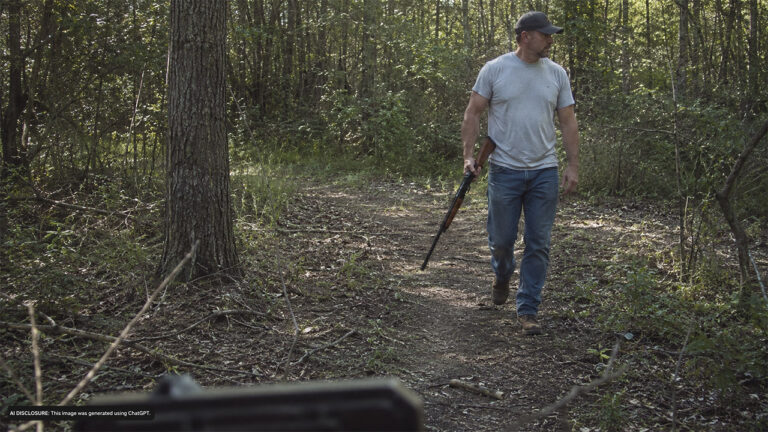
The hunter thought he was doing everything right.
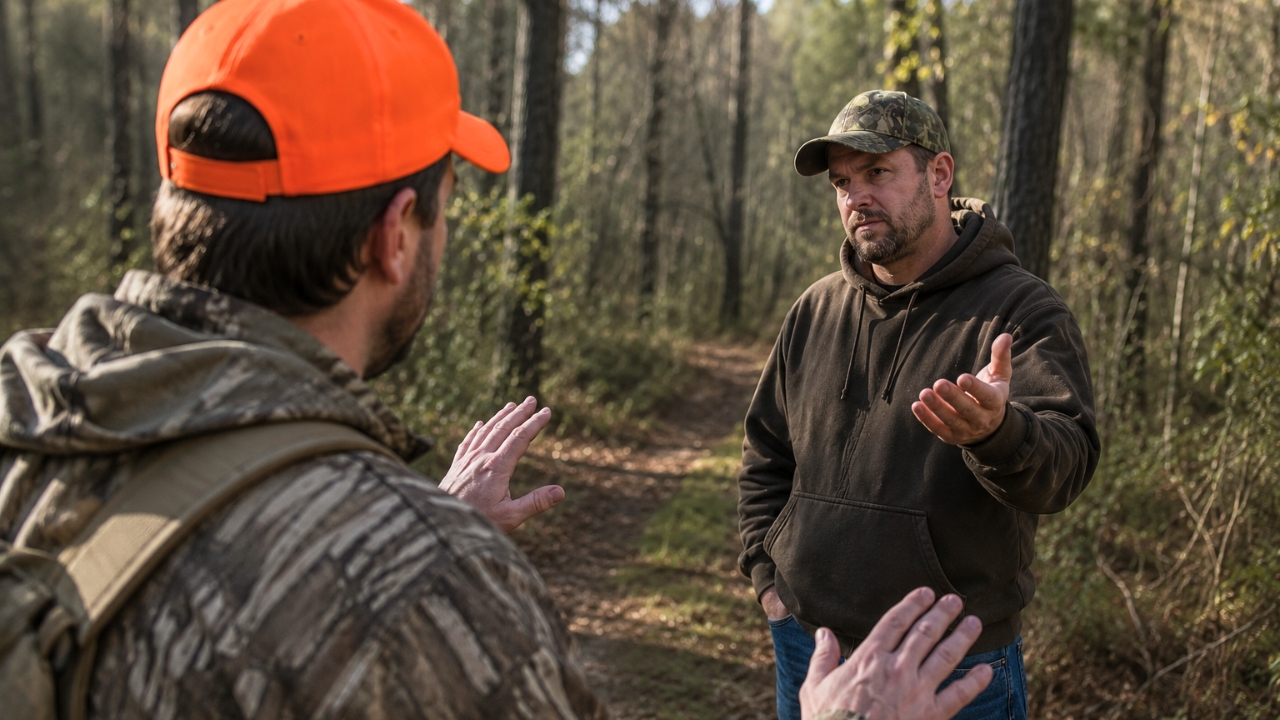
He had permission to be on the property. He was hunting where he believed he was allowed to hunt. He was not sneaking across a fence, slipping onto someone else’s lease, or playing games with a boundary line.
Then another man pointed a gun at him.
The situation came up in a Reddit thread where a hunting attorney was answering legal questions from hunters. One commenter brought up a situation that sounds exactly like the kind of thing nobody wants to deal with in the woods: another hunter or landowner pointing a firearm at him while he was on land he had permission to hunt.
That is not a small misunderstanding.
There are plenty of ways to handle a property dispute. You can call the landowner. You can ask for proof of permission. You can step back, take photos, call a game warden, or wait at the truck for law enforcement. But pointing a gun at someone is a massive escalation, especially when the person on the receiving end may also be armed because he is hunting.
That is how hunting conflicts go from tense to deadly.
The hunter’s question was not framed like some internet tough-guy rant. He wanted to know what his rights were. That tells you he understood how serious the moment was. When someone points a firearm at you, your first reaction might be anger or fear, but the next question is usually, “What am I legally allowed to do now?”
That is a hard question to answer in the middle of the woods.
A hunter can be completely right about having permission and still be in a dangerous spot if the person confronting him does not believe it. Maybe the other man thought he owned the land. Maybe he thought the hunter was trespassing. Maybe there was a miscommunication between relatives, leaseholders, or neighbors. Maybe the permission came from one person while another person on the property had no idea.
Those things happen. Rural land access can get messy fast. One family member says yes. Another says no. A lease overlaps with casual permission. A neighbor thinks a road is private. Somebody believes the fence is the line, while the survey says otherwise.
But none of that makes it okay to muzzle another person.
That is where the story hits the nerve. Hunters spend a lot of time talking about safety rules because those rules are supposed to hold even when people are annoyed. Treat every gun like it is loaded. Do not point it at anything you are not willing to destroy. Keep your finger off the trigger until you are ready to shoot. Know your target and what is beyond it.
Pointing a gun at another hunter during an argument shreds all of that.
It also creates a problem for the person being threatened. If he reaches for his own firearm, the whole thing can turn into a standoff. If he yells, the other man may get more worked up. If he walks away, he may be turning his back on someone who already pointed a gun at him. If he stays, he is stuck trying to talk sense into a person who has already crossed a line most responsible gun owners never cross.
That is why asking an attorney makes sense. The law can be different depending on the state, the facts, the property, and exactly what happened. Was the gun raised intentionally? Was it pointed directly at him? Was there a verbal threat? Did the man block him from leaving? Was the hunter truly there with valid permission? Did he call police or a game warden afterward?
Every detail matters.
But from a common-sense hunting standpoint, the lesson is simpler: if you think someone is trespassing, do not walk up and point a gun at him. Get a description. Get a plate number if there is a vehicle. Keep distance. Call the game warden or sheriff. If you feel in danger, get out of there. A deer, a property dispute, or a bad access arrangement is not worth turning into a gunfight.
The hunter’s situation also shows why written permission matters. A handshake is better than nothing, but when another person challenges you, a text, signed note, lease copy, or direct landowner contact can cool things down faster. It will not fix every hothead in the woods, but it gives you something more solid than “he said I could.”
Even then, a piece of paper does not stop a person who is already angry and armed.
That is probably why the Reddit thread mattered to so many hunters. It was not just a legal question. It was the kind of scenario every responsible hunter hopes he never faces. You can know the rules. You can have permission. You can be calm. And still, someone else can make one reckless decision that forces you to think about survival, self-defense, and what happens after the game warden arrives.
For the hunter asking the question, the moment was serious enough that he wanted legal clarity. And honestly, that was probably the right instinct. When a gun gets pointed at you in the field, the hunt is over. The only thing left is getting out safely and making sure the person who did it does not get the chance to do it again.
What Commenters Said
Because the post was part of an attorney Q&A, the discussion leaned more practical than emotional.
The advice circled around one major point: do not rely on internet bravado when guns and property law are involved. A few commenters treated the situation like the answer should be obvious, but the attorney-style responses made it clear that facts matter. State law matters. The exact wording of threats matters. Whether the hunter was legally allowed to be there matters.
Still, most people understood that pointing a firearm at someone is not normal conflict resolution. Several commenters said that even if a hunter is trespassing, the answer is not to threaten him with a gun unless there is an immediate safety threat. Trespassing can be reported. A gun threat can become a criminal matter of its own.
Some hunters said this is why they avoid casual or unclear permission. If they do not have the landowner’s name, number, and clear boundaries, they do not feel comfortable hunting it. Others said they carry written permission or keep texts saved on their phone for exactly this reason. If someone confronts them, they want to be able to say, “Here is who gave me permission. Call him.”
A few people focused on de-escalation. If somebody points a gun at you, they said, your first job is not to win the argument. It is to get home. Speak calmly if you can. Keep your hands visible. Do not make sudden moves. Back away when possible. Call law enforcement once you are safe.
Other commenters were more direct: report it. A person who points a gun at another hunter during a dispute is a danger to everyone using that land. If he did it once, he may do it again to someone else.
There was also a broader warning for landowners and leaseholders. If multiple people may be using the same property, everyone needs to know who has access. A lot of these confrontations start because one person grants permission and another person does not know about it. That does not excuse pointing a gun, but it does show how messy land access can get when nobody communicates clearly.
The strongest takeaway from the thread was that property disputes and firearms should never mix casually. If someone is on land where he should not be, call the people whose job it is to handle it. If someone points a gun at you, get safe and report it. Do not turn the woods into a courtroom, and definitely do not turn it into a standoff.