Photo credit: MyImages – Micha/Shutterstock.com
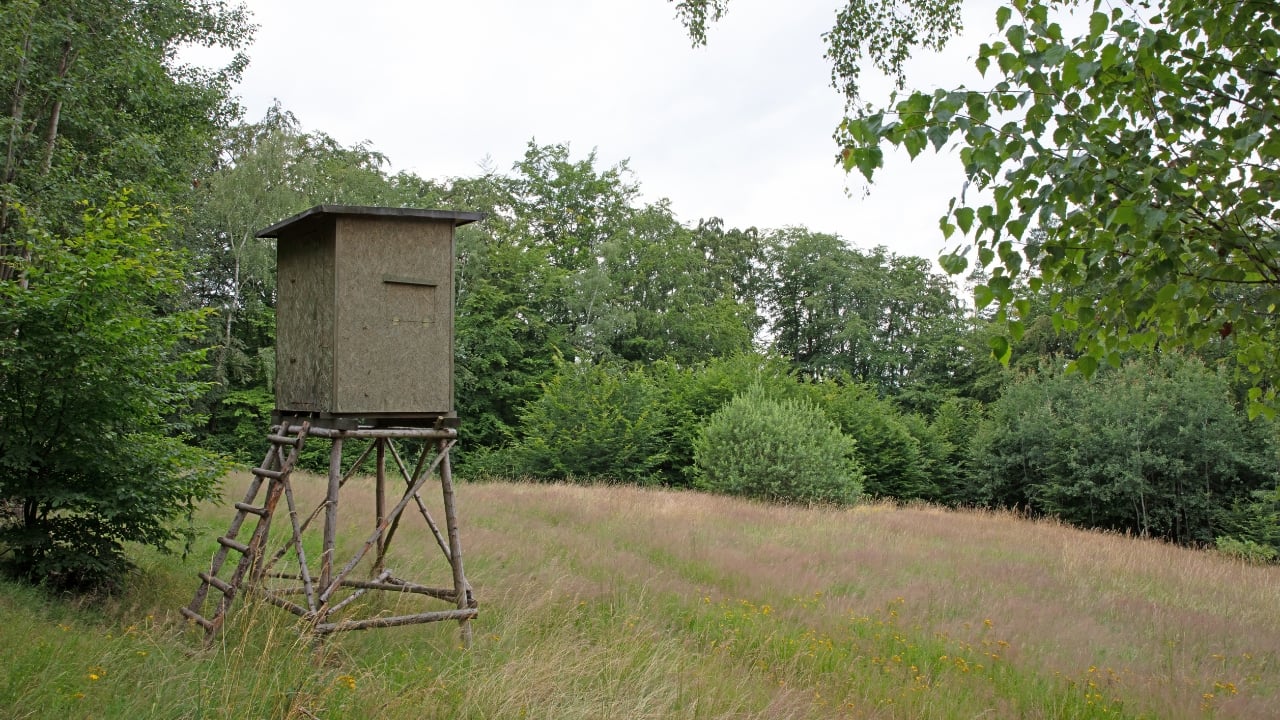
A hunter on Reddit said he could live with a neighbor putting a stand close to the property line if it was set up to hunt inward on that person’s own land. What he could not ignore was what he found in this case. In the post, he said the neighbor had picked a tree right on the line for the stand, which already felt a little offensive to him, but the bigger issue was the direction. According to him, the stand was set so the hunter would be looking and shooting over his property, not back into their own. That was the part he said he had a real problem with.
The post was short, but it said enough to make the situation easy to picture. He was not describing a vague suspicion or a possible misunderstanding. He was looking at a stand that, in his view, was deliberately oriented toward his side of the line. He even wrote that, in good faith, a stand like that should be set back at least a shot’s distance from the border so there is no question about where someone plans to shoot. The fact that this one sat right on the line and then faced into his side made it feel like the good-faith part had already been skipped.
That single detail drove almost the entire comment section. One of the first replies came from someone who said they had dealt with basically the same thing, with neighbors getting as close to the line as possible. That commenter said it might not be illegal everywhere, but called it terrible etiquette. Another person drew the same line the original poster did and said facing into your own property is one thing, but looking over your neighbor’s land is a different story entirely. In other words, the thread was not really arguing about whether a stand can ever be near a property line. It was arguing about what the stand’s placement says when the intended shot direction is clearly wrong.
A few commenters pointed out that edge setups are sometimes unavoidable, especially on small pieces of land, ag ground, or narrow travel corridors. One hunter said he has a small tract and has put a stand on the border before because the only usable trees were there, but he emphasized that his stand faces into his own property. Another said the same kind of setup happens on agricultural land all the time, where borders and field edges are often the only practical places to hunt. Those replies did not really defend what the original poster was describing. They mostly reinforced the distinction: being near a line is not automatically the issue; setting up to hunt over someone else’s land is.
The thread then shifted into what to do about it. Some people said to post the property line more aggressively so the message is impossible to miss. One person suggested a direct conversation with the neighbor, saying it could go a long way if handled calmly. Another commenter had a more creative idea and said to ask whether it would be okay if the original poster hunted the neighbor’s property too, just to make the point without coming in hot. That same commenter said he had expanded his own hunting access by being civil with neighbors instead of making everything a boundary fight. A lot of people liked that answer because it treated the problem as something that might still be fixed by talking before it hardened into a feud.
Not everybody thought politeness would solve it. One commenter said that if someone is brazen enough to put a stand right on the fence line facing into your property, a conversation may not get you anywhere. That person described dealing with leased hunters on a neighboring farm who had done something similar, and said they responded by flagging the boundary heavily and setting up a nearby stand of their own. Another commenter suggested putting an old blind where the neighbor would expect to shoot, calling it a nonconfrontational way of signaling that the line had been noticed and that the setup was not welcome.
There was also a legal undercurrent running through the thread. One commenter said sending bullets across property lines is illegal in most places and is generally treated like trespass. Others brought up state-specific distance rules, with one saying his jurisdiction requires hunters to stay 150 yards off a property line without consent, while another said Illinois requires hunters to be 50 yards away for bow and 200 for shotgun without permission. Those comments were not universal legal advice, but they showed why the original poster felt uneasy. Even if the stand itself did not break a rule where he lived, a stand aimed into his side raised the possibility of shots, wounded deer, and retrieval fights crossing the line afterward.
By the end, the story was less about one tree stand and more about what the stand signaled. To the original poster, it was not just a bad-looking setup. It was a neighbor choosing the one orientation that made it feel like his property had become part of somebody else’s hunting plan. The replies mostly agreed on that much, even when they disagreed about the best response. A stand on the line can sometimes be explained. A stand on the line aimed over the neighbor’s ground is a whole different kind of message.