Photo credit: Unsplash
The hunter thought he understood the deal.
It was public land. Not a lease. Not a private farm. Not somebody’s family acreage that had been passed down for three generations. Public land.
That means nobody owns the spot just because they got there first, hunted it last year, hung a stand nearby, or decided a certain patch of woods was “theirs.” You can have favorite places. You can have patterns. You can know a ridge better than most people. But on public land, the word “mine” only stretches so far.
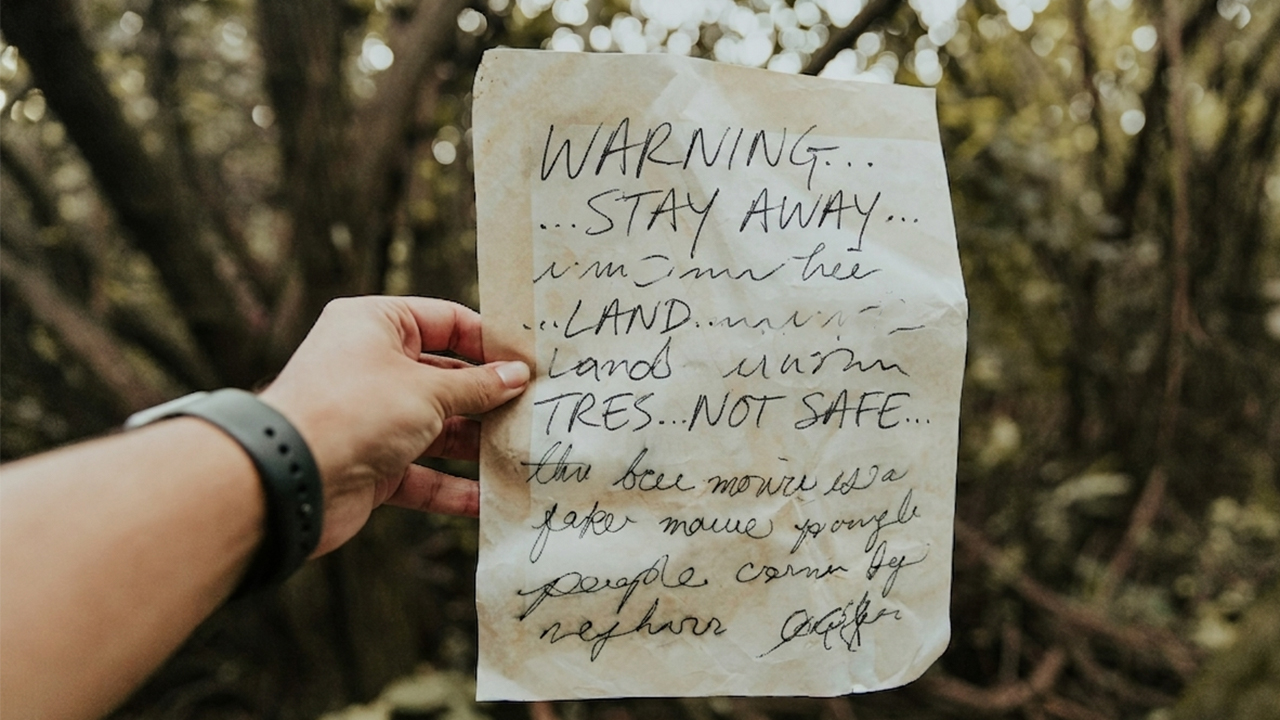
In a Reddit post, the hunter said he found a note telling him to stay away from a public-land stand. The message was pretty clear: someone else believed that area belonged to them, at least during hunting season.
That is the kind of thing that makes public-land hunters roll their eyes and clench their jaw at the same time.
A note by itself is annoying enough. It carries that little bit of entitlement that drives people nuts. Instead of accepting that public ground is shared, somebody decided to leave a warning like they had deeded rights to a tree. The hunter’s point was simple: public land is not private land, and it is not your spot.
But the situation apparently did not stop with the note.
The hunter described hearing shots later that seemed like they were being fired out of spite. That is where the whole thing shifted from “somebody is being childish” to “this feels a little sketchy.” Because when a person is already angry enough to leave a territorial note on public land, hearing shots that feel intentionally disruptive changes the mood fast.
Maybe the shots were legal. Maybe they were at game. Maybe they were just coincidental. Public land has gunfire. That is part of hunting season. But when the note comes first, the shots do not feel random anymore. They feel like part of the message.
And that is what makes these public-land disputes so miserable.
Most hunters can handle competition. Somebody else gets to a spot first, you move. A truck is already at the pull-off, you adjust. Someone walks through your setup by mistake, you mutter under your breath and salvage what you can. That is public land. It is not always peaceful, but it is fair as long as everyone remembers they are sharing it.
The problem starts when one person decides shared land belongs to him.
A stand left on public land can create that mindset. The person who put it there starts thinking of the whole area as his setup. Maybe he scouted it. Maybe he trimmed lanes where legal. Maybe he has trail-camera photos nearby. Maybe he sat there every weekend in November. But none of that turns public property into a private lease.
If the rules allow stands to remain, that still does not give the stand owner control over the woods around it. Other hunters can walk through. Other hunters can sit nearby if they are following the law. Other hunters can use the same general area. It may be poor etiquette to crowd someone on purpose, but leaving a note like a warning sign does not change the access rules.
The hunter’s frustration came from that exact entitlement. He was not saying he wanted to ruin another person’s hunt. He was saying nobody gets to claim public land with a note and attitude.
The shots made it feel worse because gunfire carries a threat even when it is not intended as one. If someone fires just to spook deer, ruin another hunter’s sit, or make a point, that is already low behavior. If the shots are in an unsafe direction or close enough to make another hunter wonder about intent, it crosses into something more serious.
That is where public-land drama becomes more than annoying.
A hunter should not have to wonder whether another person is shooting legally or trying to intimidate him. He should not have to sit in the woods replaying a note in his head every time a shot cracks nearby. Public land already requires trust in strangers. Territorial behavior burns through that trust fast.
The saddest part is that none of this had to happen. If the person who left the note had simply accepted the reality of shared ground, everybody could have hunted legally and moved on. Maybe they would have crossed paths. Maybe one would have picked another ridge. Maybe they would have had a short conversation and worked out where each planned to sit.
Instead, it became a warning note and bad blood.
That is why so many hunters say public land brings out both the best and worst in people. You meet generous folks who share information, help drag deer, and give space without being asked. You also meet people who think a tree stand is a land deed and a note is enough to run strangers off.
This hunter was not having it.
For him, the note was the line. Public land is public land. You can hunt it hard, love a spot, and hope nobody beats you there. But you do not get to post your own imaginary claim and expect everyone else to obey it.
Commenters mostly backed the idea that public land does not belong to whoever leaves the angriest note.
Several people said they understood being frustrated when someone sits close to a stand, but that frustration does not create ownership. If a hunter wants exclusive access, he needs private land or a lease. Public ground means other people can use it too, even if that makes the hunt harder.
Others said leaving a note was a bad look by itself. A polite note asking someone to be mindful of a stand is one thing. A note telling someone to stay away from public land is another. Commenters saw that as entitlement, not etiquette.
A few people focused on the shots and said the hunter should be careful. If someone seems to be firing out of spite or trying to intimidate another hunter, that can become a safety issue. Several suggested documenting the note, the location, and any threatening behavior, then contacting a game warden if things escalated.
Some commenters also warned that public-land conflicts are not worth a face-to-face fight in the woods. If someone is already acting territorial, arguing under the trees during gun season can get ugly fast. It is better to keep distance, gather proof, and involve authorities if needed.
There were also hunters who said the best move is sometimes just to walk farther and find another setup, not because the note writer is right, but because a bad neighbor in the woods can ruin the day even if you win the argument. That answer feels unfair, but plenty of public-land hunters understood the logic.
The main point was simple: favorite spots are not property rights. On public land, nobody owns a stand area just because they got attached to it. And if a person starts using notes or gunfire to push others away, he is the one making public land worse for everyone.