
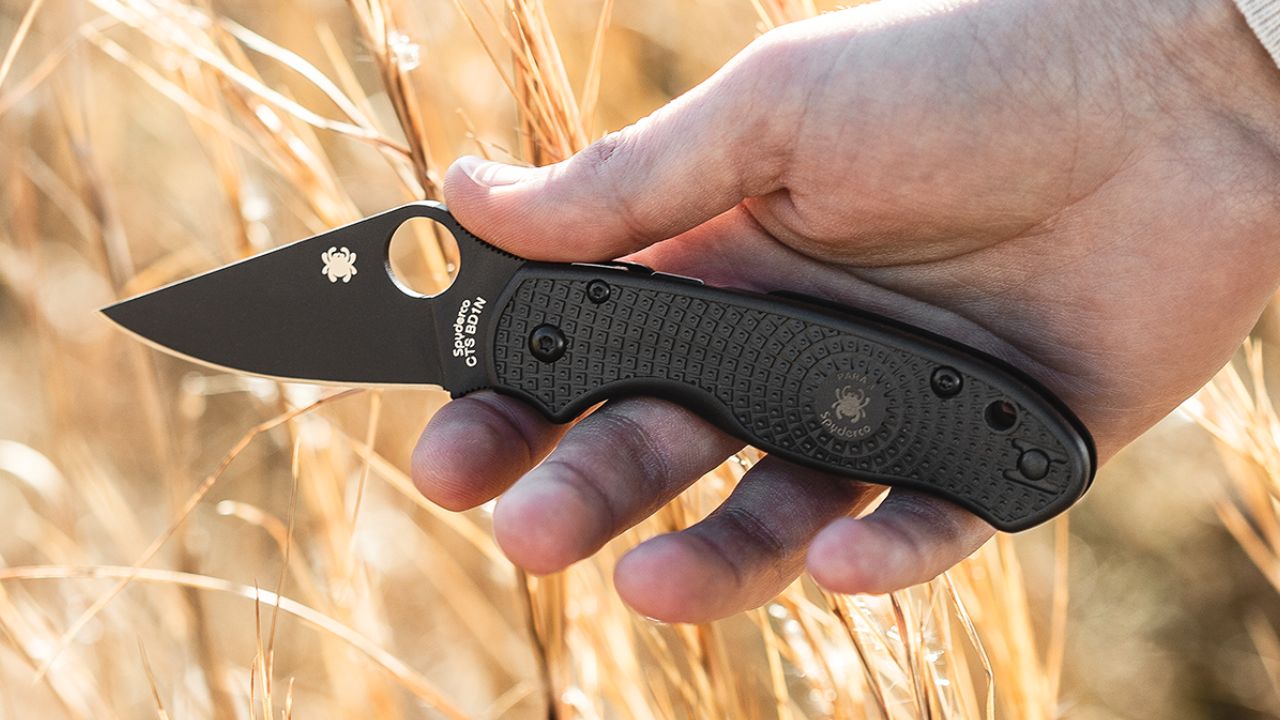
Photo credit: Knife Center
Knife politics is moving quickly, and by 2026 you are likely to feel the impact every time you clip a folder into your pocket or check a bag at the airport. Knife Rights has spent more than a decade turning scattered reforms into a coordinated national campaign, and the group is now concentrating its firepower on a handful of specific legal changes. If you carry a blade for work, self‑defense, or the sheer satisfaction of good steel, understanding those priorities will tell you where knife laws are loosening, where they are hardening, and how your own rights may shift next.
The new baseline: how Knife Rights reshaped the map
You are not starting from a blank slate in 2026, you are stepping into a landscape that Knife Rights has already tilted. The organization reports that its advocacy has produced a long list of statutory changes, with 53 bills repealing knife bans in 32 states and over 200 cities and towns since 2010. That track record is not abstract, it is the reason you can now legally carry knives in places that once treated a pocket clip as probable cause, and it underpins the group’s confidence as it pushes into more controversial territory like automatic knives and federal preemption.
The group’s own year‑end review framed this as a long campaign rather than a string of isolated wins, noting that by late 2024 Knife Rights’ efforts had resulted in 49 bills enacted repealing knife bans in 31 states and over 200 cities and towns. The updated figure of 53 bills in 32 states, repeated on the organization’s homepage, shows that the pace has not slowed and that the group sees itself as building a “Sharper Future” for all Americans rather than defending a static status quo. That history is the foundation for the five trends now dominating its 2026 agenda.
Trend 1: Turning automatic knives into ordinary tools
The most visible front in 2026 is the push to normalize automatic knives, treating them as everyday tools instead of contraband. Knife Rights has made automatic and “switchblade” bans a priority, arguing in litigation that Automatically opening (“switchblade”) knives and other knife designs and opening mechanisms are neither “unusual,” nor outside constitutional protection. That legal stance is paired with a legislative strategy that has already helped roll back statewide bans, especially in jurisdictions that once treated any button‑activated blade as inherently criminal.
The recent repeal of a statewide prohibition in the Mid‑Atlantic illustrates how this trend is playing out. In Delaware, lawmakers advanced a package that Knife Rights described as Delaware Switchblade Ban Repeal Bill Passed Senate, and then celebrated when Delaware Switchblade Ban Repeal & Knife Law Reform Signed became law. Trade coverage noted that this change made Delaware the twenty‑second state to legalize automatic knives and that This leaves only three states where civilian possession of automatic knives remains banned: New Mexico, Minnesota and one more jurisdiction, while California’s partial ban is still being litigated. For you as a carrier, that means automatic knives are rapidly shifting from fringe to mainstream, with Knife Rights intent on finishing the job in the last holdout states.
Trend 2: Dismantling the Federal Switchblade Act
Even as state bans fall, a federal relic still shapes what you can buy and ship, and Knife Rights has made dismantling it one of its most aggressive 2026 priorities. The group has returned to court to attack the statute that restricts interstate trade in automatic knives, arguing that the law is out of step with both modern knife technology and current constitutional doctrine. In its latest complaint, Knife Rights stresses that Originally enacted in 1958, the Act restricts the introduction into interstate commerce of common automatically opening knives across state lines and into U.S. ( the United States ) territories. For you, that restriction can turn a perfectly legal knife in your home state into a legal risk the moment it crosses a border in the mail.
Industry allies are trying to solve the same problem from another angle, and Knife Rights is watching that track closely. The American Knife & Tool Institute has rallied support for federal legislation that would lift the commerce barrier, describing American Knife & Tool Institute’s Legislative Efforts Federal as focused on a Freedom of Commerce Act that would repeal the relevant section of federal code. The proposal is explicit that This legislation will repeal the Federal Switchblade Act of 1958 and allow consumers to purchase any automatic knife that is legal in their state. Knife Rights’ own litigation and lobbying are aligned with that goal, and if either path succeeds, your ability to order an automatic knife online and have it shipped legally would expand overnight.
Trend 3: Locking in state preemption so local rules cannot trap you
Even if your state legislature modernizes its knife code, a patchwork of city ordinances can still turn a routine commute into a legal minefield, which is why Knife Rights is pushing hard for statewide preemption. The organization’s white paper on Knife Law Preemption explains that these statutes repeal and prevent local ordinances more restrictive than state law, which often serve mainly to confuse or entrap law‑abiding carriers. The same document includes Model Legislation with a detailed Title and enacting clause that state lawmakers can drop directly into bills, a sign that Knife Rights is not just lobbying but also drafting the language it wants to see enacted.
Recent state‑level fights show how this strategy plays out in practice. In West Virginia, Knife Rights highlighted that a West Virginia: Knife Rights supported Second Amendment Business Protection Act strengthened protections for firearms and knife retailers, reinforcing the idea that state law should shield lawful commerce from local hostility. Elsewhere, the group has warned that, Despite Knife Rights groundbreaking efforts to enact preemption, the majority of states still allow cities and counties to adopt knife rules that are more restrictive than state law. For you, that means preemption is not an abstract legal doctrine, it is the difference between one clear statewide standard and a maze of local traps.
Trend 4: Cleaning up state codes, from Delaware to Texas
Beyond headline fights over automatics, Knife Rights is spending 2026 on quieter but consequential clean‑up work in state statutes. The Delaware reforms are a case study, because the same package that legalized switchblades also simplified other parts of the code. Knife Rights described the final measure as Delaware Switchblade Ban Repeal & Knife Law Reform Passes, signaling that the goal was not just to lift one ban but to make the law more coherent for ordinary carriers. If you live or work in Delaware, that means fewer technical traps and a clearer sense of what you can legally carry in your pocket or toolbox.
In the South, Knife Rights is already mapping its next steps after earlier wins. Coverage of a recent legislative session noted that Looking ahead, Knife Rights is signaling that it will keep pressing Texas lawmakers to finish what it started, closing remaining gaps in the code. That matters because Texas is often treated as a bellwether for permissive weapons laws, and incremental reforms there can ripple outward as other legislatures borrow language or political cover. The same pattern is visible in other states where Knife Rights has already helped repeal bans and is now returning to refine definitions, clarify carry locations, and align knife rules with broader self‑defense statutes.
Trend 5: Building federal travel protections for knife owners
Even if your home state is knife‑friendly, travel can turn routine carry into a legal hazard, which is why Knife Rights is pushing for national protections modeled on firearm transport laws. The group has championed a Knife Owners’ Protection Act, arguing that KOPA simply aims to protect knife owners in a similar manner as KOPA protects firearm owners, creating a safe harbor when you are passing through jurisdictions with stricter local rules. The organization is candid that, However, hard lessons from past litigation have convinced it that statutory safeguards are essential if carriers are to avoid arrest while traveling between two places where their knives are legal.
Practical travel guidance from the knife industry underscores why this matters. When you plan a trip, you are told that When researching local and state laws, you should focus on five areas that most knife laws regulate, including blade deployment, blade length, carry method, location restrictions, and bans on specific types of knives. Knife Rights wants federal law to smooth at least part of that complexity by ensuring that, if your knife is lawful at your origin and destination, you are not criminalized in between. For you, a robust Knife Owners’ Protection Act would mean fewer surprises at traffic stops, airports, and state lines.
Trend 6: Using model bills and apps to navigate a patchwork
Knife Rights is not relying solely on courtroom arguments or one‑off bills, it is trying to standardize reform and give you tools to survive the gaps that remain. The organization’s preemption white paper includes detailed Model Legislation that spells out a Title, enacting clause, and operative language that any state can adapt, a sign that the group wants to replicate successful statutes quickly rather than reinventing them in each capitol. At the same time, its broader mission statement emphasizes that Knife Rights is engaged in promoting legislation that eliminates irrational restrictions on knife possession and in the legal defense of knife owner civil rights, blending policy drafting with courtroom defense.
On the user side, the group has invested in digital tools so you can keep up with shifting rules in real time. Its LegalBlade app was recently updated, with the organization noting that Despite Knife Rights groundbreaking efforts to enact Knife Law Preemption nationwide, the majority of states do not cover knives, and many cities still have laws more restrictive than state law. For you, that means an app is not a luxury but a practical necessity, a way to check whether a spring‑assisted folder that is fine in Idaho might trigger a misdemeanor in a coastal city or whether a fixed blade on your belt is treated differently in Louisiana.
Trend 7: Aligning with broader Second Amendment and industry campaigns
Knife Rights has always framed its work as part of a wider Second Amendment and civil rights movement, and that alignment is becoming more explicit as it targets 2026. The organization’s homepage highlights that Knife Rights efforts have resulted in 53 bills repealing knife bans in 32 states and over 200 cities and towns since 2010, presenting those numbers as proof that knives deserve the same constitutional respect as firearms. A year‑end review reinforced that narrative by noting that, as of Dec, Knife Rights had already reached 49 bills and was still adding to that tally.
Industry groups are moving in parallel, often with overlapping goals. A policy explainer on Federal Legislative Efforts Given current conditions argues that legislative action is needed to give law‑abiding citizens clear access to the tools that the Constitution has always protected, language that dovetails with Knife Rights’ own rhetoric. Trade coverage of custom blades for a major firearms convention noted that the advocacy group has successfully led repeals of bans on so‑called switchblade or automatic knives in various states and has promoted preemption that would simplify tangles of conflicting local regulations. For you, that convergence means knife rights are increasingly discussed in the same breath as gun rights, which can amplify political support but also intensify opposition.
Trend 8: Watching the outliers, from California to Washington State
Even as the national trend tilts toward liberalization, a handful of states remain outliers, and Knife Rights is watching them closely as it plans its next moves. Trade reporting on the Delaware repeal emphasized that California’s partial ban on automatic knives is proceeding on appeal, a reminder that litigation there could either entrench or unravel one of the country’s most restrictive regimes. If you live in or travel through California, the outcome of that case will directly affect whether a small automatic in your pocket is treated as a tool or a crime.
Elsewhere, state codes remain surprisingly strict even as neighbors loosen up. A buyer’s guide for automatics points out that, while Pennsylvania decriminalized automatic knives, in Washington State it is illegal to own a switchblade at all. That is layered on top of other regional contrasts, such as the difference between relatively permissive rules in Idaho and tighter restrictions in Washington. Knife Rights sees these outliers as both a challenge and an opportunity, because each successful reform in a restrictive state sends a message that even long‑standing bans can be reversed.
Trend 9: What 2026 could look like for your daily carry
By 2026, the cumulative effect of these campaigns is likely to reshape how you think about everyday carry, especially if you move between states for work or travel. Knife Rights’ own metrics, from the early tally of 49 bills in 31 states to the current count of 53 bills in 32 states, suggest that more reforms are coming, not fewer. State‑level measures like North Carolina’s Bill H 439 in the 2025‑2026 Session, which amends weapons statutes effective on or after December 1, 2025, show that legislatures are still actively revisiting how knives fit into broader weapons codes. For you, that means the legal status of a favorite folder or automatic could change mid‑decade, for better or worse.
At the same time, federal debates over the Switchblade Act and travel protections will determine whether your rights stop at the state line or follow you across the country. Policy briefs on Federal Switc reform and Knife Rights’ own litigation against the Act will decide whether automatic knives are treated as ordinary commerce or kept in a special, restricted category. Meanwhile, the organization’s news feed, which recently featured a headline noting that Dec brought an Anti DOJ that Drops Coal in Knife Rights Stocking for Christmas, is a reminder that federal agencies remain a powerful counterweight. Navigating 2026 will require you to track those national fights, stay alert to state‑level reforms from Texas to California, and use tools like LegalBlade so your daily carry stays on the right side of a rapidly changing law.
Like The Avid Outdoorsman’s content? Be sure to follow us.
Here’s more from us:


