
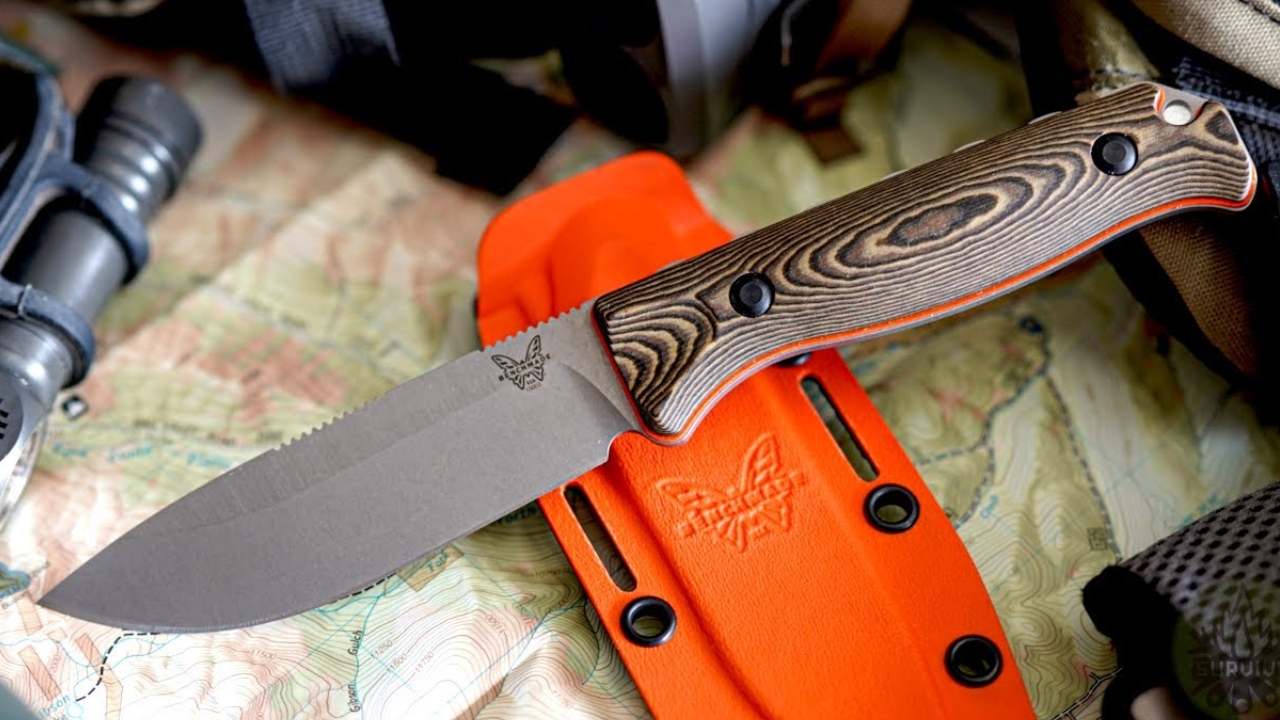
Photo credit: Survival Gear/YouTube
You should not have to stand at the tailgate on opening morning wondering if the knife on your belt is going to get you cited instead of helping you dress an animal. Knife law has shifted quickly in recent years, and the gap between what feels normal in hunting culture and what is actually legal has widened. The goal is simple: carry what you need in the field, without guessing, and without handing a game warden or sheriff an easy reason to turn a good day into a legal problem.
That means treating your hunting knife the same way you already treat your rifle or tags, as gear that comes with rules attached. Across the country, states are loosening some restrictions while tightening others, especially around blade length, automatic mechanisms, and where you can carry. If you understand the broad patterns and a few state specific traps, you can build a kit that works from the truck to the skinning shed and still stays on the right side of the law.
Why hunters are suddenly talking about knife laws
You are feeling the knife law conversation more intensely now because the legal landscape has been moving under your boots. Some states that once treated large fixed blades as suspicious now recognize that a stout hunting knife is a tool, not a weapon, while others still treat certain designs as “dangerous” regardless of how you use them. A national overview of knife laws by state notes that what you can carry is often limited, and that any automatic knife, described as spring loaded, is unlawful to carry in some jurisdictions, especially when concealed carry already has many restrictions.
At the same time, advocacy groups have pushed hard to roll back older bans that treated common pocket knives as contraband. Legislative tracking from one national organization shows that the new law is effective in at least one state that repealed a switchblade ban, and that change arrived alongside litigation in the Fifth Circuit Court of Appeals. For you as a hunter, the result is a patchwork: more freedom in some places, sharper penalties in others, and a growing expectation that you will know the difference before you clip a knife to your pocket or strap one to your pack.
Big picture: how states classify your hunting knife
When you slide a knife into your sheath, the law does not see “the knife I use to quarter elk,” it sees a category. Many statutes divide blades into ordinary folding knives, fixed blades, and a cluster of “dagger, dirk, stiletto” style weapons. In some outdoor regulations, a person is told that they shall not carry a dagger, dirk, stiletto, a double edged nonfolding stabbing instrument of any length, or any other dangerous weapon, even if it might be described as a hunting knife, on certain lands or in specific contexts, language that appears in guidance on knives in outdoor pursuits.
That distinction matters because a classic drop point hunting knife with a single edge is usually treated more leniently than a double edged blade that looks like a fighting knife. State level summaries explain that some jurisdictions are “knife friendly,” such as Arkansas, which allows open carry of most knives, including folding knives and fixed blades, while others, like Californ, are described as having more restrictions and allowing most knives only within tighter rules. You do not need to memorize every statute, but you do need to recognize when your blade crosses the line from “tool” to “prohibited design” in the eyes of the law.
Blade length: the quiet rule that trips up hunters
Even when the style of your knife is acceptable, blade length can quietly turn a legal carry into a violation. A detailed breakdown of knife laws in 2025 notes that most states limit everyday carry knives to a blade length of 3 inches to 4 inches, and that certain blade types may be prohibited without a permit. That range is shorter than many traditional hunting knives, which often run 4.5 inches to 6 inches, so a blade that feels normal on your belt in camp might be too long for legal concealed carry in town or at a gas station.
Some states spell out the rule in even more precise terms. Guidance on California knife law explains that the rule is simple: the blade of any legal automatic knife under 2 inches or folding knife that is exposed and locked into position can be openly carried, while longer automatic knives face tighter limits, especially when transported across state lines. For you, the practical takeaway is to know the exact length of your primary hunting blade and to decide whether it lives openly on your belt, stays in your pack until you are on private land, or is swapped for a shorter folder when you head into town.
Automatic, OTF, and “tactical” blades in a hunting pack
Modern hunting kits increasingly include automatic folders, assisted openers, and out the front designs that make one handed use easier when you are gripping antlers or holding a leg. The law, however, often treats those mechanisms differently from a simple slipjoint. A national ranking of knife laws by state points out that knives you can carry are, as a result, limited, and that any automatic knife, described as spring loaded, is unlawful to carry in some states, especially where concealed carry already has many restrictions.
Out the front designs add another layer. A legal table on OTF knife laws asks “Is your OTF legal in…?” and lists each State with separate columns for Possession and Concealed Carry, including entries where possession is illegal and concealed carry is illegal. That means the same automatic knife that is perfectly acceptable in your home state could be contraband the moment you cross a border. If you like the speed of an automatic for field dressing, treat it like a firearm with a special permit: research the rules, keep documentation handy, and be ready to leave it at home when the map turns against you.
State spotlights: Missouri, Texas, California and the Southwest
Some hunting destinations illustrate just how different the rules can be. In Missouri, a community discussion of local law notes that Missouri treats switchblades that violate the federal Switchblade Act as illegal, and that the maximum legal blade length for a concealed knife is capped, with certain knives restricted except where specific exceptions apply, details echoed in a Missouri focused thread. A separate overview of Missouri knife laws explains that Knife Carry Laws in Missouri treat open carry generously, stating that in Missouri it is generally legal to openly carry knives of any type, whether you prefer a large fixed blade or a folding design, which is why many hunters there simply keep their knives visible on the belt.
Head south and the picture shifts again. A breakdown of Texas knife laws describes Knife Carry Laws in Texas for Adults 18+, explaining that for the purposes of knife law in Texas there is a distinction between Open and Concealed Carry, and that adults 18 and older enjoy broad rights to carry “location restricted knives” in many settings but face limits in schools and certain public places. On the West’s coastal edge, the California guidance on open carry clarifies that if the blade of any legal automatic knife under 2 inches or folding knife is exposed and locked into position, it can be openly carried, but longer automatic knives and certain concealed configurations remain tightly controlled. Compare that to a more knife friendly climate in parts of the Southwest, where states like Arizona are widely known among hunters for permissive carry rules that still require you to pay attention in cities and on posted properties.
Travel days: crossing state lines with a hunting knife
Your season rarely stays inside one set of borders. You might leave home before dawn, cross two or three states, and roll into camp by evening, all with the same knife on your belt. Legal guidance for travelers stresses that, before embarking on your journey, you should thoroughly research the knife laws of each state you will be traversing through and the destination state to avoid legal repercussions, advice spelled out in a section that begins with “Apr” and “Before” in a guide to understanding interstate knife laws. That means checking not only where you plan to hunt, but also where you plan to buy gas, eat, or stay overnight.
Air travel adds another layer. A national overview of pocket knife rules explains that, apart from the Switchblade Act, the TSA regulates items allowed on board aircraft, including pocket knives, and notes that as of April 2021, pocket knives remain prohibited in carry on baggage even when state law would allow you to carry them on the street. If you are flying to a hunt, your knives belong in checked luggage, properly sheathed and secured, and you should be ready for the destination state to impose its own rules the moment you step off the plane.
Federal facilities, public land, and special zones
Even in a knife friendly state, certain places flip the rules. Federal buildings, some national parks, and specific wildlife refuges can treat your hunting knife as a prohibited weapon regardless of what state law says. Legal guidance on compliance with federal facilities explains that if your journey involves passing through federal facilities like national parks or similar areas, you must comply with federal laws to prevent violations, even when state statutes are more permissive. That can affect everything from the knife on your belt when you walk into a ranger station to the one in your pack when you cross a visitor center threshold.
On state and private lands, special hunting regulations can also narrow what you may carry. Outdoor guidance notes that a person shall not carry a dagger, dirk, stiletto, a double edged nonfolding stabbing instrument of any length, or any other dangerous weapon on certain lands, even if it might be described as a hunting knife, and that separate language addresses how knives are treated on land possessed by the person, details laid out in a section on knives in outdoor pursuits. For you, that means reading not only the game regulations about caliber and season dates, but also the fine print on what kind of blade is allowed in specific wildlife areas, parks, or timber company leases.
Who is barred from carrying, and how enforcement is changing
Knife law is not only about the object, it is also about the person holding it. A national summary of state knife laws explains that Prohibitions in many states apply to persons who have previously been convicted of a crime, and that There are also restrictions tied to age, schools, and other sensitive locations. If you have a prior felony or certain misdemeanor convictions, you may face tighter limits on what you can carry, even during lawful hunting, and the penalties for getting it wrong can be more severe than a simple equipment citation.
At the same time, advocacy groups have been steadily pushing to make knife codes more user friendly for law abiding owners. A legislative roundup notes that Legislative Updates June on the Front Page describe how Knife Rights and its fellow plaintiffs filed a Notice of Appeal in a high profile case, while a separate entry explains that the new law is effective immediately in one state that repealed a “Deadly Weapon” classification, with the change continued through litigation in the Fifth Circuit Court of Appeals. For hunters, that activism has already translated into fewer outright bans on ordinary folders, but it has not erased the need to read the law that applies to you personally.
Practical checklist: building a season ready, legal knife kit
Once you understand the moving parts, you can build a knife setup that works across most of your season without constant second guessing. Start by choosing a primary fixed blade that fits within the typical 3 inch to 4 inch range many states use for everyday carry, or be prepared to wear a longer blade openly on your belt when local law allows it, as suggested by the observation that most states limit EDC knives to that length and may prohibit certain types without a permit. Add a compact folder that is clearly within local limits for use in town, at the gas station, or in campgrounds where a big sheath knife might draw the wrong kind of attention.
Then think about how you travel. Guidance on interstate trips advises that during travel, you should securely store your knives in compliance with state laws, and that if you are transporting knives in a vehicle, you should ensure they are not easily accessible from the passenger compartment, instructions spelled out in a section beginning with “Apr” and “During” in the same interstate knife law guide. If you are flying, remember that TSA rules still treat pocket knives as prohibited in carry on bags, as explained in the overview of Pocket Knives and Air Travel, so your hunting blades belong in checked luggage. Finally, keep an eye on broader hunting policy debates, where examples like the discussion of lead ammunition and how politics, lobbying, and transition periods keep a poison alive, described under the heading “Secondly: Phased regulation. With the revision of the hunting ordinance in connection with the revised hunting law” in a Swiss focused analysis of phased regulation, show how gear rules can change gradually, with lengthy transition periods that still require you to adapt.
Like The Avid Outdoorsman’s content? Be sure to follow us.
Here’s more from us:


