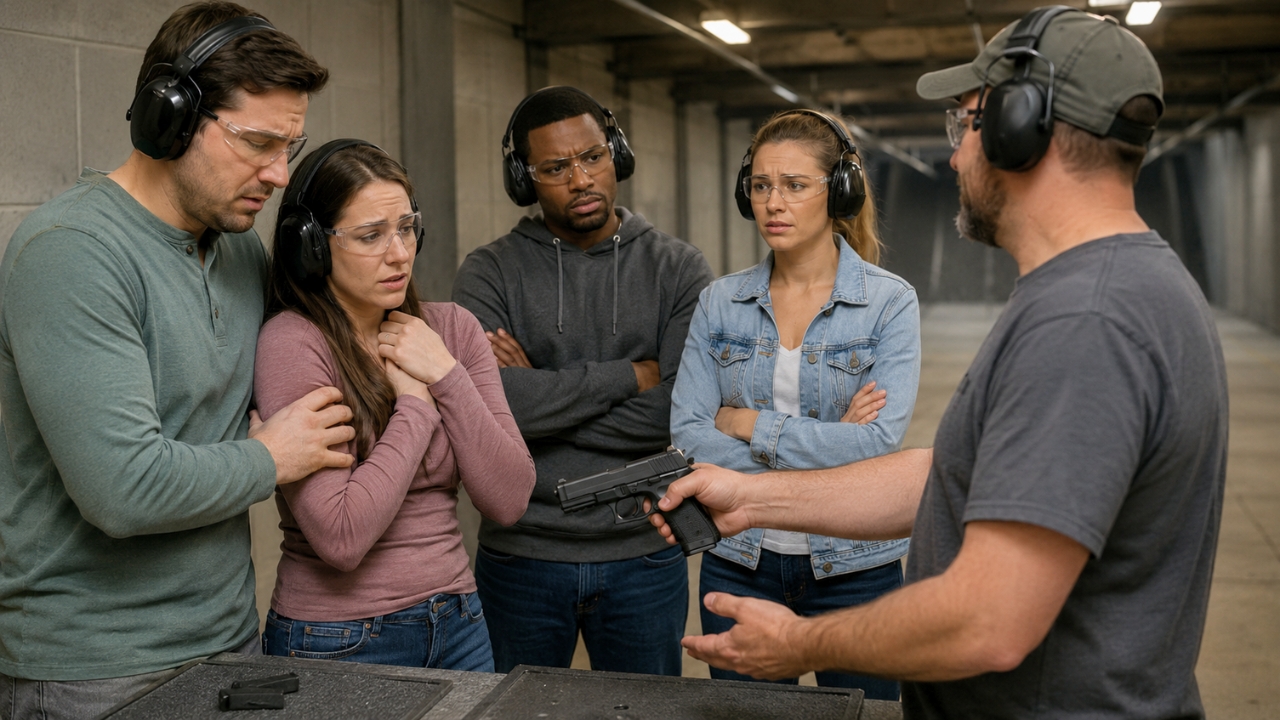
Photo credit: The Avid Outdoorsman
A first-time range visitor said he went shooting with a group of friends and left surprised by how little safety instruction they received before handling firearms.
The question came from a post on r/guns titled “What are safety precautions normally like at ranges in the US?”. The poster said he and a group of friends visited a range in the United States, and based on his description, the experience felt much less structured than he expected. He wanted to know whether that was normal or whether the range had been unusually casual.
That kind of question gets attention fast in gun communities because range safety is one of those areas where people have very little patience for sloppy habits. A new shooter may not know what to expect, but the range should. Any facility that rents guns, hosts beginners, or allows groups of inexperienced shooters has to take safety seriously from the first minute.
The poster seemed surprised that the process did not include more instruction. For someone unfamiliar with American ranges, that can feel strange. You might expect a detailed briefing, close supervision, or a step-by-step safety talk before anyone touches a firearm. Some ranges do exactly that. Others assume the customer knows what he is doing unless he says otherwise. That gap is where problems can start.
The post turned into a larger discussion about who is responsible for safety at a range: the business, the range officer, the person renting the gun, or the shooter holding it.
The real answer was uncomfortable but clear. Everyone is responsible, but the person holding the gun cannot outsource the basics.
First-Time Shooters Need More Than a Waiver
Most commercial ranges have some kind of paperwork before a customer shoots. There may be a waiver, a rules sheet, a safety video, or a quick verbal briefing. But paperwork alone does not make a new shooter safe.
That seemed to be the poster’s concern. He and his friends were not experienced enough to know what should happen next, and the range apparently did not give them the level of instruction he expected. That can leave beginners unsure about things that experienced shooters take for granted: how to keep the muzzle downrange, how to load and unload, what to do during a malfunction, how to ask for help, when to put a gun down, and what the cease-fire rules mean.
A range that rents guns to new shooters should make those things plain. A short safety talk can prevent a lot of bad moments. So can a range officer who is visibly present and willing to correct mistakes immediately.
But commenters also made clear that a shooter should never treat a range visit like a theme park ride where the staff handles all the risk. A firearm is not safe because someone at the counter said it was fine. It is safe because the person holding it follows the rules every single time.
That means the basics matter before the first magazine is loaded: treat every firearm as loaded, keep the muzzle in a safe direction, keep your finger off the trigger until ready to shoot, and know your target and what is beyond it.
Those rules are not advanced training. They are the entry fee.
Commenters Said Ranges Vary a Lot
One of the biggest themes in the thread was that range experiences can differ wildly.
Some ranges are strict. They have range officers watching the line, required safety videos, clear commands, and immediate corrections for unsafe handling. A new shooter may feel heavily monitored, but that is often a good thing. It means someone is paying attention.
Other ranges are looser. They may trust customers to know the rules, especially if the customer says they have shot before. Some may have staff behind the counter but not actively watching every lane. Outdoor ranges, private clubs, indoor rental ranges, and rural shooting facilities can all operate differently.
That range-to-range difference is what confused the poster. He was trying to figure out whether what he experienced was typical in the United States. Commenters generally explained that there is no single national experience. Laws, range policies, insurance requirements, staff culture, and local expectations all shape how strict a range feels.
But many users also made clear that “other ranges are loose too” is not a defense. If a first-time group feels underprepared, that is a sign they should ask for instruction or find a range with stronger supervision.
A good range should not make beginners feel like they have to guess. And a beginner should not feel embarrassed to say, “We are new. Can someone walk us through this?”
That sentence may be the safest thing a new shooter says all day.
The Group Setting Adds Risk
A group of first-time shooters can be fun, but it also creates extra safety challenges.
People get excited. They talk over each other. Someone films. Someone laughs. Someone turns around to show a friend something. One person loads while another reaches for a target. A new shooter may be focused on recoil, noise, or adrenaline and forget where the muzzle is pointed.
That is exactly why groups need structure. One person shooting at a time. Everyone else behind the line. No handling firearms while people are downrange. No turning with a gun. No finger on the trigger until sights are on target. No passing loaded firearms between people.
Those rules sound obvious until you put a nervous first-timer in a loud indoor lane with friends watching.
A range officer or instructor can keep that energy from turning careless. They can slow everyone down, correct grip and stance, and remind the group that safety matters more than getting a video or trying every gun on the rental wall.
Commenters were likely sensitive to that because most experienced shooters have seen bad group behavior at ranges. It does not always come from malice. Often it comes from inexperience mixed with excitement. But the bullet does not care whether the mistake was innocent.
A first-time group needs more supervision, not less.
New Shooters Should Ask Questions Before Touching the Gun
The thread also became a reminder that new shooters should not wait for staff to volunteer every piece of information.
If something is unclear, ask before handling the firearm. Ask how to load it. Ask how to unload it. Ask what to do if it jams. Ask where the safety is. Ask how to keep the action open. Ask what the range commands mean. Ask whether a staff member can watch the first few shots.
There is no shame in that. The embarrassing thing is pretending to know and then making a dangerous mistake.
A lot of gun owners respect new shooters who ask careful questions. It shows humility and seriousness. It also gives the range a chance to respond appropriately. If the staff seems annoyed by basic safety questions, that is a bad sign.
The poster’s concern was reasonable because beginners do not know what they do not know. But once a person realizes the instruction is thin, the safest move is to pause and ask for more. If the range refuses or brushes it off, leave and find another facility.
Shooting can be a great experience for new people, but only when the environment is controlled enough for them to learn safely.
The Business Still Has a Responsibility
Commenters may put responsibility on the shooter, but that does not let ranges off the hook.
A range that rents firearms to inexperienced people has to know the risks. It should have clear rules, staff willing to teach, and enough oversight to stop unsafe behavior before it gets dangerous. If a range makes money from beginners, it needs systems built for beginners.
That does not always mean a long class before every lane rental. But it should mean enough instruction that nobody is handed a gun without understanding the basics.
A range’s reputation depends on that. Responsible shooters will often avoid places where staff seem checked out, where unsafe behavior is ignored, or where first-timers are treated like they should already know everything. One careless customer can endanger everyone on the line.
Good ranges know that safety culture is not optional. It starts at check-in, continues at the counter, carries onto the firing line, and does not end until the guns are cleared and put away.
The poster’s experience raised a fair question because the safest ranges do not rely on luck and assumptions.
What Commenters Said
Commenters generally agreed that safety expectations vary by range, but they did not treat that as an excuse for weak instruction.
Many said first-time shooters should receive a clear safety briefing before handling firearms. They should know the basic rules, understand range commands, and have someone available to help with loading, unloading, and malfunctions. A group of beginners should not be left guessing.
Others emphasized personal responsibility. Even if a range is casual, the person holding the gun is responsible for muzzle direction, trigger discipline, and safe handling. If a shooter does not know how something works, he needs to stop and ask before continuing.
Several commenters likely pointed out that some ranges are much stricter than others. A loose experience at one facility does not mean every American range operates that way. Some are heavily supervised, while others assume more knowledge from customers.
The practical advice was to choose ranges carefully. New shooters should look for places with good reviews, visible range officers, beginner instruction, and staff who take questions seriously. If the range seems careless or dismissive about safety, leave.
For the first-time group, the visit raised a question every new shooter should care about. A range should never feel like people are figuring out gun safety as they go. The rules need to be clear before the first round is loaded, because once firearms are in hand, confusion is not a small problem anymore.