Photo credit: The Avid Outdoorsman
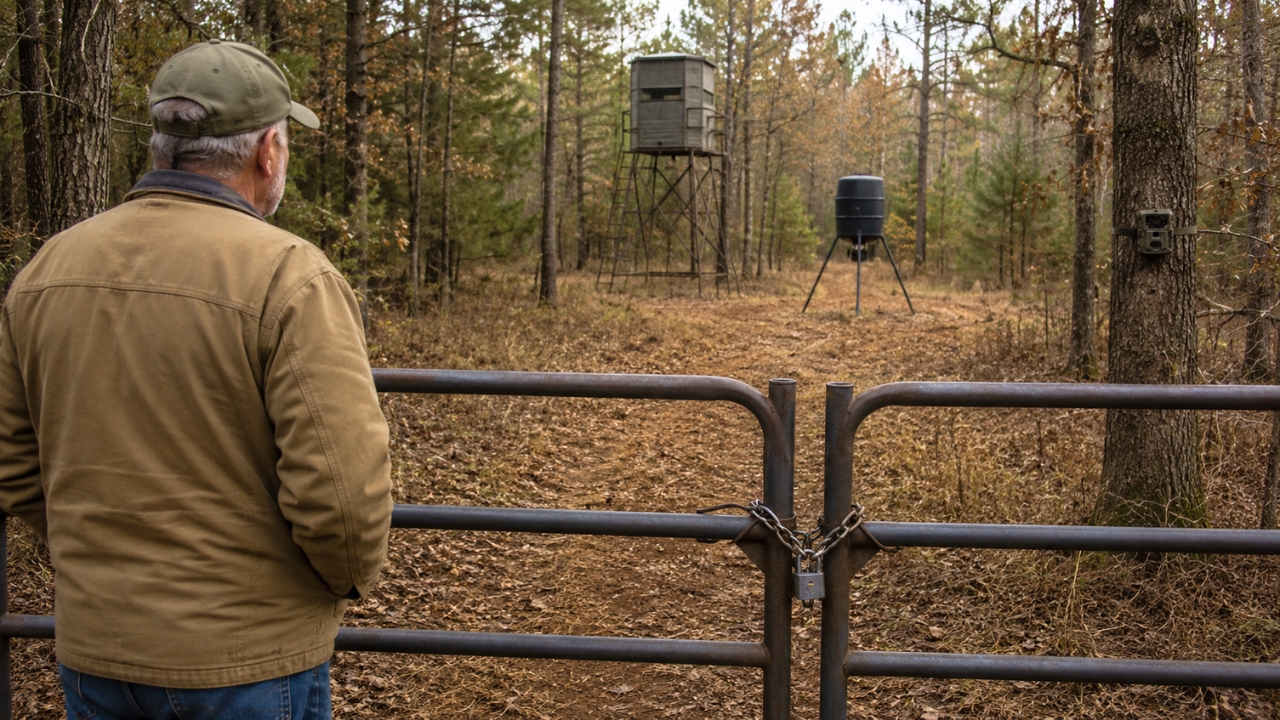
The gate was locked. The land was posted. The owner was clear that this was not open ground.
Then he found the setup anyway.
In a Reddit post, the landowner said he had found a trespasser’s hunting setup on his property. And this was not a guy who wandered across the line with a rifle and got turned around. The landowner found gear: a stand, a feeder, and a trail camera.
That is a whole different level of nerve.
A stand means somebody planned to sit there. A feeder means somebody had been trying to bring deer to that spot. A trail camera means somebody wanted to monitor what was moving through the property, probably when the owner was not around. Put all three together and it stops looking like a mistake. It starts looking like someone had quietly set up a private little hunting spot on land he did not own.
The poster made it clear he was the landowner. He also said the gate was locked and the land was posted. That matters, because there are always people who try to lean on the same tired excuses. They did not know. They thought it was somebody else’s place. They had permission years ago. They were just following a map. They got confused.
But a locked gate and posted land do not exactly scream “come on in.”
That is probably why the post felt so frustrating. The landowner was not asking whether the person had done something wrong. He knew the setup did not belong there. What he wanted to know was what to do with the gear.
That is where things can get tricky.
A lot of landowners would be tempted to load every bit of it up and call it a day. The stand, the feeder, the camera — all of it sitting on private property without permission. From a gut level, it feels like the trespasser donated it. He crossed the line, left expensive equipment behind, and now the owner gets the satisfaction of hauling it out.
But there is also the practical side. Taking the gear might feel right, but depending on local law, it could create its own headache. Leaving it there means the person may come back. Destroying it could turn a hunting trespass case into a property-damage argument. And confronting the person alone could be a terrible idea, especially when you already know he is willing to sneak onto private land with hunting gear.
The landowner was in West Virginia, according to his replies, and commenters quickly started steering him toward the game warden or DNR. That made sense. A trespasser on foot is one problem. A trespasser who set up a stand, feeder, and camera behind a locked gate is a hunting enforcement problem.
The feeder made the setup feel even worse. In plenty of places, baiting rules are specific and can vary by season, county, disease zone, and property type. A landowner who finds a feeder he did not place may suddenly have to worry about illegal baiting, deer management rules, or being tied to activity he had nothing to do with.
The trail camera adds another layer. Whoever set it there may have photos of the owner, his family, vehicles, livestock, workers, or anyone else using the property. Even if the camera was meant for deer, it is still an unauthorized camera on private land. That feels invasive in a way a stand alone might not.
And then there is the safety piece. If someone has a stand hidden on your land, you do not know when he is coming in. You do not know what direction he is shooting. You do not know if he is hunting while you are working, checking fences, cutting hay, riding around, or letting someone else hunt legally. A mystery hunter behind a locked gate is exactly how people end up walking into situations they never saw coming.
The landowner did not say he lived on the property. He later clarified it was an old cow farm used for hay. That may explain why the trespasser thought he could get away with it. Empty-looking land makes some people bold. If they do not see a house or a truck every day, they start acting like nobody will notice.
But someone did notice.
And once the owner found the gear, the trespasser’s quiet setup was not quiet anymore. The stand, feeder, and camera were not just equipment. They were proof that someone had gone past a locked gate and treated private land like his own hunting lease.
What Commenters Said
Commenters came in hot, but the smarter advice was to document everything before touching anything.
Plenty of people said the landowner had just scored free gear. Some joked that Christmas came early. Others said if someone leaves a stand, feeder, and camera on private property, they should not be shocked when the owner takes it all down and keeps it.
But several commenters were more cautious. They told him to take photos of the full setup before moving anything. Get pictures of the stand, feeder, camera, posted signs, gate, entry points, and anything identifying on the equipment. If the SD card had photos of the person who set it up, that could matter too.
A lot of people pushed him to call the game warden right away. Since the post involved hunting gear, a feeder, and possible poaching, commenters said the warden might have more interest than regular law enforcement. One person even posted the West Virginia DNR poaching contact information after the landowner said he was in WV.
There was some debate over whether he should touch the gear at all. One commenter said it was evidence and should be left for the warden to collect if the landowner wanted authorities involved. Another said DNR was not going to treat it like a crime-scene drama and that pictures would probably be enough. That split pretty much captured the whole thread: some people wanted the landowner to be careful, while others wanted him to load it up and enjoy his new hunting equipment.
A few commenters warned about retaliation. If the trespasser knows where the property is and comes back angry, the landowner could be dealing with someone willing to cut locks, steal cameras, or cause trouble. That is another reason several people liked the idea of involving DNR or the sheriff instead of handling it alone.
Others suggested leaving a note where the gear had been, either with the landowner’s number or the game warden’s number. The idea was simple: if the person wants his stuff back, he has to identify himself. And if he identifies himself, he is also admitting he was hunting behind a locked gate on posted private land.
There was also one practical warning that kept coming up in different ways: do not assume this is the only setup. If someone was comfortable putting a stand, feeder, and trail cam there, he may have other cameras, bait piles, entry paths, or stands hidden somewhere else.
For the landowner, the takeaway was pretty clear. This did not look like a harmless mistake. It looked like a full hunting setup placed where it did not belong. And once a trespasser goes that far, the owner has every reason to stop treating it like a neighborly misunderstanding.