Photo credit: AI-generated image created using ChatGPT. Illustrative only.
It’s one thing to hear distant shooting in the country and shrug it off as “somebody on the next place.” It’s another thing when a shotgun report is so close it makes your ears ring—and an injured turkey comes fluttering right over your coop and into a tree above your birds.
That’s the spot one landowner found himself in, laid out in the source post. He’d been outside closing up the chicken coop for the night when the blast went off nearby. Seconds later, the wounded bird flew overhead, landed above the coop, and then took off again when the landowner came back with glasses and a spotlight.
He couldn’t confirm the shooter was actually standing on his ground. But based on direction—near a barn and a small pasture where turkeys regularly cross in the evenings—he had a bad feeling someone had been set up and waiting on those birds, possibly on his property. The bigger problem wasn’t just the turkey. It was the thought that somebody might be hunting close to his home, his livestock, and his outbuildings without permission.
When a “nearby” gunshot turns into a property and safety issue
Most rural folks are used to the sound of gunfire in season. The difference here is proximity and timing. A close shotgun blast at dusk, right as birds are being put up, isn’t just unsettling—it’s a safety concern.
A turkey flying from the shot to the coop area also gives you a clue about where it came from and where it was headed. That doesn’t prove a trespass. But it does tighten the circle to the places the landowner already suspects: the pasture the birds use like a travel corridor, and the general direction of the barn.
There’s also a livestock angle that a lot of folks don’t think about until it happens. A “winged” turkey crashing into trees above a coop can spook chickens, stress them, and in the worst cases turn into a predator magnet if there’s blood on the ground later. Even if the bird flew off, the disturbance alone is enough to make a landowner pay attention.
The injured turkey: who do you call, and what actually matters?
The landowner’s first question was simple: should he call anyone about the injured turkey? That’s a fair question, and it comes up more often than people admit. Wild animals get hit on roads, shot and lost, mauled by predators—you name it.
Practically speaking, the “who” depends on your state and what the animal is doing. If it’s suffering in your yard or creating an immediate problem around your animals, many places route these calls to a local game warden, wildlife agency, or sometimes a sheriff’s office dispatch that relays it. If it’s already flown off into the timber, most agencies are going to treat it as a “wounded and unrecovered game” situation unless there’s evidence of poaching or unsafe shooting near occupied buildings.
What matters most is what you can accurately report: time of shot, direction, distance from your buildings, and what you observed (injured turkey, flight path, where it landed). Keep it factual. The goal isn’t to guess who did it—it’s to document an incident in case it’s part of a bigger pattern.
Not having proof is the worst part—and trespassers count on it
The landowner admitted he regretted not having cameras up everywhere. That line will sound familiar to anyone who’s ever dealt with boundary issues. Trespassers and uninvited hunters thrive in the gaps: the back corner nobody checks, the low spot where a fence disappears into brush, the lane that looks like “it goes somewhere.”
Even without a camera, you can start building a clearer picture fast. Walk your likely access points first—gates, two-tracks, ditch crossings, field edges near the barn, and any place a vehicle can tuck in out of sight. Look for fresh boot tracks, tire marks, cut wire, a fence pushed down, or the kind of disturbed leaves you only get from repeated foot traffic.
It’s also worth looking for the “waiting” setups that turkey hunters like: a little brushed-in spot near a travel corridor, a bit of scraped ground where someone’s been sitting, or telltale candy wrappers and shotgun hulls. None of that is definitive on its own, but it moves you from a gut feeling to something you can document.
Why this feels like more than a one-time incident
A close shot near a coop at evening doesn’t feel random, and the landowner’s description hints at someone who knows the routine. The birds “most evenings” cross that pasture. That’s exactly the kind of pattern an unauthorized hunter would take advantage of—especially if they believe the landowner won’t notice in the moment or won’t have proof afterward.
That’s also where the “three years” idea comes from in real life. Trespass hunting isn’t always a dramatic one-and-done event. It can be a quiet habit: a person slips in for a quick sit, takes shots when they think nobody’s outside, and disappears before anyone can respond. It can go on season after season until something happens that’s too close to ignore—like ringing ears and a wounded bird over the coop.
Whether it’s actually been happening that long here isn’t something the landowner could confirm in the moment. But the concern is legitimate: once you suspect someone is using your ground without permission, you have to assume it may not be their first time.
The smart next moves: document, deter, and don’t confront alone
When you think someone is hunting your place without permission, the temptation is to charge into the dark and “handle it.” That’s a bad plan. You don’t know who it is, you don’t know how they’ll react, and you don’t want a property dispute turning into a tragedy.
A better play is a layered approach. First, document what happened right away while it’s fresh: the time, the exact location you were standing, where the shot sounded like it came from, and where the turkey went. If you find hulls, tracks, or a disturbed setup near the pasture or barn, photograph it where it lies before you touch anything.
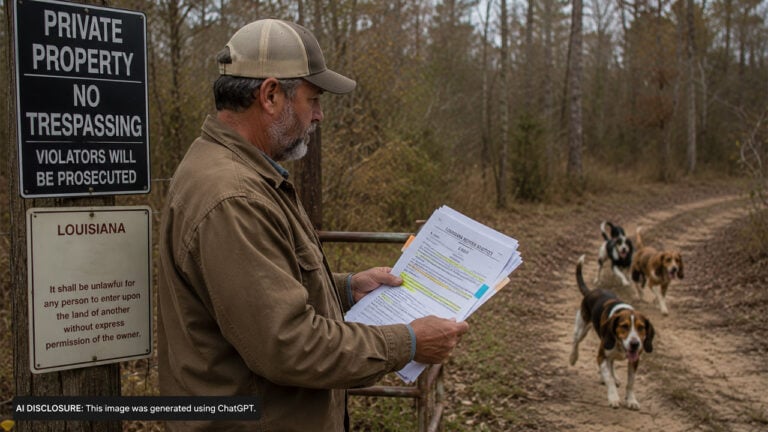
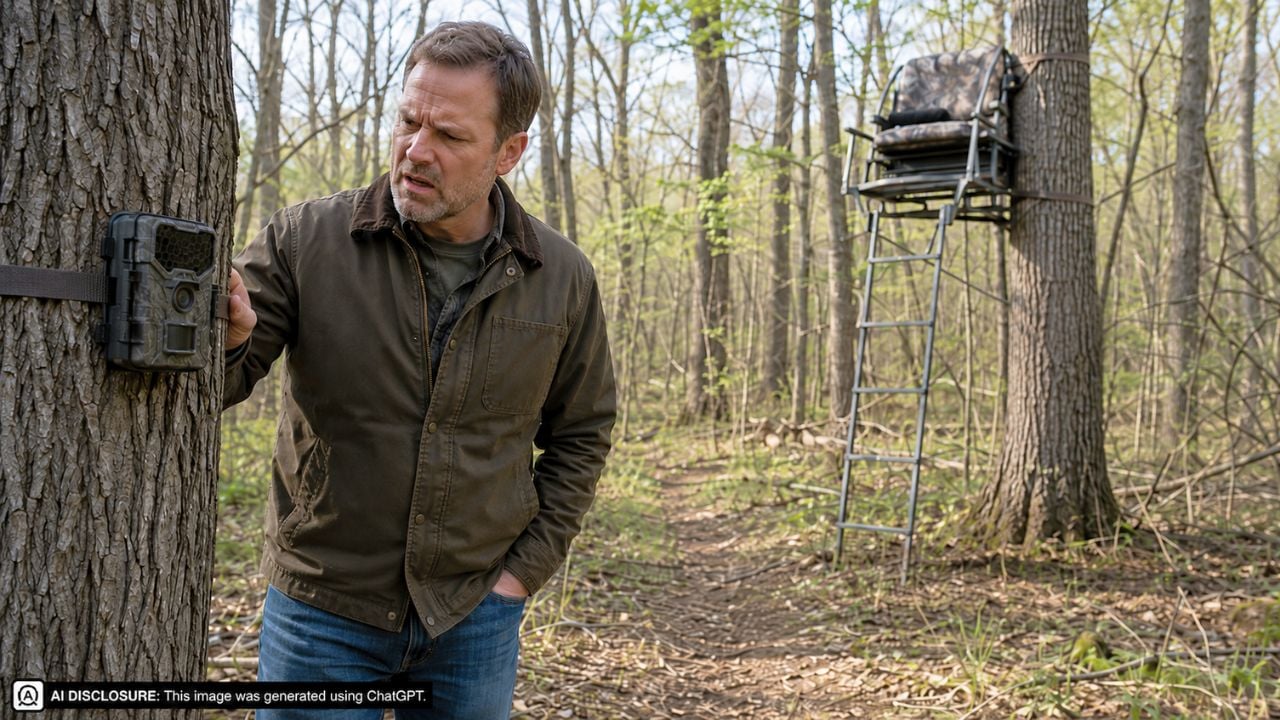
Second, add deterrence where it counts. Clear “No Trespassing” signage at likely entry points is simple and often matters for enforcement. Trail cameras aimed at gates, field edges, and the easiest walking routes can give you what your ears can’t: a face, a vehicle, a time stamp, and a repeat pattern. You don’t need cameras everywhere—you need them where people naturally enter and travel.
Third, consider notifying the right authorities once you have something concrete. If the shooting was close to buildings and livestock, that’s not just a hunting issue—it can become a public safety issue. In many areas, game wardens take trespass and illegal take seriously, especially when it involves shots fired near homes or farm structures.
The landowner in this situation was upset, and for good reason. In the country, “my property” isn’t just a line on a map—it’s where your kids play, where your animals sleep, and where you’re supposed to feel safe. If somebody is slipping in to hunt without permission, the fix isn’t a midnight showdown. It’s clear boundaries, good cameras, solid documentation, and the patience to let the evidence do the heavy lifting.