Photo credit: KoolShooters/Pexels.com
A concealed carrier said he was driving through town when another driver’s road rage turned into a parking lot confrontation he could not easily drive away from.
In a Reddit post, he explained that the situation started while he was on the road. Another driver became aggressive, and instead of letting the moment die in traffic, the man followed him.
That alone is enough to put most people on edge. Road rage is one thing when someone honks, yells, flips a hand up, and keeps moving. It becomes a different kind of problem when the angry driver follows you off the road and keeps the confrontation going.
The poster eventually ended up in a parking lot. That is where the situation tightened up. He was no longer dealing with a rude driver separated by lanes of traffic and locked doors. He was dealing with a stranger who had followed him, stopped nearby, and was now closing distance on foot.
The man got out and started walking toward him.
That is one of those moments where concealed carriers have to make decisions fast. You do not know if the person is coming over to scream, swing, pull a knife, grab through the window, or simply posture. You also do not get the luxury of assuming the best when someone has already chosen to follow you into a lot after a road-rage incident.
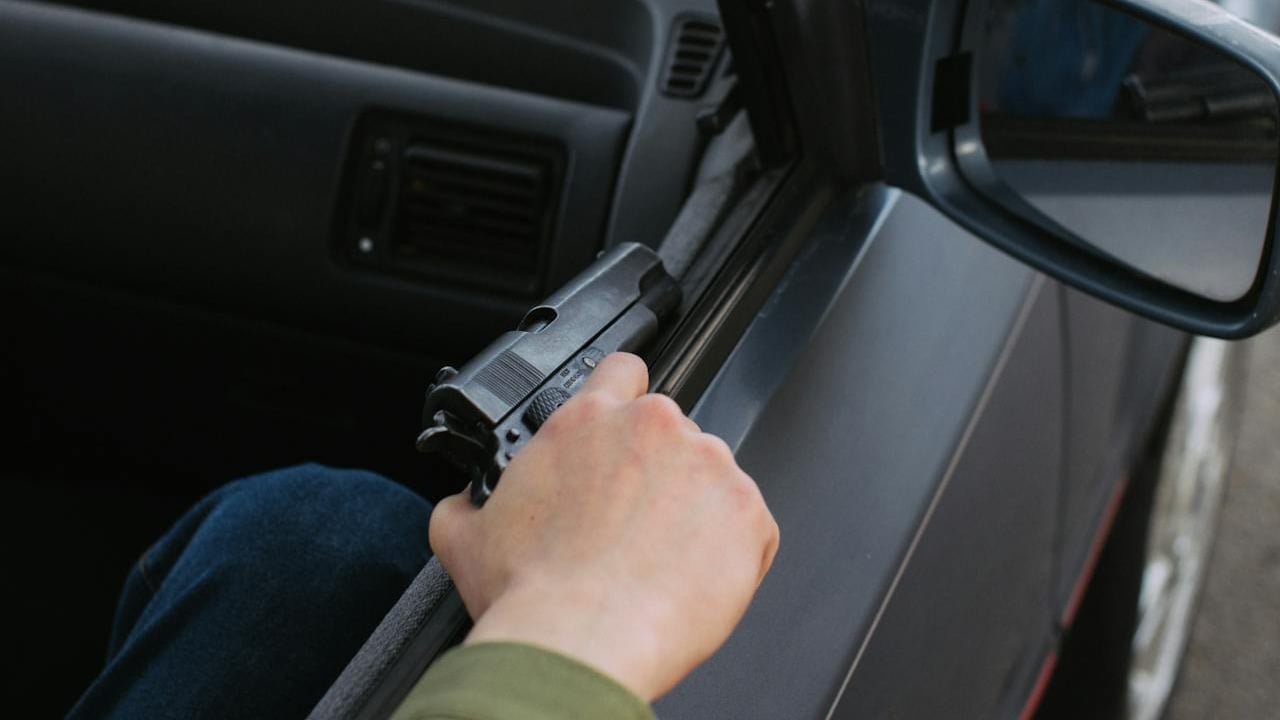
The poster said he pulled his gun in self-defense for the first time. He did not describe firing. He did not describe chasing the man or trying to turn the confrontation into a fight. The gun came out because the angry stranger kept advancing after following him into a place where the poster felt trapped or threatened.
The moment a gun comes out, everything changes. Even if no shot is fired, the situation crosses a line that most responsible carriers hope they never reach. That is why the poster brought it to Reddit. He was not bragging about it. He was processing it.
The hard part about road rage is that the threat can build from almost nothing. Maybe someone feels cut off. Maybe someone thinks another driver was too slow, too fast, or too close. Maybe both drivers make a mistake. But the second one person decides to follow the other, it is no longer about traffic. It becomes a personal confrontation.
And parking lots are a bad place for those confrontations. There are other cars, bystanders, blind spots, curbs, storefronts, and limited escape paths. A person who is already angry can close the gap quickly. A driver trying to leave may have to back up, turn around, avoid pedestrians, or wait for another car to move.
That is why many commenters focused less on the draw itself and more on what could have happened earlier. In road-rage situations, the safest move is often to avoid stopping anywhere the other person can box you in. If you believe someone is following you, a police station, fire station, busy well-lit public area, or a 911 call while continuing to drive may be safer than pulling into a random lot.
But once the man was already out and walking toward him, the poster had a much smaller set of choices. He could try to leave if he had a clear path. He could stay locked in the vehicle and hope the man stopped. He could give verbal commands. Or he could prepare for the possibility that the stranger was about to attack.
That was the pressure point in the story. A concealed handgun is not a tool for winning an argument. It is not there to settle traffic anger. But when a person follows you, gets out, and keeps coming, the carrier has to decide whether the danger has moved past yelling.
The poster believed it had.
The outcome was that he drew the firearm and the confrontation did not continue into a physical fight. No one was shot. No one was described as being injured. But the incident clearly left an impression on him because it was the first time he had ever pulled his weapon in self-defense.
For a lot of people who carry, that first defensive draw is a gut-check. It forces you to think about everything that led to it: how you drove, where you stopped, whether you could have left earlier, whether you waited too long, and how close you came to a life-changing decision.
The poster’s account did not read like someone looking for applause. It read like someone who had been put in a bad spot by an angry stranger and wanted to know how other concealed carriers saw it.
Commenters mostly zeroed in on avoidance. Several said that if someone is following you during a road-rage incident, the goal should be to keep moving and call 911 rather than stopping somewhere the other driver can approach on foot.
A lot of people recommended driving to a police station or another public place with cameras and people around. Some said even a fire station, busy gas station, or well-lit store lot would be better than an empty or quiet parking lot, but they still warned that stopping at all can be risky if the other driver is committed to confronting you.
Others said the poster needed to think hard about the legal side of displaying a firearm. A defensive draw may be justified if there is a real threat, but if the facts are unclear, the person with the gun can end up being treated as the aggressor. That is why several commenters told him to call police first whenever possible and report that he was being followed.
Some commenters focused on staying in the vehicle. They argued that a locked vehicle gives at least some barrier and buys time, while stepping out or engaging can make things worse. Others pointed out that if a person is blocked in and the aggressor is closing distance, the options shrink fast.
The common advice was simple: do not trade anger with an angry driver, do not stop somewhere isolated, call 911 if you are being followed, and keep your escape route open. If the person still closes in and you truly believe you are in danger, then the situation is no longer about road rage. It is about getting home alive without making a bad moment worse.