Photo credit: Mongoose Guns/YouTube
When a dominant handgun brand signals it is changing course, the ripple effects reach far beyond gun counters and shooting ranges. A reported move by Glock to pull back from pistols that can be easily converted to automatic fire has surprised both longtime customers and city officials who have spent years battling the spread of illegal “switches.” The shift lands at a moment when lawsuits, new state liability laws, and past production pauses by rivals are all converging to push major firearm manufacturers in directions many shooters did not see coming.
I see this inflection point less as a single corporate decision and more as the latest sign that the business of making guns is being reshaped by legal risk, political pressure, and the realities of modern gun crime. From Chicago’s streets to New Jersey’s courts, and from the legacy of Sandy Hook to rumors about which Glock models might vanish from shelves, the industry is being forced to rethink what it sells, how it markets those products, and what responsibility it bears when things go catastrophically wrong.
Glock’s reported phase‑out and why it caught shooters off guard
The most eye‑catching development is the reported decision by Glock to phase out certain pistols that can be readily converted to automatic weapons, a move that would have been almost unthinkable for a company whose brand is built on rugged, no‑nonsense semiautomatics. In Chicago, Mayor Brandon Johnson and other city officials have publicly welcomed what they describe as Glock’s reported choice to stop producing models that are “easily convert[ible] to automatic weapons,” framing it as a concrete step toward efforts to end gun violence in the city. Local leaders have explicitly applauded what they call the Chicago Leaders Applaud Glock move, underscoring how central Glock pistols have become in local crime debates.
For many shooters, however, the idea that Glock would voluntarily walk away from any slice of its core handgun lineup feels like a sharp break from the company’s usual posture of quiet, steady continuity. The brand has long marketed itself as a constant in a volatile policy landscape, and enthusiasts have grown used to incremental generational updates rather than abrupt discontinuations tied to political concerns. That is why the notion of a Glock “phase out” aimed at models that can accept illegal conversion devices has landed as a surprise, even among owners who have no interest in automatic fire but assumed the catalog was essentially fixed unless market demand cratered.
The quiet role of conversion switches in Glock’s public image
Part of what makes Glock’s reported shift so striking is how deeply the company’s products have become entangled with the rise of tiny conversion devices that can turn a standard pistol into a machine gun. Advocacy groups and law enforcement have warned that “more and more Glocks are being converted to fire like machine guns,” pointing to the ease with which a small “switch” can be attached to the back of the slide to enable fully automatic fire. That description of how More and more Glocks can be modified has become a staple of public safety briefings, even though the devices themselves are illegal under federal law.
From a branding standpoint, this association with improvised machine guns has put Glock in a bind. The company sells semiautomatic pistols to law‑abiding civilians, police departments, and militaries, yet its name is increasingly invoked in stories about fully automatic fire on city streets. I see the reported phase‑out of easily converted models as an attempt to narrow that gap between intended use and real‑world misuse, not by redesigning the entire platform overnight but by trimming the parts of the lineup that have become most synonymous with illegal switches. Whether that recalibration satisfies critics, or instead fuels calls for broader design changes, will depend on how visible the impact is in places like Chicago where the problem is most acute.
Rumors, reality, and the future of Glock’s model lineup
Even before Chicago officials began praising Glock’s reported move on convertibility, the company’s fan base was already buzzing about which specific pistols might be on the chopping block. Viral social media posts have circulated claims that a wide swath of the catalog is being discontinued, with only a few slimline carry guns spared. One widely shared breakdown asserts that “The alleged exceptions? The Glock 43, 43X, and 48X,” describing those three as the models that would survive a broader discontinuation wave and suggesting that a new “V Model Series” would eventually replace the outgoing pistols. That framing, which explicitly highlights the The Glock 43 as one of the alleged survivors, has fueled speculation far beyond what the company itself has publicly confirmed.
From a shooter’s perspective, the idea that staple duty‑size pistols might quietly exit while compact models like the 43, 43X, and 48X remain would mark a profound shift in Glock’s identity. It would tilt the brand even more toward concealed carry and personal defense, and away from the full‑size workhorses that built its reputation with law enforcement. I see the rumor mill as a symptom of a deeper anxiety: if legal and political pressure can push a company to rethink models linked to conversion switches, what else might be on the table in the next round of changes? Until Glock spells out its roadmap, owners are left parsing every whisper about a “V Model Series” as a clue to how far the company is willing to go.
How other manufacturers have already blinked
Glock is not the first major gunmaker to alter its product mix in ways that surprised its core customers. When Colt, long described as “One of America”s oldest gunmakers, announced that it was suspending AR‑15 production for civilians, it sent a jolt through a market that had come to see the AR platform as a permanent fixture. The company’s decision to halt civilian AR‑15 sales, captured in coverage of how Colt suspends AR‑15 production, was framed as a business choice tied to military and law enforcement contracts, but many gun owners read it as a capitulation to political pressure.
That history matters because it shows how quickly a “never going to happen” scenario can become reality once a manufacturer decides that reputational or financial risk outweighs the benefits of a controversial product line. I see Glock’s reported phase‑out of easily converted pistols as occupying a similar space in the handgun world to Colt’s AR‑15 pause in the rifle market. In both cases, a marquee brand adjusted course in response to forces outside the traditional supply‑and‑demand calculus, signaling to shooters that even iconic platforms are not immune when legal liability, public scrutiny, and government attention converge.
Legal pressure: from Sandy Hook to New Jersey’s public nuisance law
Behind these product decisions sits a rapidly evolving legal landscape that has chipped away at the once‑ironclad protections gunmakers enjoyed. The most symbolic crack came when The Supreme Court declined to block a lawsuit brought by Sandy Hook families against a gun manufacturer, allowing the case to proceed despite industry arguments that federal law shielded them. The decision meant that the Sandy Hook lawsuit against the gun‑maker could go ahead after SCOTUS declined the appeal, a signal that at least some claims about marketing and responsibility would get their day in court.
States have taken that opening and pushed further. In New Jersey, lawmakers enacted a statute that allows the state to sue firearm companies under a public nuisance theory, arguing that certain business practices contribute to widespread harm. A federal appeals panel later ruled that New Jersey can enforce that law, reversing an earlier injunction from Judge Zahid N. Quraishi and clearing the way for the state to bring cases against gun makers it believes are fueling violence. The ruling that New Jersey can sue gun companies under public nuisance law has effectively put manufacturers on notice that their design and distribution choices could be litigated as contributions to a broader social hazard, not just as isolated product defects.
The Remington and Bushmaster warning shot
The financial stakes of these legal shifts became painfully clear when the company behind the Bushmaster rifle used in the Sandy Hook shooting agreed to a massive settlement with victims’ families. The deal, which totaled $73 million, was reached even though the manufacturer insisted that “The plaintiffs never produced any evidence that Bushmaster advertising had any bearing or influence over Nancy Lanza” and maintained that the marketing did not cause the tragedy. That line, explicitly naming Bushmaster and Nancy Lanza, underscored how a company can be forced to pay even while publicly disputing the core allegations about its conduct.
For executives at other gunmakers, that settlement reads like a cautionary tale about the cost of letting a case reach discovery and trial. I see it as one reason manufacturers are now more willing to adjust product lines or marketing strategies preemptively, rather than risk being portrayed in court as indifferent to how their guns are used. When a single lawsuit tied to a single model can end with a $73 million payout, the calculus around controversial features, aggressive branding, or easily modified designs changes. Glock’s reported willingness to phase out pistols that can be readily converted to automatic fire fits squarely into that new risk environment, where avoiding the next Sandy Hook‑style case is as much a business priority as capturing the next market segment.
Safety controversies and the SIG Sauer P320 lesson
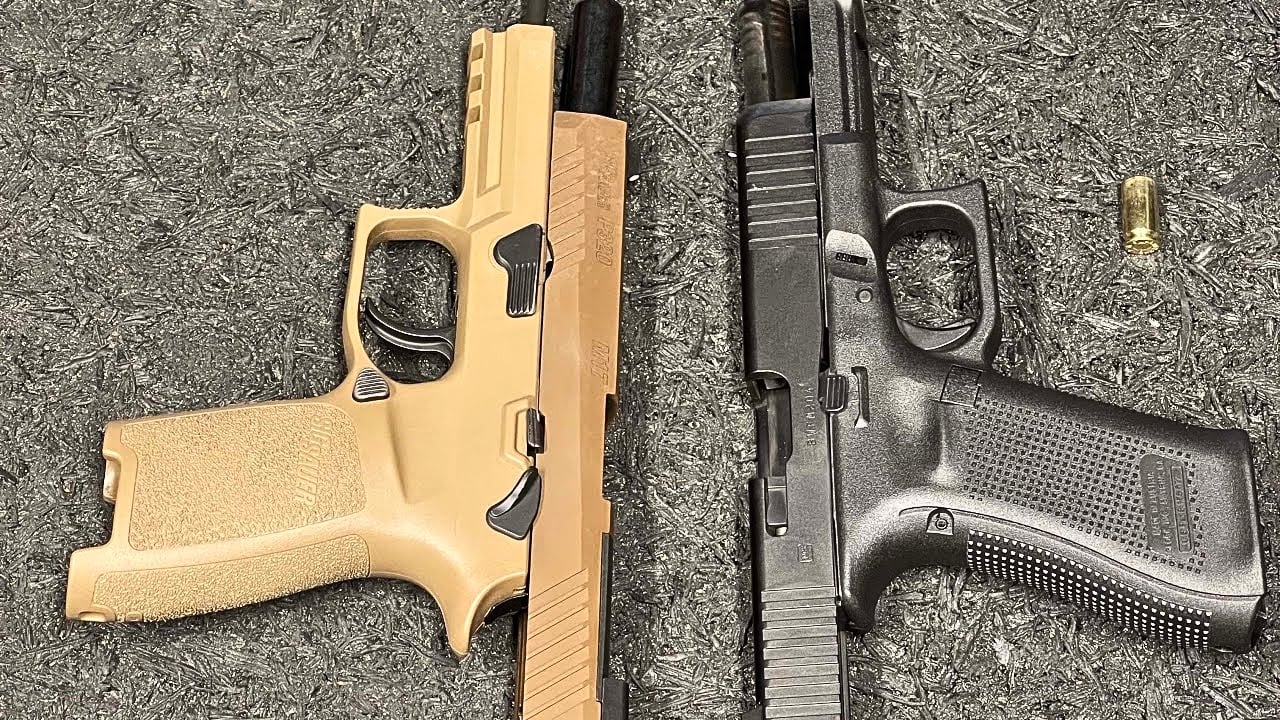
Legal exposure is not limited to mass‑shooting marketing claims. Product safety controversies have also shown how quickly a modern handgun can become a liability if owners allege it fires when it should not. SIG Sauer has spent years confronting accusations that its P320 pistol can discharge without a trigger pull, with owners reporting incidents where the gun allegedly fired on its own. Those claims, which trace back to at least 2017, have included reports from both civilians and law enforcement, and even referenced concerns from the U.S. Army about the platform. Coverage of how SIG Sauer has faced claims that the P320 malfunctions has turned a flagship sidearm into a case study in how quickly trust can erode when safety questions linger.
For Glock, which has built its reputation on simple, striker‑fired reliability, the SIG Sauer P320 saga is a reminder that even a technically sophisticated design can become a legal and public relations headache if real‑world incidents contradict marketing promises. I see the focus on conversion switches as part of a broader effort by manufacturers to close any gap between how guns are supposed to function and how they are actually used or misused. Whether the issue is alleged uncommanded discharges or illegal full‑auto conversions, the pattern is the same: once a narrative takes hold that a particular model is uniquely prone to dangerous behavior, plaintiffs’ lawyers and regulators will line up to test that claim in court.
Political and regulatory heat on “major gun manufacturers”
The pressure on big gun companies is not just coming from civil lawsuits and state statutes. Political scrutiny has intensified to the point where lawmakers and regulators are willing to threaten production itself. In one widely shared clip, a commentator describes how a “Major Gun Manufacturer” was told to “Cease Production Immediately Or Else,” capturing the sense that government actors are prepared to use their leverage to force changes in how firearms are made and sold. The video, titled Major Gun Manufacturer Told To Cease Production Immediately Or Else, reflects a climate in which the phrase “or else” no longer sounds like hyperbole to industry insiders.
Against that backdrop, Glock’s reported willingness to pare back models associated with illegal automatic fire looks less like a voluntary tweak and more like a strategic hedge against future showdowns with regulators. I read the move as an attempt to demonstrate responsiveness before a city, state, or federal agency decides to make an example of a “major firearm manufacturer” in a high‑profile enforcement action. By adjusting its catalog now, Glock can argue that it is part of the solution to the switch problem, not the company that needs to be ordered to “cease production” of a controversial design under threat of legal or regulatory sanctions.
What all this means for everyday shooters
For rank‑and‑file gun owners, the cumulative effect of these shifts is a marketplace that feels less predictable than it did a decade ago. Models that once seemed like permanent fixtures can suddenly be suspended, as with Colt’s AR‑15 decision, or rumored to be on the verge of discontinuation, as with the chatter around Glock’s alleged “V Model Series” and the survival of the 43, 43X, and 48X. At the same time, legal developments from The Supreme Court’s handling of the Sandy Hook case to New Jersey’s public nuisance law have made it clear that manufacturers are now thinking about courtroom risk every time they design a new feature or approve a marketing campaign.
I see Glock’s reported phase‑out of easily converted pistols as a bellwether for how the industry will navigate this new terrain. Shooters who value stability may bristle at the idea that political and legal forces can reshape product lines, while others will welcome any change that appears to reduce the availability of guns that can be turned into improvised machine guns with a simple switch. Either way, the message is unmistakable: in an era of heightened scrutiny, major firearm manufacturers are making moves that even seasoned shooters did not expect, and those decisions will shape what ends up in holsters, safes, and evidence lockers for years to come.
Like The Avid Outdoorsman’s content? Be sure to follow us.
Here’s more from us: