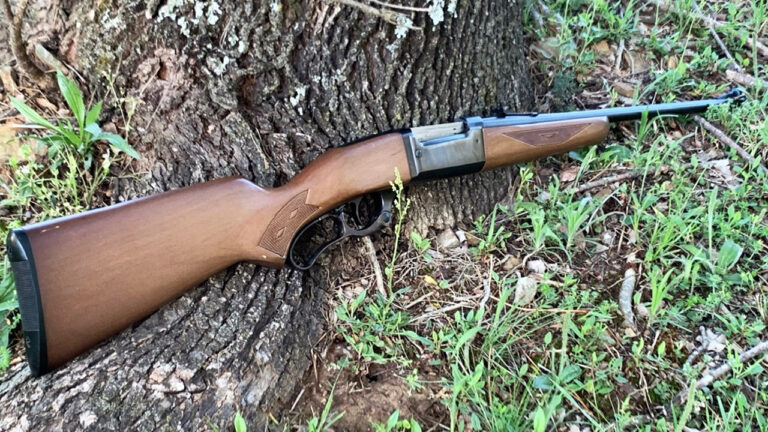
Photo credit: Ambrosia Studios/Shutterstock.com
Handgun buyers are sending a clear message: they want more capability, more personalization and more value, even as they grow more selective about when and why they purchase. The latest trends in compact pistols, concealed carry gear and premium sidearms point to a market that is maturing rather than shrinking, with innovation and responsiveness now as important as raw volume. Where manufacturers and dealers lean into those shifts, the next few years are likely to reward them with steadier, more sustainable demand.
Instead of a single dominant trend, the handgun space is fragmenting into distinct lanes, from budget-friendly carry guns to high-end custom builds and tech-forward models that borrow ideas from the broader consumer electronics world. I see that fragmentation as the real signal about where the market is headed: toward a more segmented, consumer-driven ecosystem in which data, design and marketing matter as much as caliber and capacity.
Handguns inside a reshaped firearms economy
The broader firearms economy is expanding, but not in a straight line, and handguns sit right at the center of that uneven growth. One major forecast shows the overall firearms market rising from $46.75 billion in 2024 to $50.95 billion in 2025, a reminder that even in a cautious consumer climate, the category is still growing. Within that, handguns benefit from their dual role as both defensive tools and lifestyle products, which helps explain why they continue to command shelf space and R&D budgets even as long guns and accessories jockey for attention.
Industry leaders describe a sector at a crossroads, where “Innovation, Responsiveness Vital To Success” and where, as one analysis puts it, “Once again, the U.S. firearms industry finds itself at a crossroads,” language that captures how much pressure there is to adapt quickly to shifting demand. Those themes run through the Jun Innovation, Responsiveness Vital To Success Once reporting, which underscores that macroeconomic headwinds and changing consumer expectations are forcing handgun makers to rethink everything from product cycles to pricing. In that context, the brands that treat handguns as part of a broader ecosystem of optics, holsters and training are the ones best positioned to ride out the next wave of volatility.
Global forces and cautious buyers are reshaping demand
Handgun trends cannot be separated from geopolitics and household budgets, both of which are pulling the market in competing directions. On one side, the Nov Russia Ukraine War Positively Influenced Market Growth Due Increased Procurement of Firearms European Countrie dynamic has boosted procurement in Europe, which in turn supports global handgun production capacity and keeps some factories humming even when U.S. consumer demand softens. On the other, domestic buyers are more price sensitive, stretching out replacement cycles and thinking harder before adding a new pistol to the safe.
Executives quoted in the Jun “Looking at the overall firearms market, we continue to see consumers generally being cautious due to macroeconomic fa…” analysis describe shoppers who are still interested in new guns but are more deliberate, a pattern that is likely to persist as inflation and borrowing costs weigh on discretionary spending. That same Jun Looking perspective suggests that while demand may stabilize, it will do so at a level where promotions, financing and perceived value play a bigger role in handgun purchasing decisions. For manufacturers, that means the next generation of pistols must justify their place in a tighter personal budget, not just stand out in a glass case.
Concealed carry is driving design, especially for women
The concealed carry segment is increasingly the engine of handgun innovation, and women are a major reason why. One emerging pattern is a “Trend 1: Increased Volume of Women Concealed Carrying,” which is pushing designers to rethink ergonomics, recoil management and aesthetics. As more first-time female buyers enter the market, they are looking for pistols that fit smaller hands, integrate cleanly with on-body carry methods and offer intuitive controls without sacrificing reliability.
At the same time, “Trend 2: Advancements in Concealed Carry Firearm Technology” is accelerating, with optics-ready slides, improved triggers and modular grip systems becoming standard even on compact models. Those “Advancements” in “Concealed Carry Firearm Technology” are highlighted in the Jan Trend Increased Volume of Women Concealed Carrying Advancements Concealed Carry Firearm Technology reporting, which notes how features once reserved for competition guns are migrating into everyday carry pistols. I see that as a sign that the market is moving toward a baseline where even entry-level handguns are expected to support red dots, suppressor-height sights and customizable backstraps, all tuned for a more diverse user base.
Innovation, from factory lines to Big 3 East, is setting the pace
Behind the scenes, the companies that build handguns are racing to keep up with these expectations, and their own trade gatherings show how quickly the bar is rising. At Big 3 East 2025, for example, the “Implications for Industry Stakeholders” section of the coverage describes a “dynamic market” that is “increasi…” focused on new materials, modular platforms and integrated accessories. Those Dec Implications for Industry Stakeholders Big East insights point to a future where handgun launches are less about incremental caliber tweaks and more about ecosystem compatibility, from suppressors to smart training tools.
Major manufacturers are already signaling that shift in their product catalogs and investor messaging. A visit to Ruger shows how a legacy brand is leaning into optics-ready slides, lightweight frames and crossover models that blur the line between duty and concealed carry pistols. When paired with the Jun “The challenges in the firearms…” commentary that “Once again, the U.S. firearms industry finds itself at a crossroads” and that “performance this quarter supports that,” it is clear from the Jun Innovation, Responsiveness Vital To Success Once analysis that the brands investing in R&D and rapid iteration are the ones weathering the current turbulence best. I read that as a warning to slower-moving competitors: in the handgun space, standing still is effectively moving backward.
Marketing is fragmenting, and consumers are in charge
As the product mix evolves, so does the way handguns are marketed, with digital channels and niche communities now shaping demand as much as traditional gun counter conversations. The “6 Marketing Trends Set To Define 2025” coverage, “Written By Ashley” McGee, describes how brands are using creator partnerships, micro-targeted campaigns and community-building content to “Set To Define” the next phase of outreach. Those Jan Marketing Trends Set To Define Written By Ashley Monthly Features Image insights show a sector that is trying to “expand the industry’s audience,” particularly among younger and more diverse shooters who may first encounter a handgun review on YouTube or Instagram rather than in a print catalog.
That shift dovetails with a broader pattern in which “Consumers are increasingly influencing the types of firearms and brands available on the market,” a trend that is “facilitated by price promotions and discounts” and by the rapid feedback loops of online reviews and social media. The Consumers analysis makes it clear that buyers are no longer passive recipients of whatever a manufacturer decides to ship; instead, they are actively shaping which handgun configurations survive and which are quietly discontinued. In practical terms, that means a compact pistol that fails to resonate with online reviewers or training influencers can struggle to gain traction, no matter how aggressively it is discounted at retail.
Content creators and “drop culture” are influencing launches
Handgun launches increasingly look like sneaker drops, complete with teaser videos, countdowns and instant feedback from enthusiasts. A video titled “INSANE! 5 New Guns Just DROPPED in 2025 (You’ve Never …)” captures that energy, with the host urging viewers to watch “first. and of course subscribe to the channel. we’ve got tons of videos coming up on the latest releases. and the hott…” models. That Sep clip is not just entertainment; it is a real-time focus group that can make or break a new handgun’s reputation within days of its announcement.
For manufacturers, this “drop culture” raises the stakes around quality control and feature sets, because any misstep is instantly amplified. It also creates opportunities to seed new technologies, such as optics-ready micro-compacts or compensated carry guns, by letting early adopters showcase them in high-visibility content. I see this as a feedback loop that accelerates innovation but also compresses product life cycles, pushing brands to refresh or iterate handguns more quickly to stay in the algorithm’s good graces.
High-end handguns are holding strong even as mid-tier softens
While some dealers report softer traffic for mid-priced pistols, the premium end of the handgun market is proving surprisingly resilient. One analysis notes continued “interest in the high-end side of the firearms market from consumers this year,” citing data from the “National Shoo…” that shows affluent buyers still willing to invest in custom-grade 1911s, optics-ready race guns and limited-edition revolvers. That Nov According National Shoo reporting suggests that, much like luxury watches or performance cars, high-end handguns function as both tools and status symbols, insulated to a degree from day-to-day economic jitters.
The pattern mirrors what has happened in other enthusiast categories, where “Accessory and appearance products remain strong” and “Performance mods also saw robust sales” even when mainstream buyers pull back. Those phrases from the Accessory and Perf automotive aftermarket data echo what I hear from handgun dealers who say that customers willing to spend four figures on a pistol are also adding threaded barrels, match triggers and custom finishes. For the market as a whole, that means the top of the pyramid is likely to remain a profit center, even if unit volumes shift toward more affordable carry guns.
Policy calm, not panic, is the new baseline
One of the quieter but important shifts in the handgun market is the relative absence of panic buying tied to looming legislation. As one retailer put it, “Our gun business slowed down, we think, because people weren’t worried about restrictive laws being passed. They sort …” and later, “a drop in the pond.” That candid assessment in the Jan Our They reporting underscores how much the industry had come to rely on fear-driven spikes, and how different the landscape looks when buyers are not racing to beat a perceived deadline.
In this calmer policy environment, handgun demand is more closely tied to personal security perceptions, training culture and lifestyle choices than to headlines about imminent bans. That can feel like a slowdown for businesses accustomed to surges, but it also creates a more predictable foundation for planning inventory, staffing and product development. I see this as a healthy reset that rewards companies focused on long-term customer relationships rather than short-term scarcity marketing.
Where the next wave of handgun growth is likely to come from
Looking ahead, the most promising growth lanes for handguns appear to be at the edges of the traditional market: new demographics, new use cases and new layers of technology. The “U.S. Firearms Industry Today Report 2025” material, with its emphasis on “Innovation, Responsiveness Vital To Success,” suggests that companies willing to tailor products for women, urban professionals and nontraditional shooters will capture share even if overall unit sales plateau. At the same time, the steady expansion of the global firearms market from $46.75 billion to $50.95 billion reinforces that there is room for well-positioned handgun brands to grow alongside rising demand for optics, holsters and training services.
For retailers and manufacturers, the strategic takeaway is straightforward but demanding. The next phase of the handgun market will be defined less by raw political cycles and more by how effectively companies listen to “Consumers,” respond to “Trend 1: Increased Volume of Women Concealed Carrying,” invest in “Advancements in Concealed Carry Firearm Technology” and leverage “Marketing Trends Set To Define 2025” to reach new audiences. Those that treat handguns as part of a broader, evolving ecosystem of gear, content and community are likely to thrive, while those that cling to a one-size-fits-all approach risk being left behind in a market that is moving, decisively, toward segmentation and sophistication.
Like The Avid Outdoorsman’s content? Be sure to follow us.
Here’s more from us: