Photo credit: Bill Drill/YouTube
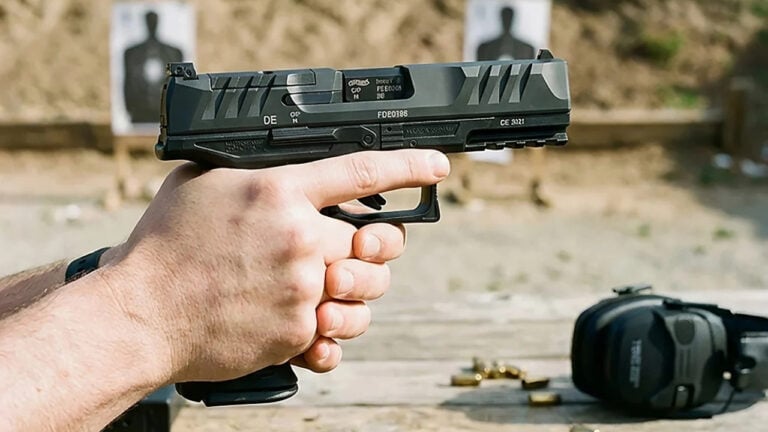
Most people think follow-up shots are about recoil control in a vague, macho way—“just hang on tighter.” That’s not what’s happening. Follow-up shots live and die by how your hands interface with the gun, and a ton of shooters are sabotaging themselves with one simple mistake: they pick a grip setup that feels comfortable in the store, but it doesn’t give them real leverage when the gun starts moving. Then they wonder why their dot or front sight disappears, why the gun twists in their hands, and why their second shot is always late and sloppy. The truth is your grip choice is setting the ceiling for how fast you can shoot accurately, and most people are choosing comfort over control without realizing it.
This shows up constantly with carry guns because people prioritize concealment and comfort, then try to shoot those same guns at speed like they’re full-size pistols. If your grip surfaces and your hand placement aren’t helping you keep the gun stable, you’ll never “fix” it with willpower. You’ll just work harder for worse results.
Smooth grips feel nice—until your hands get sweaty or you start shooting fast
A slick grip panel or a smooth polymer frame feels great when you’re handling the gun dry. Under recoil, especially if your hands are sweaty, cold, or slightly dirty, that smooth surface lets the gun shift. The shift might be small, but small shifts compound fast. Your support hand loses bite. Your strong hand starts squeezing harder to compensate. That extra squeeze can make you tremble, and now your sights are wobbling more. Then you start slapping the trigger to “beat” the wobble, and your hits spread.
The fix isn’t always “more aggressive texture everywhere,” but you do need enough traction that your hands stay planted. If you have to keep re-gripping between shots, you’re already losing time and control. Follow-up shots will always be slower when your grip is constantly resetting.
Too-small grips force your strong hand to do all the work
A lot of people run carry guns with grips that are too short or too slim for their hands and then wonder why recoil feels snappy and follow-ups feel slow. When you don’t have enough surface area, your support hand can’t contribute as much, and your strong hand ends up trying to control recoil by itself. That’s a losing strategy at speed. Strong-hand-only control is always slower, less stable, and more tiring.
This is where tiny pistols really punish people. If your pinky is floating or you’re barely hanging on, the gun is going to rotate. Once the gun rotates, you’re spending time re-finding sights instead of pressing the next shot. A slightly longer grip—sometimes even a simple extension that gives you a full purchase—can noticeably improve follow-up speed because the gun stops moving as much between shots.
“Death grip” is a common mistake that actually slows you down
Another sabotage pattern is gripping the gun like you’re trying to crush it. People clamp down with their strong hand, thinking that’s how you control recoil. What it often does is lock up your trigger finger and introduce sympathetic movement. Your finger fights the grip tension, your press gets less clean, and you start yanking shots. On top of that, a death grip burns you out faster. After a few magazines, your hands get tired and your grip consistency falls apart. Now you’re chasing the gun even more.
A better approach is firm, consistent pressure with the support hand doing the bulk of the stabilizing while the strong hand stays firm but not tremor-inducing. The goal is keeping the sights tracking predictably, not “winning” a grip contest.
The grip that wins is the one that returns the sights fast, every time
Follow-up shots come from how predictably your sights return. Your grip choice affects that return more than almost anything else. If the gun flips high, rotates, or shifts laterally, your sight picture takes longer to rebuild. If the gun tracks straight up and straight back down, your follow-up becomes faster without you having to force it. That’s why some shooters look “fast” even when they’re not rushing—they’re not losing time fixing what the gun did.
If your follow-ups are slow, don’t start by blaming your trigger or your ammo. Look at what the gun is doing in recoil. Is it flipping? Twisting? Sliding in your palm? If the answer is yes, your grip setup is working against you.
The practical fixes that actually help
A few changes usually make a noticeable difference:
- More traction where your hands contact the gun: grip tape, more aggressive texture, or grips that don’t turn slick when wet.
- A grip length that fits your hand: if your pinky is hanging, try an extension that gives you a full purchase.
- Support-hand dominance: focus on locking the gun in with the support hand so the strong hand can run the trigger cleanly.
- Consistency over intensity: same grip pressure every rep beats “as hard as you can” for two magazines.
If you want to test this honestly, run a simple drill: two shots on an 8-inch circle at 7 yards from a cold start. Don’t chase pure speed. Chase a clean first shot and a clean second shot with predictable tracking. A timer and consistent targets make this obvious fast, and you can grab basic targets and grip accessories at Bass Pro Shops if you don’t already have them. The goal is proving what setup actually returns the sights faster for you.
Like The Avid Outdoorsman’s content? Subscribe to our newsletter so you never miss an article.
Here’s more from us: