Photo credit: Santipong Srikhamta/Shutterstock.com
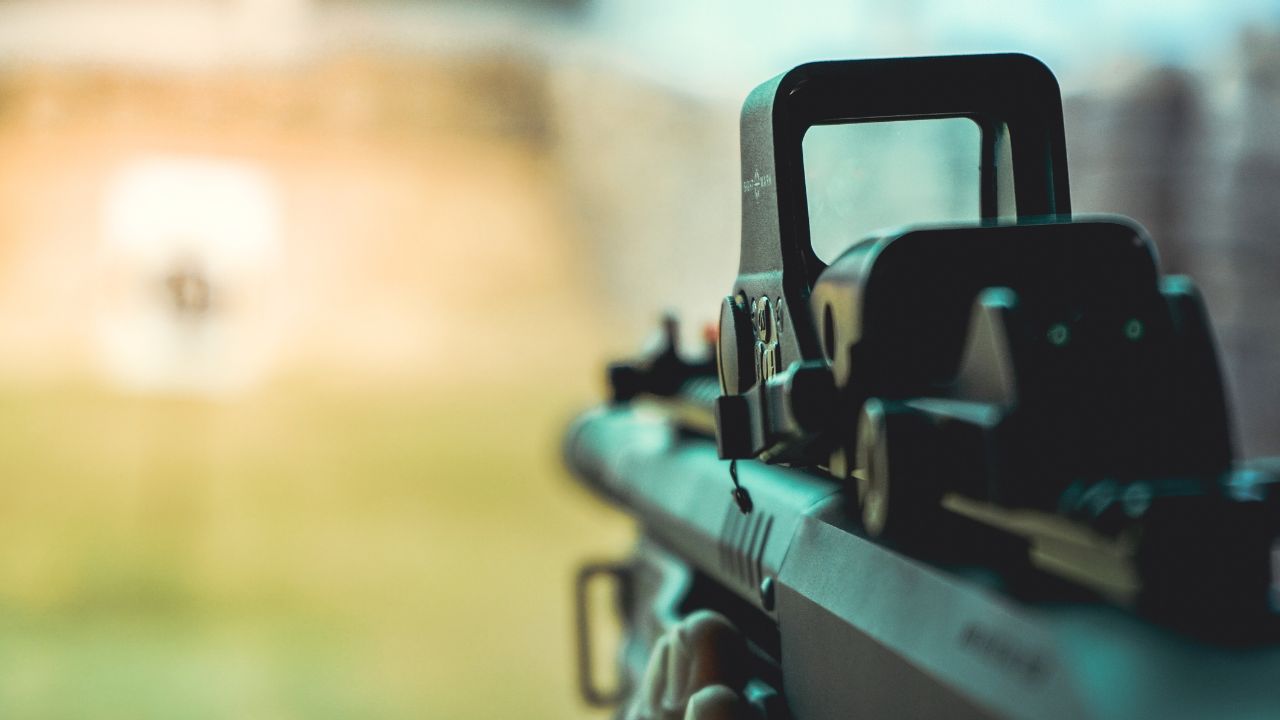
A pistol dot can absolutely make you faster and more consistent… if the setup and the shooter are squared away. The problem is a lot of people bolt one on, do two range trips, then act shocked when the dot “disappears,” batteries die, or the lens gets nasty at the exact wrong time. Irons are still the simplest, most durable option on earth—and for some carry setups, they’re still the right call. Here are 15 real-world situations that’ll show you where a dot is a legit advantage, and where irons are the smarter move.
When your eyes stop wanting to focus on a front sight
This is where dots earn their keep. With irons, you’re trying to keep the front sight crisp while the target is slightly fuzzy. As you get older (or your eyes are just tired), that front sight focus gets harder to hold, and you start “guessing” your sight picture. A dot lets you stay target-focused and still aim precisely, which is a big deal for defensive shooting where you’re processing a lot at once. The flip side: if you’ve got a nasty astigmatism, some dots look like a comma or a smear. That’s not a deal breaker, but it means you need to try different emitter sizes and brightness settings and stop cranking it to “sun mode” indoors.
When low light gets real and your sights turn into shadows
A dot helps a ton when lighting is bad. In low light, irons can disappear unless you’ve got good night sights and you can still pick up the front blade. A dot gives you an aiming reference you can see, and that matters when you’re trying to make a careful shot without “spraying and praying.” But here’s the part people forget: dots don’t replace a light. If you can’t see the target clearly, the dot doesn’t magically make the decision safe. Also, rain and fog can turn a lens into a mess. In wet conditions, irons with a bright front sight can be more dependable than a dot covered in water spots—unless you’re disciplined about wiping and managing it.
When you need speed on a realistic target, not a bullseye
On human-sized targets at real-world distances, a dot can be faster because your visual process is simpler: find dot, press. Irons require more precise alignment, and under stress that alignment tends to get sloppy. Dots reward a solid draw and presentation—if the gun comes out the same way every time, the dot is right there. If your draw is inconsistent, the dot “vanishes” and you start fishing for it, which is slower than irons. That’s why guys who struggle with dots almost always need reps on presentation, not a different optic. If you can present consistently, dots can shave time without you feeling like you’re rushing.
When you’re shooting past 15–25 yards and accuracy actually matters
Most people can “get by” with irons up close. Past 15 yards, small errors get loud, and dots make it easier to aim with precision without overthinking sight alignment. That’s why dots shine at 25 and beyond—especially if you’re trying to keep hits tight instead of just “on paper.” But this is also where cheap dots and weak mounts get exposed. If the optic isn’t rugged, or screws aren’t installed right, it’ll lose zero or shift. Irons don’t do that. So the dot advantage at distance is real, but only if the optic setup is solid. A junk optic setup at 25 yards will make you miss more confidently.
When recoil control and tracking is part of the problem
A dot gives you honest feedback. With irons, you can lose track of what the sights did during recoil, especially if you’re shooting fast. With a dot, you can watch how it lifts and returns. That helps you fix grip issues and build consistent control because you’re seeing the gun’s behavior, not guessing. The downside is that a dot can expose bad habits and frustrate people early, because now you’re watching the wobble and the movement. That’s not the dot being “hard.” That’s the dot showing you what’s happening. If you use it as feedback and not as a judgment, it makes you a better shooter faster.
When you’re shooting from ugly positions and imperfect cover
Dots are great when you can’t get a perfect stance. Shooting around barriers, from kneeling, from awkward angles—anything that makes a clean iron sight picture harder—often gets easier with a dot because you don’t need as much alignment. You can get the dot on target from positions where irons would require you to contort to line up the sights. That said, irons are more forgiving of rough presentation in one specific way: you can “index” them with muscle memory even if you don’t see them clearly. With a dot, if your presentation is way off, you’ll be searching. So dots help in awkward positions, but only if your draw/presentation fundamentals are consistent.
When your carry gun is tiny and you need the simplest setup possible
This is where irons still win a lot. Pocket guns and true micro-compacts get carried because they’re easy—not because they’re fun to shoot. Adding an optic can add bulk, snag points, and maintenance. It can also make the gun more top-heavy and less comfortable in some carry positions. A dot can still be useful on small guns, but the return on investment depends on the shooter and the role. If the gun’s job is “always there, deep concealment, minimal fuss,” irons are usually the smarter move. You can’t pretend your pocket gun is a match pistol. Keep it simple, reliable, and easy to carry every day.
When you’re committed to real practice and dry fire
Dots reward reps. A lot. Dry fire with a dot will show you exactly what your trigger press is doing—if the dot dips, you’re moving the gun. If it streaks, you’re slapping. That makes dry practice way more productive because you get instant feedback without burning ammo. But if you’re the kind of shooter who rarely trains, irons might actually be safer from a “skill decay” standpoint because they’re simple and familiar. A dot requires you to maintain presentation consistency and keep the optic maintained. If you’re willing to put in the reps, the dot will pay you back. If you aren’t, don’t pretend the optic will do the work for you.
When the environment is dirty, wet, or full of lint
This is a big “be honest” category. Dots have lenses. Lenses collect stuff. Pocket lint, dust, rain, sweat, oil—it all ends up on the glass. If you carry hard every day, you need a routine: quick wipe, quick inspection, and the discipline to notice when the emitter is blocked or the lens is smeared. In extreme cold, condensation can be a thing too. Irons don’t care. They’re dumb and dependable. If you’re in a job or lifestyle where your gun is constantly exposed to debris and moisture, irons can be the smarter move unless you’re disciplined about maintenance and your dot choice is rugged.
When battery management is something you’ll actually do
A dot that’s dead is just extra weight. Modern dots can run a long time, but “long time” still ends eventually, and people forget. If you’re the shooter who changes batteries on a schedule, checks brightness, and verifies function, a dot is great. If you’re the shooter who can’t even remember where your spare mag is half the time, irons might be a better match. This isn’t a character attack—it’s just reality. Gear that requires maintenance punishes neglect. The best dot users I know treat battery changes like smoke detector batteries: scheduled, boring, automatic. If you won’t do that, keep irons and spend the money on ammo and training.
When you rely on a perfect draw but you don’t actually have one yet
Dots are unforgiving of sloppy presentation. If your draw path is inconsistent, the dot won’t be in your window and you’ll hunt for it. With irons, you can often “find” the sights faster because you’re used to them and the reference is simpler. This is why a lot of new dot shooters feel slower at first. The fix is not “ditch the dot.” The fix is 500–1,000 clean dry reps where the gun comes up the same way every time. If you’re not willing to do that, irons might be the smarter move. A dot is a performance upgrade after your draw is repeatable.
When you need maximum durability with minimum moving parts
For pure ruggedness, irons still win. There’s nothing to crack, nothing to fog internally, no electronics, no mounting screws to loosen. If your pistol lives in rough conditions, gets tossed around, or you’re hard on gear, irons are hard to beat. A quality dot can absolutely be duty-grade, but it’s still an added system. If you choose a dot, choose one with a proven track record, mount it correctly, and confirm it stays put. If you can’t do those things, don’t run a dot “because everyone is.” Run irons and train hard. A boring setup that always works beats a fancy setup that turns into a question mark.
When you’re dealing with strong sunlight and bright backgrounds
Dots can wash out or get hard to see if brightness isn’t set right. Some shooters crank brightness all the time, then indoors it blooms and turns into a fuzzy blob. Others leave it too low and lose it outside. You’ve got to manage brightness intelligently. Irons don’t have that issue, but they can be harder to pick up against certain backgrounds too. The practical answer: a dot helps outside if you have enough brightness and a good emitter, and you don’t mind adjusting it. If you never touch settings, irons may be more consistent for you across lighting changes. This is another “maintenance vs simplicity” trade.
When you want redundancy and you set it up correctly
A dot doesn’t mean you abandon irons. If this is a carry gun, backup irons are smart, and a co-witness setup can save you if the dot fails or the lens is occluded. But you have to set it up properly: irons tall enough to use, dot mounted correctly, and you actually practice using irons through the window. A lot of people add backup irons and never train them. Then they’re surprised when the dot fails and they can’t shoot. A dot-plus-irons setup can be the best of both worlds, but only if you treat irons like a real backup plan and not decoration.
When the job is deep concealment and comfort is the whole point
This is the final honest one: if the pistol doesn’t get carried, none of this matters. If adding a dot makes the gun print more, dig into you, or makes carry annoying enough that you leave it behind, you just lost. In that role—deep concealment, minimal profile—irons are still the smarter move for a lot of people. You can be deadly accurate with irons at real distances if you train. A dot can be a performance boost, but performance doesn’t matter if the gun stays at home. Build the setup that you’ll actually carry every day, and don’t let internet trends overrule what works for your body and your routine.
Like The Avid Outdoorsman’s content? Subscribe to our newsletter so you never miss an article.
Here’s more from us: