Photo credit: Drake00 – CC BY-SA 3.0/Wiki Commons
Modern pistols are built lighter, smaller, and sometimes more powerful than their predecessors. But with that progress came a trade-off—many of today’s designs snap harder in the hand. Older military handguns, often made of steel and chambered for slower, lower-pressure rounds, can feel surprisingly soft to shoot. Their weight and mechanics soak up recoil in a way polymer pistols rarely do. If you’ve ever shot a classic sidearm, you know the difference immediately. Here are the old military handguns that continue to impress by handling recoil smoother than plenty of modern designs.
Colt M1911

The Colt M1911 earned its place in history, but it also stands out for how well it manages recoil. Despite being chambered in .45 ACP, a round known for its punch, the pistol’s all-steel construction and low bore axis help tame the kick. The weight of the gun works in your favor, spreading the impulse out and keeping muzzle rise manageable.
Shooters often find the recoil more of a push than a snap, especially compared to lightweight modern pistols chambered in the same caliber. Military service members appreciated how controllable it was in rapid fire, and it’s still praised today for its shooting comfort. While the design is over a century old, it handles recoil in a way that makes newer pistols feel harsher by comparison. If you want proof that old steel guns can shoot softer than modern plastic, the M1911 makes the case every time you pull the trigger.
Browning Hi-Power

The Browning Hi-Power served militaries worldwide for decades, and part of its staying power came from its shootability. Chambered in 9mm and built from solid steel, the pistol’s weight helps absorb recoil while keeping the muzzle steady. The grip design also spreads recoil evenly into the shooter’s hand, making it one of the more comfortable service pistols to run through long sessions.
Compared to lightweight polymer-framed 9mm pistols today, the Hi-Power feels smoother and more balanced. The recoil impulse is less snappy, allowing faster follow-up shots without as much effort. Soldiers valued this controllability, especially in close-quarters use where rapid fire mattered. Many shooters still prefer the Hi-Power over newer designs simply because it’s easier on the hands. Even though production ended, its reputation for handling recoil gracefully continues, showing that sometimes older steel designs outperform modern guns in real-world comfort and control.
Walther P38

The Walther P38, introduced in World War II, was ahead of its time mechanically. Its short-recoil, locked-breech system distributed recoil forces more efficiently than many pistols of its era. Chambered in 9mm and built with enough weight to stabilize the gun, it shoots softer than most modern service pistols of the same caliber.
Where lightweight polymer guns tend to deliver a sharp snap, the P38 delivers a gentle, controllable impulse. Its double-action/single-action trigger system added some complexity, but the actual recoil management made it popular with soldiers. Even today, many shooters are surprised at how comfortable it is to fire. The combination of design and heft allows quick, accurate follow-up shots without fighting the muzzle. While modern pistols lean on lighter frames and higher capacities, the P38 proves that sometimes an older steel gun handles recoil with far more grace and predictability than newer handguns.
Tokarev TT-33

The Tokarev TT-33 looks utilitarian, but its performance is surprisingly smooth given its powerful cartridge. Chambered in 7.62×25mm Tokarev, the round has a sharp crack, yet the pistol’s all-steel frame and linear design keep it controllable. The recoil impulse feels more like a firm push straight back rather than a snap upward, which helps shooters maintain accuracy.
Soldiers who carried it often commented on its reliability and how manageable it was, even during rapid strings of fire. Compared to modern pistols chambered in similar high-velocity rounds, the TT-33 feels steadier and more predictable. The weight of the gun soaks up much of the energy, preventing the harsh bite common in lighter designs. While it lacks modern ergonomics and safety features, the Tokarev still impresses at the range with recoil handling that outpaces plenty of newer pistols. Its reputation as controllable under fire made it a trusted military sidearm for decades.
Luger P08

The Luger P08, famous for its toggle-lock mechanism, has recoil characteristics that surprise many modern shooters. Chambered in 9mm, its unique action absorbs and redirects energy in a way that softens the felt recoil. Combined with the pistol’s weight and balance, the result is a firearm that feels smoother in the hand than many lighter contemporary pistols.
The low bore axis and natural grip angle further help control muzzle rise, making follow-up shots easier than expected. While the design looks unconventional, it delivers comfort in practice. Soldiers appreciated the accuracy and controllability, even if the pistol itself was mechanically complex. At the range today, shooters often remark on how pleasant the Luger is to fire compared to polymer 9mms. Its recoil impulse feels more refined, proving that even over a century ago, thoughtful design and solid steel construction could create a handgun that outperforms many modern sidearms in terms of shooting comfort.
SIG P210

The SIG P210 has long been regarded as one of the smoothest-shooting service pistols ever made. Adopted by the Swiss military, it’s chambered in 9mm and built with remarkable precision. Its weight, fit, and craftsmanship all contribute to a recoil impulse that feels soft and controlled. Shooters consistently describe it as one of the most comfortable military pistols to fire.
The P210’s slide rides inside the frame rails, which lowers the bore axis and helps reduce muzzle flip. This makes rapid, accurate shooting easier than with many modern handguns. While the pistol is heavy, that extra mass works in the shooter’s favor, taming recoil and allowing steadier aim. Even compared to newer designs with advanced polymer frames, the P210 feels smoother and more predictable. It remains a benchmark for controllability, showing that older European service pistols still outperform many current production models in recoil management.
Makarov PM

The Makarov PM is a compact Soviet-era pistol chambered in 9×18mm Makarov, and despite its small size, it handles recoil better than you’d expect. The cartridge sits between .380 ACP and 9mm Luger in power, but the pistol’s all-steel frame soaks up much of the recoil. The result is a controllable sidearm that feels smoother than many modern lightweight carry guns.
Where small polymer pistols in .380 or 9mm often snap violently, the Makarov gives you a steady push that’s easier to manage. Soldiers and police who carried it appreciated its balance of size and shootability, finding it effective for rapid fire at close range. Even today, shooters are surprised at how manageable it is compared to contemporary compact pistols. Its weight, combined with simple mechanics, gives it an edge in recoil control that’s rare in pistols of its size. The Makarov proves that old-school steel beats plastic for shootability.
Webley Mk VI Revolver

The Webley Mk VI revolver, chambered in .455 Webley, may look imposing, but its recoil is surprisingly soft. The large, heavy frame and top-break design soak up the power of the cartridge, turning what could be a punishing shot into a manageable push. Compared to modern magnum revolvers, the Webley feels remarkably controllable for its size and caliber.
Soldiers who carried it during World War I and II often commented on its comfortable shooting characteristics. The big, slow-moving bullet didn’t generate the kind of snap you find in higher-pressure modern rounds. Instead, the recoil rolled back gently, making follow-up shots less intimidating. Even though it’s an old design, the Webley continues to impress shooters who expect it to kick harder than it does. Its combination of mass, balance, and cartridge choice makes it one of the smoothest-handling military revolvers, proving that bigger isn’t always harsher when it comes to recoil.
Colt New Service

The Colt New Service revolver was used by the U.S. military in calibers like .45 Colt and .455 Webley, and its size made it a natural recoil tamer. The revolver’s heavy frame absorbs much of the impulse, turning stout loads into something manageable. Instead of a sharp snap, you get a rolling push that makes extended shooting less fatiguing.
Compared to modern lightweight revolvers chambered in similar calibers, the New Service is far more comfortable. Its weight and grip size spread recoil across the shooter’s hand, allowing steadier control and faster recovery between shots. Soldiers valued its durability and controllability in the field, where reliability mattered just as much as shootability. Today, it remains a revolver that surprises shooters with how soft it feels despite its chamberings. The New Service demonstrates how mass and solid steel design often make older revolvers smoother to fire than many modern handguns built for carry.
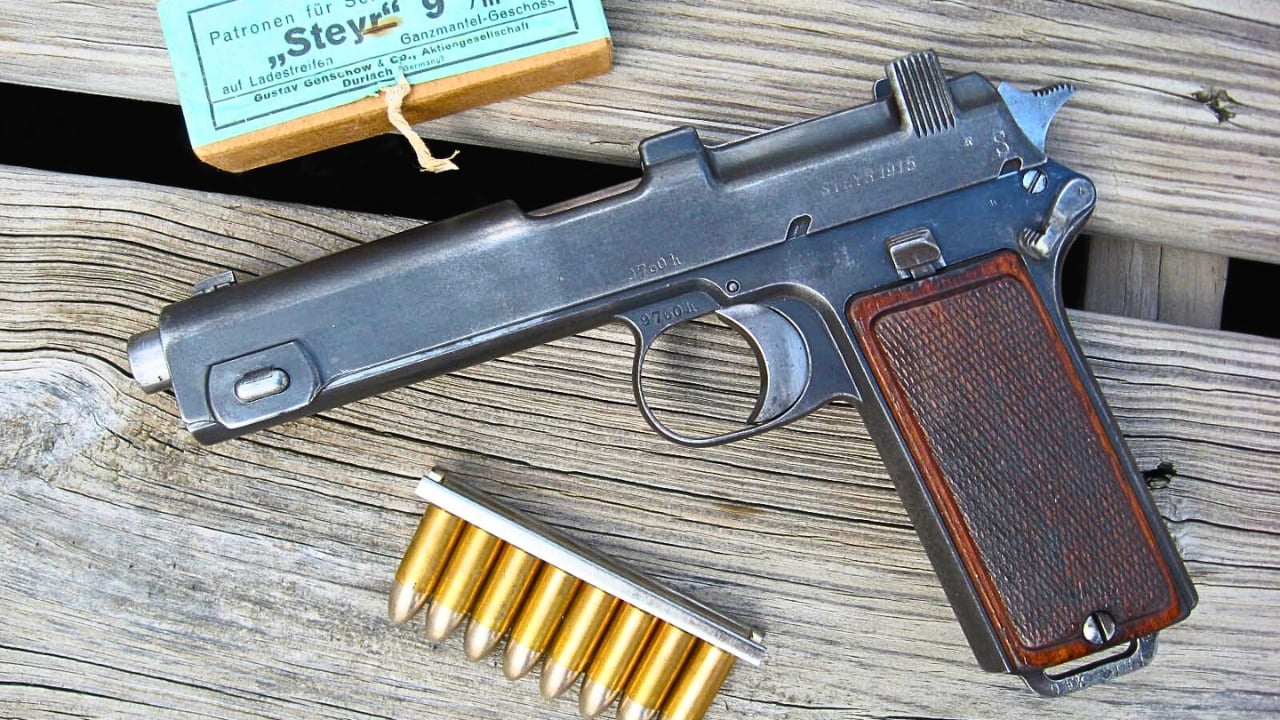
Steyr M1912

The Steyr M1912 pistol, used by the Austro-Hungarian military, has an unusual look with its fixed magazine and rotating barrel system. But when it comes to recoil, it’s smoother than many modern pistols. Chambered in 9mm Steyr, the combination of steel construction and unique action helps manage the recoil impulse effectively. Shooters are often surprised at how steady it feels.
The rotating barrel system directs energy differently than tilting-barrel pistols, reducing muzzle rise and softening the perceived recoil. Its weight further dampens the kick, making it controllable even during rapid fire. Soldiers appreciated its durability and balance, finding it comfortable despite its unconventional design. At the range today, the Steyr M1912 still impresses those who expect it to be harsh. Instead, it delivers a smoother recoil experience than many lightweight 9mms currently in production. It proves that even over a century ago, engineers found ways to tame recoil effectively.
FN 1910

The FN 1910, designed by John Browning, is a compact pistol that handled recoil surprisingly well for its size. Chambered in .32 ACP or .380 ACP, it wasn’t the most powerful sidearm, but the steel frame and blowback design kept recoil smooth and manageable. Unlike many modern pocket pistols in the same calibers, it didn’t punish shooters with sharp muzzle flip.
Its rounded grip and solid weight allowed the recoil to spread across the hand comfortably. Soldiers and officers who carried it valued its shootability for a small sidearm, finding it more controllable than expected. At the range, the FN 1910 still feels steadier than lightweight polymer .380s or .32s that often snap unpredictably. While modest in power, its ability to shoot comfortably made it stand out in its era and still relevant today. It’s proof that older steel pocket pistols can offer a smoother recoil experience than many modern carry guns.
Nagant M1895

The Nagant M1895 revolver is often remembered for its unusual gas-seal system, but it also stands out for its controllable recoil. Chambered in 7.62×38mmR, the round isn’t especially powerful, and the revolver’s hefty all-steel construction soaks up what recoil there is. The result is a sidearm that feels steady and predictable to shoot, even during extended sessions.
Where modern small-frame revolvers often kick sharply with comparable cartridges, the Nagant delivers a gentler experience. Its long double-action trigger isn’t the smoothest, but once fired, the recoil impulse is surprisingly mild. Soldiers valued it for reliability, and shooters today often remark on how comfortable it is despite its age and quirks. While it may not be powerful by modern standards, the Nagant shows how older designs can balance weight and cartridge choice to produce a recoil profile that’s easier to manage than many newer revolvers on the market.
Savage Model 1907
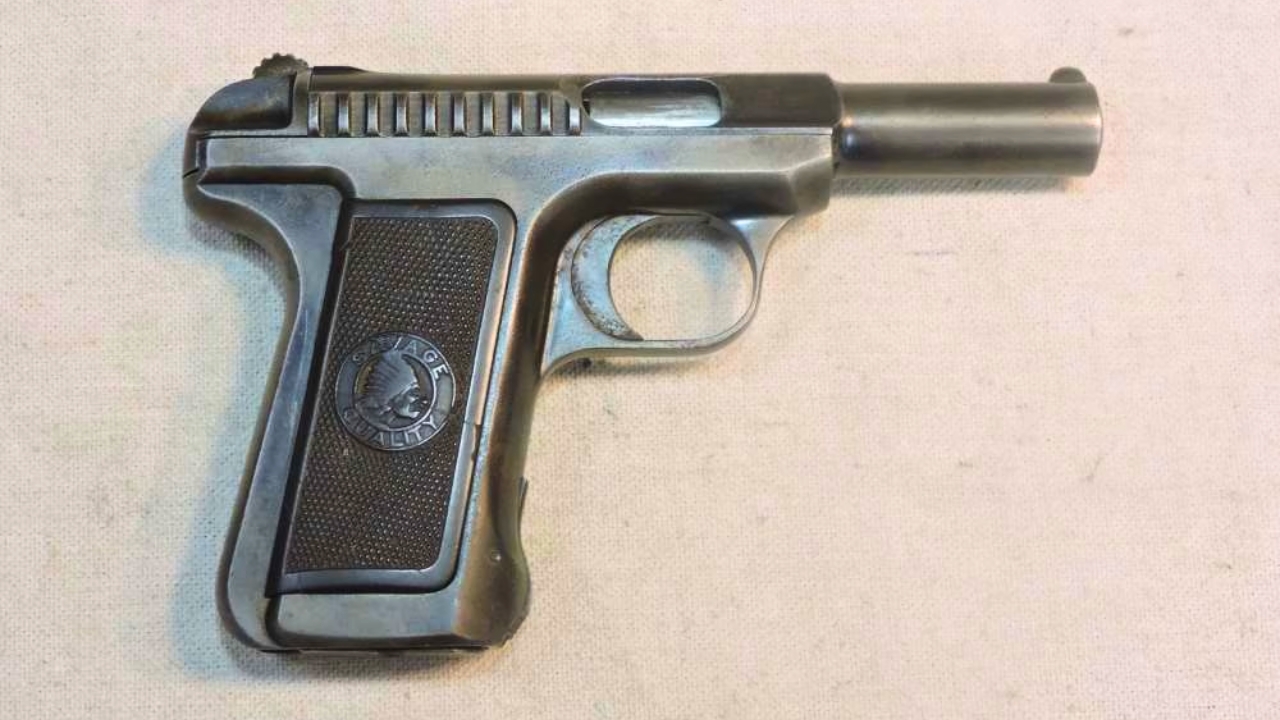
The Savage Model 1907, chambered in .32 ACP and issued to some U.S. officers during World War I, is another old handgun that handles recoil with ease. Its steel construction and comfortable grip design absorb much of the cartridge’s energy, turning it into a smooth push rather than a snappy snap. Compared to modern pocket pistols in .32, it feels significantly more controllable.
The pistol’s reputation for shootability helped make it popular with both civilians and military officers at the time. Rapid fire is easy to control, and accuracy remains steady even during longer sessions. Where modern polymer pocket pistols often sting the hand after a few magazines, the Savage 1907 remains pleasant to shoot. It’s one of those old designs that proves weight and ergonomics can make all the difference. Even though it’s over a century old, it still offers a softer shooting experience than many modern handguns chambered in the same caliber.
*This article was developed with AI-powered tools and has been carefully reviewed by our editors.