Photo credit: imred/Shutterstock.com
Some handguns vanish from the market and not a single tear is shed. Maybe they were unreliable, uncomfortable, or built so cheaply that even loyal fans stopped defending them. A few were overengineered, others underbuilt, but all shared one thing—they didn’t leave shooters wanting more. These are the pistols that fade quietly into pawn shop racks or collectors’ odd corners, remembered only as lessons in what not to do. You won’t find anyone asking when they’re coming back, and for good reason.
Remington R51

The Remington R51 came back from history with huge expectations and even bigger disappointment. What was supposed to be a modern revival of a classic turned into a reliability nightmare. Feed issues, out-of-battery discharges, and sloppy machining ruined its first impression. Even after a full redesign, the damage was done.
Shooters who trusted the Remington name expected smooth shooting and solid engineering. Instead, they got recalls, returns, and a pistol that became a running joke. The R51 might have looked sleek, but it earned a reputation no brand wants—one that shooters forgot the moment it left stores.
Colt All American 2000

When Colt introduced the All American 2000, it promised to bring the brand into the polymer era. Instead, it became one of the worst flops in Colt’s history. The trigger was spongy, accuracy mediocre, and reliability all over the map. The rotating barrel design was interesting but never worked smoothly in practice.
Shooters wanted a Glock competitor and got a clunky pistol that cost more and performed worse. Collectors might hang on to them for curiosity’s sake, but nobody misses shooting one. It was a bold swing at modernization that completely whiffed.
Taurus PT-145 Millennium Pro

The PT-145 Millennium Pro sold well early on thanks to its compact size and big capacity. Unfortunately, it earned a reputation for cracked frames and trigger safety failures. Taurus eventually issued recalls, but not before the gun’s reputation collapsed.
Plenty of owners experienced accidental discharges or reliability issues under recoil. Once those stories spread, the pistol’s fate was sealed. You don’t miss a carry gun that made you nervous to carry it. When it disappeared, most shooters didn’t even notice—it was safer that way.
AMT Backup

The AMT Backup looked like the ideal deep concealment pistol—tiny, stainless, and chambered in real defensive calibers. Then you fired it. The trigger was brutally heavy, the slide sharp-edged, and recoil painful in anything above .380. Malfunctions were common, and parts support was nearly nonexistent.
It was the kind of gun that seemed like a good idea until you shot it once. After that, it went into drawers or got traded away fast. When AMT shut down, few people mourned the Backup’s loss. It was more of a headache than a handgun.
Bryco Jennings 9

The Bryco Jennings 9 was a staple of pawn shops in the ’90s and a nightmare on the firing line. Built cheaply with zinc alloy parts, it was unreliable, inaccurate, and prone to breaking under normal use. The safety design was even dangerous enough to cause accidental discharges.
It filled a niche for budget buyers, but nobody who owned one looks back fondly. Most ended up discarded, damaged, or traded in for something that actually worked. The fact that it’s gone isn’t a loss—it’s progress.
Hi-Point C9 (First Generation)

The modern Hi-Point line has its defenders, but that first-generation C9 earned every insult it got. It was bulky, heavy, and about as ergonomic as a brick. While reliable in some cases, accuracy and comfort weren’t part of the design equation.
Hi-Point improved later models, but the early guns were rough—literally. They worked, but they weren’t enjoyable. When early versions disappeared, nobody begged for their return. Most shooters were too busy celebrating the fact that they didn’t have to explain why their gun looked like a stapler.
Intratec TEC-DC9

The TEC-DC9 looked intimidating and futuristic in the ’90s, but that’s where the praise ended. It was unreliable, heavy, and wildly inaccurate. Designed more for looks than function, it jammed constantly and attracted the wrong kind of attention from lawmakers and the media.
Collectors might hang on to one for nostalgia, but as a shooter, it’s miserable. The balance is awful, the trigger is poor, and the weight makes it impractical for anything but conversation pieces. When production ended, nobody missed having one at the range.
Lorcin L380

The Lorcin L380 is another cheap import from the “Saturday night special” era, and it lived up to that label in all the wrong ways. Loose tolerances, poor metallurgy, and unreliable magazines made it frustrating at best and dangerous at worst.
Plenty of new gun owners bought one thinking they were getting a deal, only to learn that “cheap” doesn’t mean “bargain.” Most failed within a few hundred rounds. When Lorcin folded, there weren’t any fan petitions for a comeback—everyone moved on to something that actually worked.
Sigma SW9

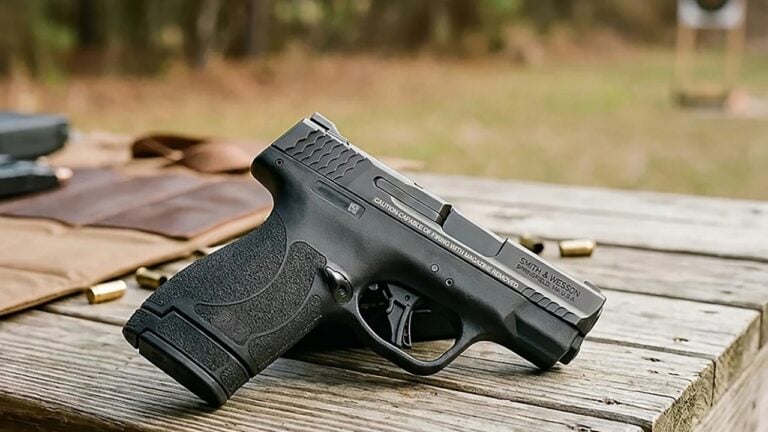
The Smith & Wesson Sigma was supposed to be their big answer to Glock. Instead, it was a harsh lesson in how not to design a striker-fired pistol. The trigger pull felt like dragging a cinder block, and accuracy suffered as a result.
While the gun functioned reliably, the user experience was miserable. Most owners sold theirs within months, opting for the M&P line that replaced it. Smith & Wesson quietly let the Sigma fade away, and few shooters bothered to notice.
Steyr M9 (Early Model)

The Steyr M9 had an interesting design and futuristic ergonomics, but its first production run was plagued with reliability issues. Ejectors broke, the sights loosened, and support in the U.S. was weak. The triangular sights were polarizing—some loved them, most didn’t.
Later models fixed many issues, but that early batch left a bad taste in shooters’ mouths. The M9 could’ve been great, but the timing and execution were wrong. When it disappeared from shelves for a few years, most shooters simply shrugged and reached for something proven.
Colt Double Eagle

The Colt Double Eagle was a double-action 1911 variant that nobody asked for and few liked. The grip felt wrong, the trigger was inconsistent, and the added complexity solved nothing. Colt’s loyalists tried to support it, but the design never caught on.
It wasn’t unreliable—it was unnecessary. Shooters who wanted a 1911 wanted the classic trigger and simplicity, not a complicated DA/SA system. When Colt pulled the plug, the silence was deafening. It’s one of those pistols whose absence improved the catalog.
Like The Avid Outdoorsman’s content? Be sure to follow us.
Here’s more from us:
The worst deer rifles money can buy
Sidearms That Belong in the Safe — Not Your Belt
*This article was developed with AI-powered tools and has been carefully reviewed by our editors.