Photo credit: Robert Sarnowski/Shutterstock.com
Polymer pistols may dominate the market today, but that doesn’t mean they’ve cornered the idea of balance. In fact, many metal-framed pistols continue to outshine their lighter counterparts when it comes to how steady they feel in your hands. Balance isn’t only about weight; it’s about how that weight is distributed, how the bore sits over your grip, and how the pistol returns to target after each shot. A well-balanced gun lets you shoot longer and steadier without fighting the muzzle.
Shooters often assume lighter means better, especially for carry, but balance can matter more than ounces. A gun that points naturally and settles quickly between shots builds confidence in ways polymer frames sometimes struggle to match. The following pistols prove that steel and alloy designs still hold their own against modern polymers. They’re the ones you’ll find yourself wanting to shoot more, not less, because they manage weight and recoil in a way that feels intuitive every time.
Browning Hi-Power

The Browning Hi-Power has been admired for decades because of how naturally it points and balances. Its all-steel frame distributes weight evenly, which reduces muzzle flip and gives the shooter confidence with every string of fire. Compared to lighter polymer pistols, the Hi-Power feels more planted, making it easier to maintain accuracy through longer sessions.
The slim grip profile also contributes to its balance. Unlike many modern double-stack polymer guns, the Hi-Power never feels bulky in hand. It settles in naturally, and the steel slide rides smoothly, translating recoil energy into a push rather than a snap. This balance has been one of the reasons it remained in military and police service worldwide long after polymer options took over. For shooters who appreciate a pistol that feels steady and shoots flat, the Hi-Power still demonstrates how steel designs can outperform lighter frames in balance and control.
SIG Sauer P226

The SIG P226 is a full-size pistol that surprises many shooters with how well it balances despite its steel slide and alloy frame. Where some polymer rivals feel top-heavy, the P226 spreads weight in a way that keeps the muzzle down and follow-up shots consistent. It’s one of the reasons elite units carried it for decades, trusting it not just for reliability but for how it shoots under stress.
The grip angle and frame contour help the pistol settle naturally into the hand. That geometry, combined with its weight distribution, makes the P226 easier to track during rapid fire than many polymer guns of similar size. Shooters often remark on how little adjustment they need between shots, as the sights realign almost automatically. While polymer designs may win in terms of lighter carry weight, the P226 proves that balance is what keeps you shooting fast and accurate when it really matters.
CZ 75B

The CZ 75B has earned its reputation as one of the best-balanced pistols ever made. Its slide-in-frame design keeps the bore axis low, which directly translates into reduced muzzle rise and better control. Unlike many polymer pistols, which can feel snappy and light up front, the 75B feels steady and locked in place when you press the trigger.
The all-steel construction adds weight, but it’s weight that works in your favor. The gun tracks flat, and recoil feels softer compared to lighter polymer rivals. The ergonomics also play a big role in its balance, with a grip that seems to mold into the hand and keeps the gun stable even under extended shooting. Shooters who run both polymer and steel side by side often notice the difference immediately. With the CZ 75B, the pistol seems to return to center naturally, making it a classic example of how balance can make a firearm stand out.
Beretta 92FS

The Beretta 92FS is one of those pistols that feels bigger than many polymers yet manages to balance better in actual shooting. Its open-slide design reduces reciprocating mass, which smooths out recoil and helps the gun return to target faster. While polymer pistols in the same size can feel slide-heavy, the 92FS spreads its weight in a way that gives it a steadier, more predictable recoil cycle.
Another factor in its balance is the grip frame. The angle and contour distribute pressure evenly, letting you lock in a strong grip that doesn’t shift shot to shot. Despite being a full-size all-metal pistol, it doesn’t feel clumsy or nose-heavy. Shooters who transition between the 92FS and polymer service pistols often remark that the Beretta feels more controllable, especially when firing longer strings. Its balance has been one of the reasons it remained a standard issue in militaries and police forces around the globe for so long.
SIG Sauer P229

The SIG P229 is technically a compact pistol, but it feels steadier than many full-size polymer guns. The heavier slide and alloy frame balance well over the grip, creating a natural point of aim that stays consistent shot after shot. It’s been favored by federal agencies not only for reliability but for its shootability under pressure.
What sets the P229 apart from polymer rivals is how recoil energy is handled. Instead of a sharp flip, the gun cycles smoothly and settles quickly, making controlled pairs far easier. The frame rails run nearly the full length, which helps keep the slide tracking consistently. While it’s heavier than polymer compacts, the balance it offers makes the tradeoff worth it. Many shooters who switch to the P229 from lighter pistols notice immediately that their groups tighten and their follow-up shots speed up, proving balance often matters more than weight alone.
Smith & Wesson Model 39

The Smith & Wesson Model 39 was one of the first American-made double-action semi-autos, and it earned respect for its balance. Built with an alloy frame and steel slide, it carried lighter than some of its all-steel counterparts but still balanced better than polymer pistols that came decades later. Its slim profile and well-angled grip made it easy to shoot consistently.
Shooters who pick one up today often remark on how natural it feels, despite its age. The recoil impulse is straight back, with less muzzle rise than you’d expect from such an early design. Unlike many modern polymers that rely on grip texture or extra features to stabilize, the Model 39 simply balances well in the hand. For a pistol that paved the way for later designs, it remains a reminder that balance has been a key part of shootability long before polymers changed the market.
CZ P-01

The CZ P-01 may be compact, but it manages to feel steadier than many polymer pistols in the same size class. Built on an alloy frame, it combines durability with a weight distribution that keeps the muzzle under control. Its design borrows from the 75 series, with the low bore axis and slide-in-frame layout that helps it track flat under recoil.
The ergonomics of the grip make it easy to maintain control, even through extended strings of fire. While many polymer compacts can feel twitchy or light up front, the P-01 feels balanced and stable. Shooters who run it side by side with polymer carry guns often find they shoot the P-01 faster and more accurately. NATO certification proved its durability, but its balance is what makes it enjoyable and effective in real-world use. It’s a compact that handles like something larger, and balance is the reason why.
SIG Sauer P210

The SIG P210 is often described as one of the most accurate service pistols ever produced, and balance is at the core of that reputation. Its all-steel construction and precise machining give it a steadiness that polymer pistols struggle to replicate. The bore sits low, and the frame and slide fit so tightly that the recoil cycle is smooth and predictable.
The grip angle also contributes to its natural pointing ability. When you bring the P210 up, the sights align without much adjustment, and the pistol stays planted during firing. Shooters often notice that it feels like an extension of the hand, not something that needs to be muscled into control. While it’s heavier than modern carry pistols, its balance makes it one of the easiest to shoot accurately. The P210 remains a benchmark for how a pistol should feel in terms of steadiness and precision.
Star Model B

The Star Model B is an underrated pistol that shares much of its lineage with the 1911 but stands out for how balanced it feels. Built with all-steel construction, it avoids the nose-heavy tendencies of some later pistols. Instead, the Model B distributes weight evenly, which translates to smooth handling and controllable recoil.
Shooters often remark that it feels more like shooting a full-size service pistol, even though it’s relatively slim. Compared to polymer rivals, which can feel snappy or top-heavy, the Star’s weight and design make it far easier to manage. While it doesn’t have the fame of the 1911, those who’ve shot one often appreciate how naturally it handles. For hunters, collectors, or anyone interested in older pistols that shoot well, the Star Model B proves balance has been a part of Spanish design for decades, even if it didn’t get the recognition it deserved.
Walther P38

The Walther P38 was ahead of its time in many ways, and one of its most enduring qualities is its balance. The all-steel frame and unique locking block system give it a recoil impulse that feels different from most pistols, especially compared to polymer guns. Instead of a sharp kick, it cycles with a steadier, more controllable motion.
The grip angle is another factor that makes the P38 feel well-balanced. It points naturally and doesn’t require much effort to keep on target. Shooters often find that despite its age, it feels steadier than many modern designs. Where polymer pistols may feel light and twitchy, the P38 feels anchored in hand, making it easier to shoot accurately across multiple rounds. Its design influenced countless later pistols, and its balance remains one of the reasons it’s still enjoyable to take to the range today.
Colt Commander

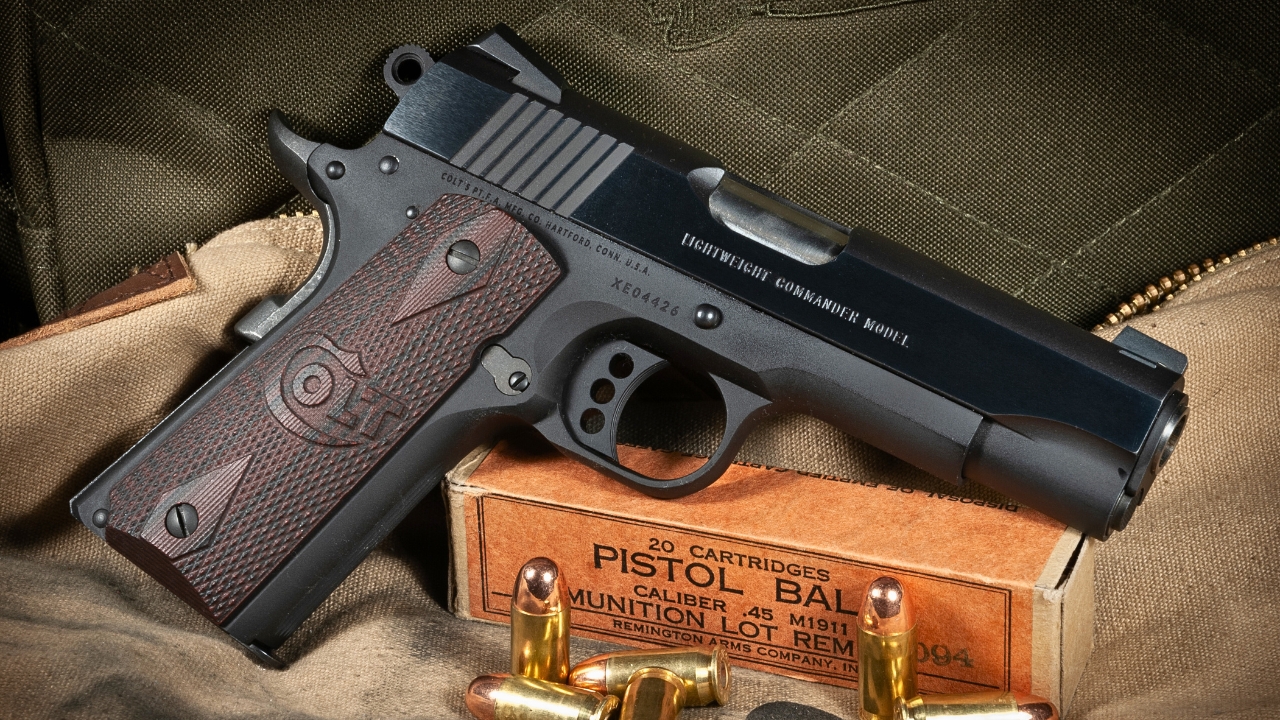
The Colt Commander offers a more compact version of the 1911 platform while maintaining the balance that shooters love. The shorter barrel and slide don’t make it feel nose-heavy, and the all-steel or alloy frames keep the gun steady under recoil. Many shooters prefer the Commander over full-size 1911s for how naturally it handles without losing the qualities that make the platform so effective.
The balance comes from both the low bore axis and the way the grip fills the hand. Even with heavy .45 ACP loads, the Commander doesn’t feel unruly. Polymer pistols of the same size often feel jumpier, while the Commander stays anchored and predictable. This makes it a favorite for both carry and range use. The Commander proves that compact pistols don’t have to give up balance, especially when designed with the same attention to weight distribution as its larger sibling.
SIG Sauer P220

The SIG P220 has long been a favorite for .45 ACP shooters who want balance without excessive size. Its alloy frame keeps it lighter than a full steel gun, but it still balances better than polymer .45s, which can feel overly snappy. The weight of the slide over the grip gives it a steadiness that makes hot .45 loads easier to manage.
The grip contour and bore axis contribute to the natural feel of the pistol. Shooters often find that it points without effort and stays steady under recoil. Compared to polymer rivals, which rely on lighter weight and aggressive grip textures, the P220 delivers balance through thoughtful design and weight distribution. This is one reason it’s been trusted by both military and law enforcement agencies for decades. The P220 shows that even a full-power cartridge like .45 ACP can feel manageable when paired with the right pistol balance.
Luger P08

The Luger P08 is famous for its unique toggle-lock design, but balance is another quality that makes it stand out. The grip angle and slim frame give it a natural point of aim, something many polymer pistols struggle to replicate. Despite its age, shooters often find that it feels remarkably steady during fire.
The balance comes from its overall design. The weight sits directly over the hand, reducing the leverage effect that causes muzzle rise in other pistols. Instead of fighting recoil, the P08 seems to settle back into place naturally. Polymer pistols may be lighter, but they rarely offer this level of intuitive handling. The Luger remains one of the most iconic examples of how thoughtful design can create balance that outlasts generations of newer materials and technologies. For shooters who get the chance to fire one, its steadiness is usually the first surprise.
FN Model 1922

The FN Model 1922 extended the design of earlier Browning pistols, and one of its key strengths was balance. The longer barrel and slide added weight up front, but the slim grip and frame distributed it evenly, creating a pistol that felt steady in hand. Compared to polymer compacts of today, the 1922 still holds its own in terms of controllability.
Shooters often note that the pistol points naturally and doesn’t feel nose-heavy, even with the extended length. Its steel construction anchors it, reducing the twitchy recoil often found in lighter polymer designs. The FN 1922 may not have the fame of the Hi-Power, but it remains a strong example of how steel pistols achieved balance long before polymers became popular. For those interested in historic designs that still shoot well, the 1922 demonstrates how balance was a priority even in early semi-auto pistols.
*This article was developed with AI-powered tools and has been carefully reviewed by our editors.