Photo credit: Herrington Arms/YouTube
This one drives people crazy because it feels personal. The pistol runs fine for months, then you add a dot and suddenly you’re getting stovepipes, failures to return to battery, weird ejection, or it just feels “off.” Most of the time it’s not the optic itself being cursed. It’s tolerance stacking and timing. You changed slide mass, changed how the gun cycles, sometimes changed spring weight, and you might’ve introduced a mounting screw that’s a hair too long, or an optic plate that isn’t perfectly square. Then you’re surprised when the gun stops being boring.
Here are 15 pistols that tend to be more sensitive to optics changes than people expect—especially if you don’t install and tune them carefully.
Springfield Hellcat OSP

Hellcats can run great with dots, but they’re also a small, fast-cycling pistol. When you add an optic, you’re adding slide mass to a platform that already has tight timing. If your ammo is on the weak side or the gun is dry, you can see reliability start to wobble—especially in colder weather or when the gun is dirty. It’s not always dramatic, but it shows up as occasional failures that didn’t exist before.
The other big one is screw length and plate fit. A screw that’s slightly too long can bind or cause weird issues that feel like extraction problems. If you’re putting a dot on a Hellcat, do it like you mean it: clean threads, correct torque, correct screws, confirm no binding, and then test with your carry ammo. Micro guns don’t forgive sloppy optics installs.
Smith & Wesson M&P Shield Plus OR

The Shield Plus is a solid carry pistol, but it’s still a small gun with a lot going on in a short slide. With an optic on it, some setups get more sensitive to ammo and recoil spring condition. You’ll also see occasional issues when guys add a dot and then immediately run bargain practice ammo that was already borderline. It ran before because the gun had a little more margin. Now it doesn’t.
The other common trap is plates and mounting. If your dot isn’t seated perfectly, or your screws are wrong, you can create problems that feel like “the gun hates optics.” It doesn’t. It hates bad installs. The Shield Plus is usually fine once the optic is mounted correctly and you pick ammo that cycles it with authority.
Ruger Max-9

The Max-9 is popular because it’s affordable and optics-ready. It can also be a little more sensitive once you add a dot, especially if you’re running lighter loads. Ruger did a lot right with it, but small guns with optics are always a timing game. Add mass, change cycle speed, and anything that was barely “fine” can become a hiccup.
You’ll also see issues tied to plates and fasteners. Budget optics-ready pistols attract budget optics installs, and that’s where it goes sideways—wrong screws, wrong torque, screws backing out, thread locker applied like ketchup, you name it. If you want the Max-9 to stay boring, mount the optic correctly, test with real ammo, and don’t assume “optics-ready” means “install-proof.”
Canik TP9 Elite SC

Caniks are known for good triggers and value, but the Elite SC is a compact that can be sensitive to changes when you add an optic—especially if the optic/plate combo adds more mass than the gun likes. Some of these pistols run everything. Others get finicky with lighter loads after you add a dot. That’s the issue: it’s not always consistent across every individual gun.
Also, Caniks bring in a lot of new dot shooters, and new dot shooters tend to change grip and stance while they learn the dot. That can look like a gun problem. The best way to separate it: run the gun on irons, confirm it’s solid, mount the optic properly, then run the same ammo and track whether malfunctions are real or grip-driven. Small pistols can expose technique changes fast.
FN Reflex MRD

The Reflex is a newer micro that a lot of people like, but micro pistols with dots are still micro pistols with dots. Once you add an optic, you’re asking a short, light slide to cycle with extra mass. If you pick a dot that’s heavier or a mount that adds height and weight, you can see the gun become pickier about ammo impulse.
The other thing with newer platforms is that people are still learning what “best practices” look like for mounting and springing. If you’re running a Reflex MRD, don’t assume the factory setup is perfect for every optic and every ammo choice. Do your own testing, keep it wet, and don’t be shocked if it likes hotter 124/147 loads more than soft 115 range stuff after you mount the dot.
IWI Masada Slim

The Slim is a good concept—thin, optics-ready, modern—but it’s also in that category where slide mass and springing can be sensitive. Some owners report that once a dot goes on, the gun feels less forgiving with weak ammo. Again, not because the gun is “bad,” but because micro/ slim pistols don’t have much spare cycle energy to waste.
Mounting matters a ton here too. Plate seating, screw length, and torque make or break reliability. A dot that’s slightly loose can cause intermittent issues that make you think you’ve got extraction problems. If you’re going to carry it, treat it like a carry setup: install right, test hard, and keep track of what ammo it actually runs best once the optic is mounted.
Walther PDP F-Series

The PDP is generally a reliable platform, but the F-Series draws in a lot of first-time dot shooters, and once you add an optic and change recoil dynamics, some setups become ammo-sensitive. Walther slides can be snappy, and adding mass can shift ejection behavior. Most of the time it’s still fine—but it’s one of those pistols where if you start seeing weak ejection after a dot install, you shouldn’t just ignore it.
Another thing: dot mounting is only as good as the hardware. If you’re using plates, make sure the plate and optic sit flat and you’re not using screws that bottom out. A PDP that runs great on irons can feel like it’s “acting weird” with a dot if the install is even slightly off. Fix the install first before you start swapping parts.
Beretta APX A1 Carry

The APX A1 Carry is compact, and compact pistols don’t love added mass. It’s also a pistol that’s often bought as a budget carry option, which means many owners install budget dots and then run cheap range ammo. That’s where you see “it ran until I added an optic” stories. The slide cycles faster and with less margin, and now the weak ammo that barely worked before doesn’t.
If you’re running one, pick a dot that isn’t a boat anchor, mount it correctly, and test it with your carry ammo and your practice ammo. If it only runs one of them, you’ve got a choice to make. A carry gun shouldn’t require a special diet to behave.
Mossberg MC2sc

The MC2sc is underrated, but it’s still a small gun. Once you add an optic, you can change cycle behavior enough to reveal marginal ammo or marginal magazine springs. If you’re already at the edge of reliable cycling, a dot can push you over. That shows up as failures to eject or failures to return to battery—especially when the gun gets dirty.
Also, this pistol isn’t as common as some others, so owners sometimes have less “community knowledge” about what works. That doesn’t make the gun worse. It just means you need to do your own proving. Mount it right, keep it lubricated, and don’t assume a micro pistol will run the same across all ammo once you change slide mass.
Steyr C9 A2 MF

Steyr pistols have a loyal following and can run very well, but optics setups can add complexity. Depending on the optic and plate, you can change slide behavior and see ejection shift. Some shooters report that adding optics can make the gun feel less forgiving with soft loads. If you’re used to it being “set and forget,” that can be a surprise.
This is another one where install and ammo selection matter. If your dot is adding mass and you’re trying to run the softest practice ammo you can find, you’re stacking the deck against reliable cycling. The fix isn’t always replacing parts—it’s often just running ammo that gives the gun enough impulse and keeping the system tight and clean.
Stoeger STR-9 MC

The STR-9 MC is another value optics-ready pistol that can run well… until the dot install isn’t perfect or the ammo is weak. Budget guns don’t always have extra margin, and adding slide mass is a margin-eater. If you’re getting erratic ejection or late-cycle failures after mounting an optic, you’re probably right at the edge.
Stoegers can be solid, but the reality is: most people buying them are trying to save money. That often means cheaper ammo and cheaper optics. Both can be fine, but the combination can expose issues sooner. If you’re carrying it, test it hard and don’t talk yourself into trusting it until it’s proven with the exact setup you’ll carry.
PSA Dagger

Daggers can be great values, but there are a lot of variations in slides, cuts, plates, and user installs. When a pistol has that many combinations, you’ll see more “it ran until I added an optic” complaints—because a lot of those complaints are actually “my plate or screws aren’t right,” or “this optic is heavier than the system likes with this recoil spring.”
This isn’t a knock on the concept. It’s a reality of the platform: you’ve got to pay attention to the details. Verify screw length. Verify the striker channel isn’t being bound. Confirm the optic is seated. Then test with known-good magazines and ammo. A Dagger can be boring-reliable, but only if you treat it like a build, not like a toy.
Arex Delta Gen 2 OR

Arex makes solid pistols, but optics-ready compact guns can still get sensitive if you add mass and then run soft ammo. Some owners notice ejection changes after mounting dots, and while it might still “run,” the pattern can change enough to signal you’re closer to the edge than you were on irons.
This is where I tell guys: don’t just watch for malfunctions. Watch ejection pattern and return-to-battery feel. If the gun starts feeling sluggish after adding a dot, it’s telling you something. Maybe it wants different ammo. Maybe it wants more lube. Maybe you need to confirm the optic isn’t binding anything. The Delta can be a great carry gun, but don’t skip the proving phase.
SAR9 (optics-ready variants / aftermarket cuts)

SAR pistols can be good values, but once you get into optics-ready variants or aftermarket optic cuts, you’re adding another layer of “depends on who did the work.” If the cut isn’t perfect or the plate fit isn’t perfect, you can create reliability issues that weren’t there before. Then guys blame the gun when the real issue is the machining or hardware.
If you’re running a SAR9 with a dot, pay extra attention to mounting. Make sure screws aren’t too long. Make sure nothing is rubbing. Then run a real test with your carry ammo. If it’s 100% and the ejection looks healthy, you’re fine. If it’s not, don’t pretend it will magically fix itself.
CZ P-10 S OR
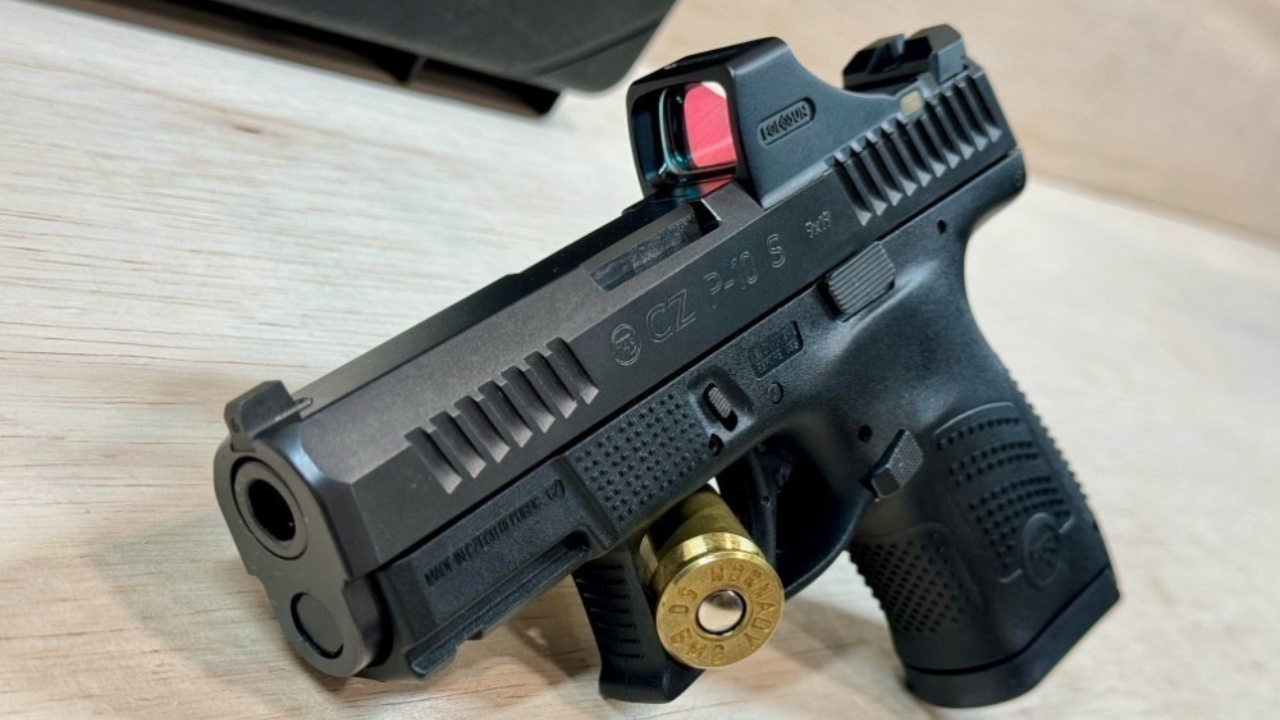
The P-10 S is a capable compact, but short-slide guns can get more sensitive with optic mass—especially if you’re trying to run very soft ammo or the gun is dry. Some setups will run flawlessly, and others will start showing occasional hiccups that weren’t present on irons. The smaller the slide and the tighter the timing, the more likely you’ll notice a change.
It’s usually not a “CZ problem.” It’s a physics-and-setup problem. If yours starts acting up after a dot, confirm the mounting, then test ammo that gives the gun a little more impulse. If it still hiccups, look at recoil spring condition and magazine health. Don’t accept “it’s mostly reliable” for a carry gun.
Like The Avid Outdoorsman’s content? Be sure to follow us.
Here’s more from us: