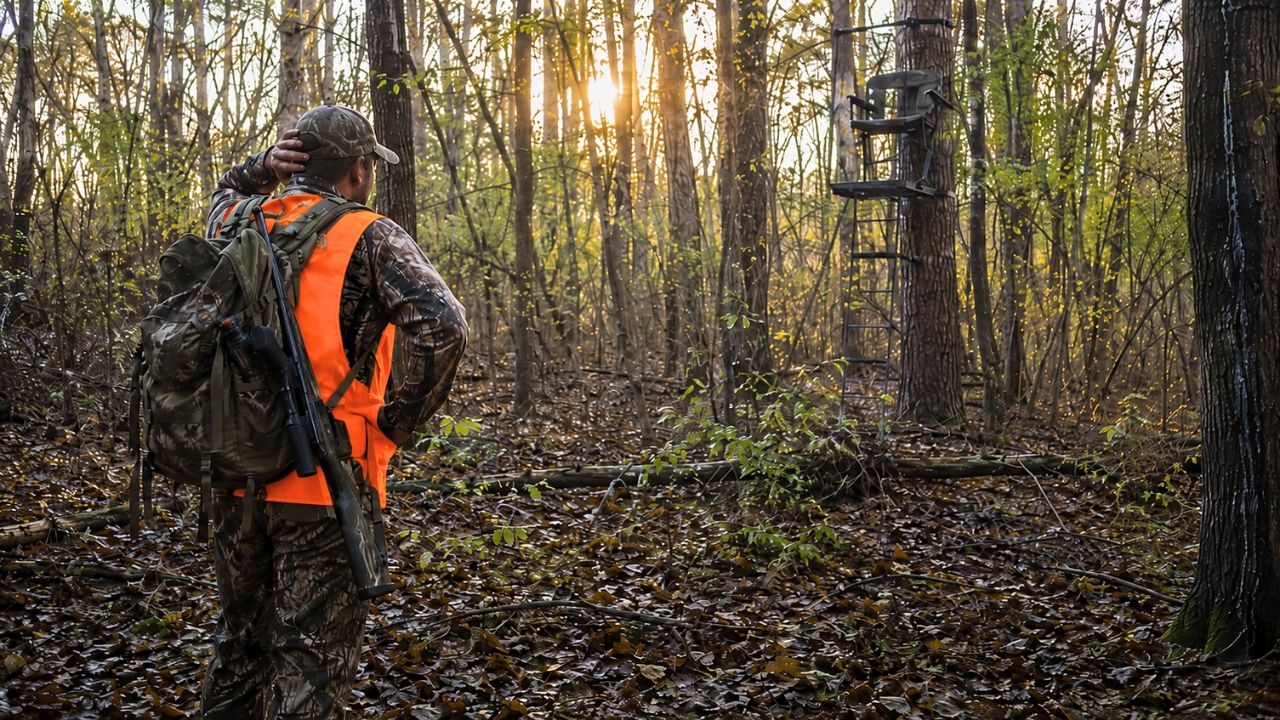
Photo credit: The Avid Outdoorsman
The hunter had a spot picked out.
That is how a lot of public-land hunting starts. You scout, you walk, you study the map, maybe hang a camera where legal, and eventually you settle on a place that feels worth the early alarm and long walk in. You do not own it. You know that. But after enough time, a spot can still start to feel familiar.
Then he found someone else’s stand hanging there.
In a Reddit post, the hunter asked about public-land stands in Pennsylvania after finding another man’s setup in the area he wanted to hunt. It brought up one of those awkward public-land questions that never has a clean answer: if someone leaves a stand on public land, does that give him any claim to the spot?
Legally, public land is public land.
But in the woods, people do not always act like it.
A stand hanging in a tree can feel like a claim marker, even when it is not. It says someone has been there, someone plans to come back, and someone may be very annoyed if he walks in before daylight and finds another hunter sitting nearby. That does not mean he owns the area. It does not mean he gets to run people off. But it does create tension before anyone has even spoken.
That was the problem the hunter was trying to work through.
If he hunted there anyway, he might be completely within his rights. Public land is shared, and a stand left in the woods does not turn the surrounding acres into a private lease. But if the stand owner showed up, the morning could go sideways fast. Nobody wants to be sitting in the dark and suddenly hear another hunter climbing in, shining a light, or asking why someone is in “his” spot.
That is where the “first come” question gets messy.
Most public-land hunters respect whoever gets there first that day. If you walk in and someone is already set up, you give them space and move on. That is basic etiquette. But leaving a stand there for days or weeks is not the same as being there first that morning. A stand is gear. It is not a person. It does not hold your place while you sleep in.
Still, a lot of hunters treat it like it does.
That attitude is what causes problems. A hunter may hang a stand, scout the area, and start believing he has earned some kind of claim. Then another hunter shows up and sees empty public ground with an empty stand. One person thinks, “I put in the work.” The other thinks, “You are not here.” Both can make arguments that sound reasonable until the words start getting sharper.
The hunter in the post seemed to understand that the safe answer and the legal answer might not be the same. He could probably hunt the area, but would it be worth the chance of a confrontation? Would the stand owner be reasonable? Would he simply move on if he saw another hunter nearby? Or would he act like the tree came with a deed?
That uncertainty is the part that wears people down on public land.
You can do everything right and still spend the morning managing other people’s expectations. You get up early, walk in quietly, and try to hunt. Then you find another person’s gear and suddenly you are not thinking about deer. You are thinking about etiquette, regulations, possible conflict, and whether somebody will come storming in at sunrise.
There is also the safety side. If the stand owner shows up and does not know anyone else is nearby, he may walk through shooting lanes or set up too close. If the original hunter moves just a little deeper, they could both end up hunting the same trail from different angles. Public land already requires awareness. Left-behind stands add one more unknown.
The smartest move is usually to know the local rules. Some public lands allow temporary stands. Some require stands to be removed daily. Some require identification tags. Some limit how long they can stay. If a stand is illegal, that is one issue. If it is legal but unattended, that is another.
But legal or not, the same truth holds: gear does not own public land.
A stand can tell you someone likes the same spot. It can warn you there may be pressure there. It can make you think twice about whether the area is worth the headache. But it should not automatically run every other hunter off land they also have a right to use.
For this hunter, the decision came down to whether he wanted to stand on principle or avoid a likely mess. Sometimes those are not the same thing. Public land gives everybody access, but it also forces everybody to deal with each other’s habits, good and bad.
And few things test that better than finding another man’s stand hanging in the tree you planned to hunt.
Commenters mostly agreed that a stand left on public land does not reserve the spot.
Several people said public land is first come, first served by the day, not by whoever hung gear there earlier. If the stand owner is not present, he does not get to claim the area just because his stand is in a tree. Others said they would still give the spot space if they had a decent backup, mostly to avoid drama.
A lot of hunters focused on checking the regulations. Public-land stand rules can vary by state, county, agency, or specific property. Some places allow stands to be left for certain periods. Others require them to be removed daily or tagged with owner information. Commenters said the hunter should know the rule before deciding what to do.
Some people warned against using the other person’s stand. Even if the land is public, climbing into someone else’s gear can create safety, liability, and theft accusations. Hunting near it is one thing. Using it is another.
Others said the stand was a clue that the area might be pressured. If someone else already found the same spot and liked it enough to hang a stand, the deer may already be getting bumped or hunted there. Moving to a less obvious place might produce a better hunt and avoid a confrontation.
The practical advice was simple: public land is shared, but shared land still requires judgment. You do not have to honor an empty stand like a reservation sign, but you also do not have to spend your morning arguing with someone who thinks it is one.