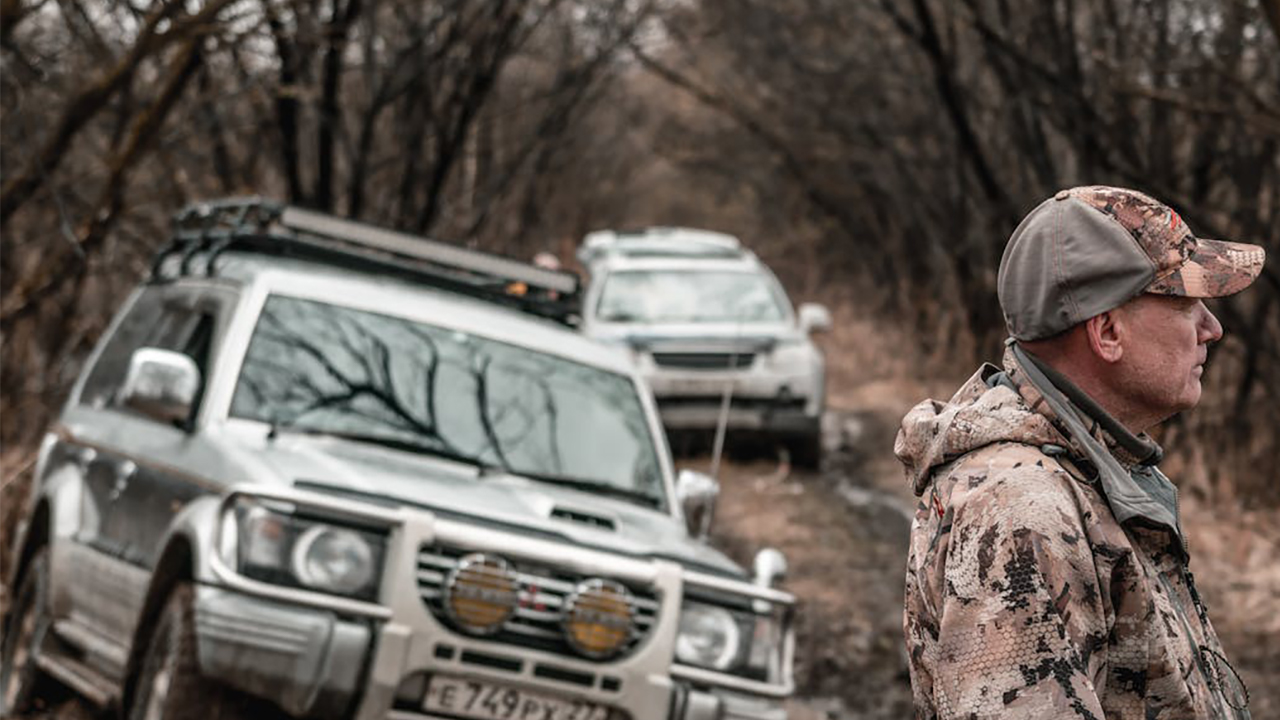
Photo credit: Konstantin Khrustov/Youtube
The public-land hunter expected pressure in the woods.
That comes with hunting ground everybody can use. You deal with other trucks at the access, people walking through spots you scouted, stands showing up where you planned to sit, and the occasional hunter who thinks “public” only applies to him.
But this went past normal public-land frustration.
In a Reddit thread, hunters were sharing the moments that made their stomach drop in the field. One story involved locals following a hunter’s truck and leaving threatening notes, turning a public-land hunt into something that felt personal before he even made it back to the vehicle.
That is a different kind of scary.
A bad shot, a close call with another hunter, or a strange noise in the dark can rattle a person in the moment. But when someone follows your truck and leaves a note, the threat follows you beyond the woods. It is not only about where you set up that morning. It is about whether someone knows what you drive, where you park, and when you are alone walking back out.
That changes the whole hunt.
Public land is supposed to be shared. That does not mean everybody loves sharing it. Some locals get possessive over spots they have hunted for years, even when they have no legal claim to them. They know the roads, the trails, the pull-offs, the ridges, and the deer patterns. Then someone from outside the area shows up, parks at the access, and suddenly the locals act like an intruder has crossed onto private ground.
Except he has not.
He is using public land.
That is what makes these situations so aggravating. A hunter can follow the law, park legally, stay on public ground, and still get treated like he has done something wrong because somebody else believes familiarity equals ownership. A person may have hunted there since he was a kid. His dad may have hunted it. His buddies may use it every season. None of that turns it into a private lease.
But some people act like it does.
The notes are where the whole thing gets ugly. A note can be passive-aggressive, threatening, or somewhere in between, but it carries a clear message: we know you were here. We know your vehicle. We want you gone.
That is not harmless woods etiquette.
It is intimidation.
A hunter walking back to his truck after dark already has enough to think about. He may be tired, carrying gear, watching his footing, listening for animals, and trying to get back safely. If he knows someone has been following his truck or leaving notes, that walk feels different. Every engine noise matters. Every vehicle parked nearby gets a second look. Every shape near the access point feels like it might be a person waiting.
That kind of tension ruins public land fast.
The hunter has to decide what to do. Keep hunting there and refuse to be run off? Move to another spot to avoid trouble? Call a game warden? Call local law enforcement? Start photographing the notes? Put a dash camera in the truck? Tell someone exactly where he is going and when he should be back?
The safest answer is usually to document everything and involve the right people if the notes are threatening. Public-land harassment is not just rude. In some places, interfering with lawful hunting or trying to intimidate someone off public ground can become a real legal issue. Even if it does not rise to that level, a paper trail matters if the behavior escalates.
And escalation is the concern.
A note is one thing. Following a truck is another. Someone waiting at the parking area is worse. Someone damaging a vehicle, blocking a road, or confronting a hunter in the dark can turn the whole situation dangerous fast. The point is not to be paranoid. It is to recognize that people willing to intimidate strangers over public land may not be thinking clearly.
The hunter did not need to be ashamed of feeling uneasy. That is a normal reaction. When someone makes it personal, the woods stop feeling like a shared resource and start feeling like a place where you are being watched.
That is a lousy way to hunt.
It also hurts the whole idea of public access. Public land only works if people accept that other legal users have the same right to be there. You can be annoyed when another hunter beats you to a spot. You can adjust, grumble, and go somewhere else. What you cannot do is follow his vehicle and leave threats because you think the ground belongs to you.
That kind of behavior is exactly why some hunters avoid certain public areas altogether.
They are not afraid of walking farther. They are tired of dealing with people who treat legal access like trespassing because the wrong truck showed up.
For this hunter, the danger was not a bear, a bull elk, or a rattlesnake. It was people who decided public land was theirs to defend with intimidation. And once that happens, every walk back to the truck feels a little less ordinary.
Commenters understood why the notes and following behavior felt worse than normal public-land crowding.
Several people said public land does not belong to locals just because they have used it longer. If the hunter was parked legally and hunting legally, he had the same right to be there as anyone else. Familiarity does not create ownership.
Others focused on documentation. Save the notes. Take pictures. Write down dates, times, vehicle descriptions, and exactly where everything happened. If the same people keep showing up or the messages are threatening, a game warden or local law enforcement needs more than a vague complaint.
A lot of hunters said they would not ignore someone following their truck. That is the part that made the situation feel more serious than a grumpy note. Once someone is tracking your vehicle, the issue is no longer only hunting etiquette. It is personal intimidation.
Some commenters advised using a dash cam or trail camera near the vehicle if legal, especially if the hunter planned to keep using the spot. Others said to tell someone where he was hunting and when he expected to be back, just in case the harassment escalated.
There were also practical voices saying no deer or elk is worth a confrontation with unstable people. That does not mean the locals are right. It means staying safe matters more than proving a point in the parking area after dark.
The main message was clear: public land is shared land, and intimidation has no place there. If someone wants exclusive access, he needs private land or a lease. Threatening notes do not turn public ground into either one.