Image Credit: All About Survival/YouTube.
When it comes to choosing a handgun for everyday carry, the debate between revolvers and semi-automatic pistols never seems to end. Both have their strengths and drawbacks, and the right choice depends on your needs, skill level, and personal preference. Some folks swear by the simplicity of a revolver, while others prefer the higher capacity and faster reloads of a semi-auto. Let’s break down the key factors to help you decide which one makes the most sense for you.
Reliability

Revolvers have a reputation for being nearly foolproof. They don’t rely on springs, magazines, or complex mechanics to cycle rounds, which means they’re less likely to jam or malfunction. If you pull the trigger and hear a click instead of a bang, just pull it again. No clearing drills needed.
Semi-autos, on the other hand, can be finicky. A bad magazine, limp-wristing, or dirt in the action can cause failures. That said, modern semi-autos are incredibly reliable, and as long as you maintain them properly and use quality ammo, stoppages are rare.
Capacity

If carrying extra rounds is important to you, semi-autos are the clear winner. A standard compact 9mm holds 12-15 rounds, while a full-size can go up to 17 or more. That’s a lot of firepower before you need to reload.
Revolvers usually hold five or six rounds. That might not sound like much, but it’s enough for most defensive situations. Some argue that if you can’t solve the problem in six shots, you’ve got bigger issues. Still, having more rounds without reloading is a strong advantage for semi-autos.
Ease of Use

Revolvers are about as straightforward as it gets—point and shoot. There’s no manual safety, slide to rack, or magazine to load. This makes them a solid choice for people who don’t want to fuss with mechanics under stress.
Semi-autos require more training. You need to rack the slide, insert a mag, and possibly disengage a safety before firing. If you don’t practice, you could fumble when it matters most. However, if you train regularly, these steps become second nature.
Concealability

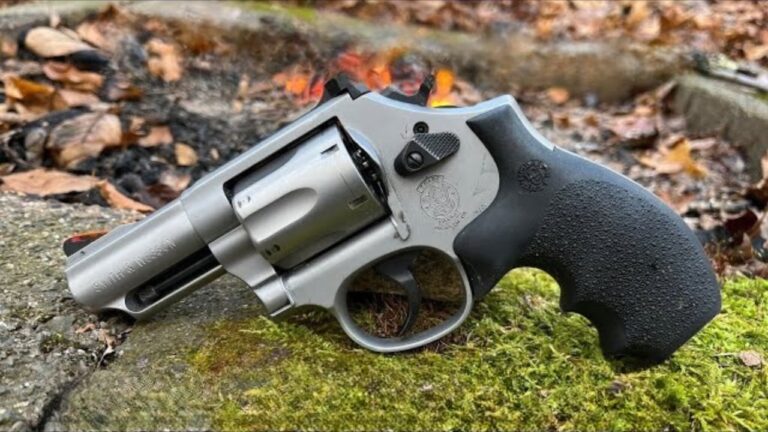
For deep concealment, small-frame revolvers have their perks. Snub-nose models are compact, smooth, and easy to carry in a pocket or ankle holster. The rounded edges and lack of a protruding slide also make them less likely to snag when drawing.
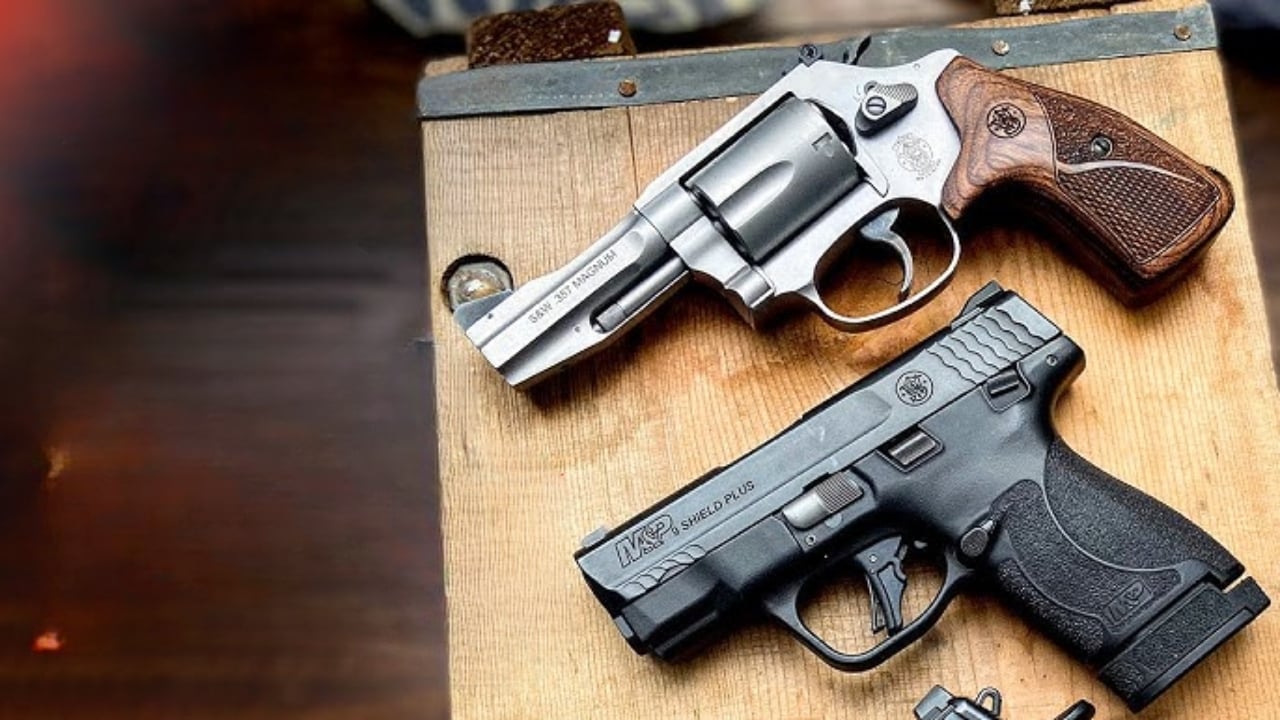
Semi-autos tend to be slimmer, which helps with inside-the-waistband (IWB) carry. Even a small revolver can be bulkier than a single-stack 9mm. If comfort and discretion are priorities, a subcompact semi-auto may be the better fit.
Reloading Speed

Reloading a semi-auto is quicker and easier. Drop an empty mag, slam in a fresh one, rack the slide, and you’re back in the fight. Even under stress, a practiced shooter can reload in seconds.
Revolvers take longer. You’re either using a speed loader, moon clips, or loading rounds one by one. None of these methods are as fast as swapping a magazine. If you think you’ll need more than five or six shots in a hurry, a semi-auto is the way to go.
Maintenance

Revolvers don’t need much upkeep. No magazines to check, fewer moving parts, and they can sit for years without lubrication and still fire when needed. If you want a grab-and-go option with minimal maintenance, a revolver is a solid choice.
Semi-autos require more care. You need to clean the slide, lubricate moving parts, and make sure your magazines function properly. They’re not high-maintenance, but they do need regular attention, especially if you carry one daily.
Stopping Power

The idea that revolvers pack more punch isn’t entirely wrong. Revolvers can handle powerful calibers like .357 Magnum and .44 Special, which can have more stopping power than many common semi-auto rounds. If you’re carrying for bear defense or want a heavy-hitting round, a revolver may be the better choice.
Semi-autos often shoot smaller calibers like 9mm, .40 S&W, or .45 ACP. While these rounds are effective for self-defense, they don’t have the same raw energy as a magnum revolver round. That said, shot placement matters more than caliber, and modern defensive ammo makes semi-autos plenty capable.
Trigger Control

Most revolvers have a double-action trigger, meaning you need to pull through a long, heavy trigger press before firing. This can be a challenge for accuracy, especially under stress. Some revolvers have single-action modes, which allow for a lighter trigger pull, but that means cocking the hammer manually before each shot.
Semi-autos generally have lighter, smoother triggers. Striker-fired pistols, like a Glock or Sig P320, have consistent trigger pulls with less effort. This can make them easier to shoot accurately, especially for beginners or those with less hand strength.
Cost and Availability

Revolvers tend to be pricier for what you get. A quality revolver from a brand like Smith & Wesson or Ruger can cost as much as, if not more than, a solid semi-auto. And since revolvers don’t use detachable magazines, you won’t be spending extra money on mags.
Semi-autos, especially polymer-framed models, are often more affordable and widely available. You can find a reliable handgun from Glock, Sig Sauer, or Springfield for a reasonable price, and spare mags aren’t hard to find. If budget is a factor, a semi-auto might give you more bang for your buck.
Recoil Management

Revolvers, especially those chambered in magnum calibers, tend to have more recoil. Small-frame revolvers in .357 Magnum can be a handful, making follow-up shots harder to control. Even .38 Special in a lightweight revolver has more snap than some expect.
Semi-autos absorb some recoil through the slide cycling, making them easier to control, especially in 9mm. A heavier full-size semi-auto will usually have less felt recoil than a similarly powerful revolver. If you’re recoil-sensitive or want faster follow-up shots, a semi-auto is probably the better option.
*This article was developed with AI-powered tools and has been carefully reviewed by our editors.