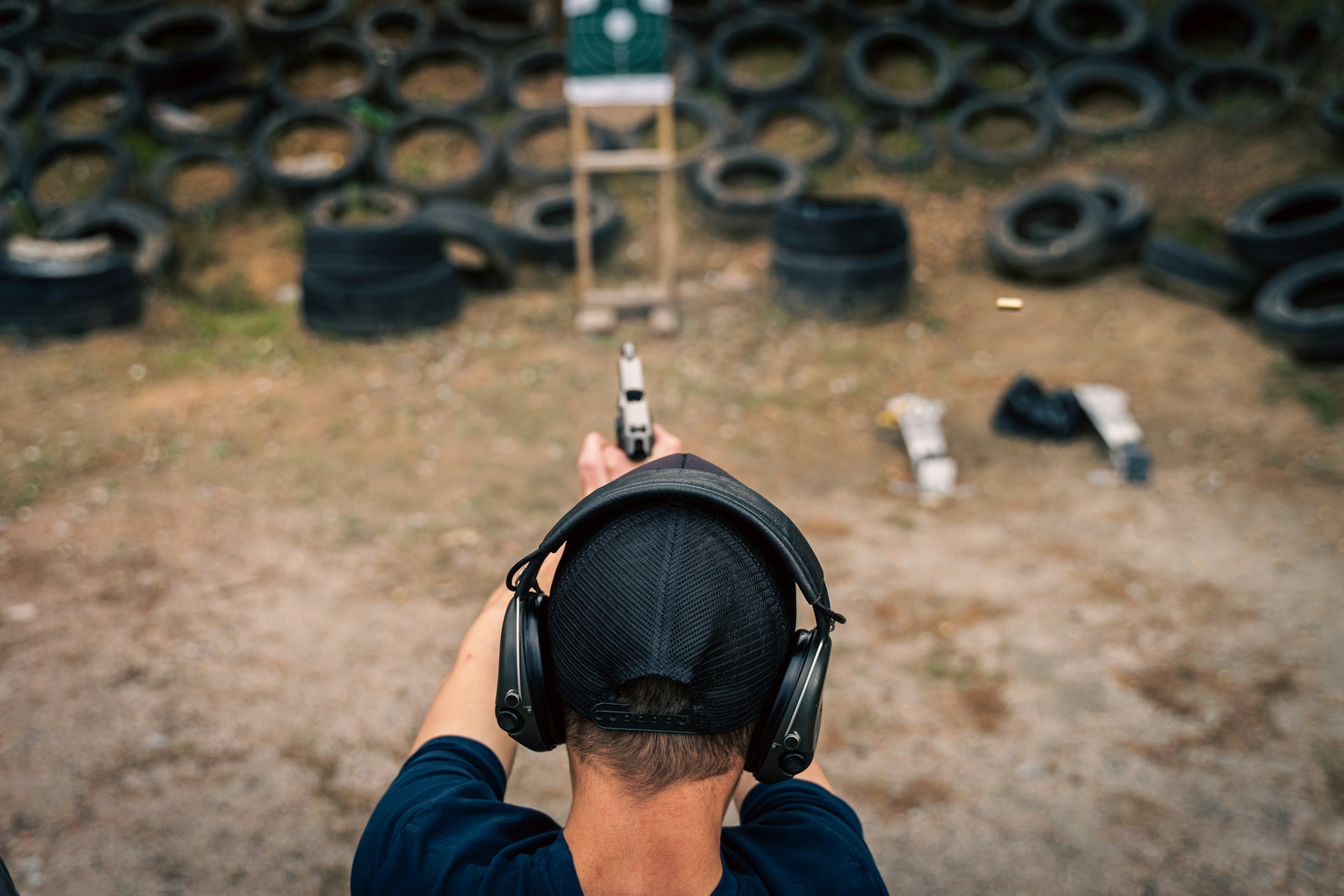
Photo credit: Artem Zhukov/Unsplash.com
The shooter did not catch it himself.
That is the scary part.
He was in the middle of an IDPA match, moving through a stage, focused on targets, timing, reloads, and not embarrassing himself in front of everyone. In that kind of setting, your brain is already busy. You are not just standing in a calm lane at the range, firing one slow round at a time. You are working through a course, trying to think and shoot at the same time.
Then one round did not sound right.
In a Reddit thread, shooters were sharing range horror stories when one person described a squib load during an IDPA match. The round was weak enough that the bullet did not clear the barrel, but the shooter was still in the rhythm of the stage. He was ready to keep going.
The range officer stopped him.
That may have saved the gun.
A squib is one of those failures that every shooter hears about but hopes never happens. The cartridge fires weakly, sometimes with a strange pop instead of a normal bang, and the bullet gets lodged in the barrel. If the shooter stops right there, it is usually a fixable problem. Unload, clear the gun, confirm the barrel obstruction, and push the bullet out safely.
If the shooter fires another round behind it, things can get ugly fast.
That next round has nowhere normal to go. Pressure spikes. Barrels can bulge or split. Slides and frames can be damaged. Parts can break. Hands, faces, and eyes can get hurt. A pistol that was fine one second can become a wreck because the shooter did not recognize the warning.
At a match, that warning can be easy to miss.
There is noise all around. Other shooters. Commands. Movement. Ear protection. Adrenaline. The pressure of being watched. You may notice the gun felt strange, but your competitive brain wants to solve the problem and keep moving. If the slide cycles enough to chamber another round, the temptation is to keep shooting.
That is where the range officer mattered.
A good RO is not only there to call times and watch for procedural mistakes. He is there to keep people safe when their brains are overloaded. If he hears a weak round, sees odd recoil, or notices something off, he has to stop the shooter immediately. That can feel frustrating in the moment, especially if the shooter was deep into the stage. But it is a whole lot better than letting him send another round into a blocked barrel.
The shooter may have been embarrassed, but he was lucky.
The squib happened in a place where someone else was watching closely enough to catch it. If the same thing had happened alone, during rapid fire, or in a defensive situation, the outcome could have been very different. He might have fired again before fully understanding what happened. And once that second trigger press happens, the lesson gets expensive and dangerous.
Squibs are also a reminder that ammo matters.
Sometimes they come from reloads. Sometimes factory ammo can fail too. A missing or undercharged powder load may still have enough primer force to push the bullet into the bore, but not enough to send it out. The shooter may see smoke, hear a dull pop, feel almost no recoil, or notice the gun failed to cycle. Any of those signs should stop the shooting immediately.
Not “finish the magazine.”
Not “try one more.”
Stop.
That is one of those rules that has to be stronger than pride. Nobody wants to be the person who stops a stage, raises a hand, and says something is wrong. Nobody wants everyone looking. Nobody wants to be the guy whose gun has to be checked while the match pauses. But that embarrassment is cheap compared with blowing up a barrel because you wanted to keep pace.
This story is also a good argument for practicing awareness, not just speed.
Shooting fast is fun. Competition makes it even more fun because everything has a timer attached. But speed cannot replace the feel and sound of the gun. A shooter should know what normal recoil feels like, what normal ejection looks like, and what normal sound is. When something is wrong, the body should recognize it before the brain tries to push through.
That takes discipline.
The range officer had that discipline here, or at least enough attention to stop the stage. The shooter got a lesson without paying for it with a destroyed pistol. The match may have been interrupted, but that is exactly how it is supposed to work. Safety stops are there because the alternative is worse.
A squib at an IDPA match is not just a malfunction. It is a test of whether the shooter, the RO, and the whole safety system are awake.
This time, the system worked.
Commenters in the thread treated squibs like one of the range problems everyone should take seriously.
Several people said a weak pop, strange recoil, or anything that feels off should stop the shooter immediately. It does not matter if you are in a match, practicing drills, or shooting casually. A possible squib means the gun gets unloaded and the bore gets checked before anything else happens.
Others pointed out that competition can make people push too fast. A timer, a stage plan, and spectators can all make a shooter want to keep going even when something feels wrong. That is exactly why range officers and safety officers need to pay close attention.
A lot of shooters praised the idea of someone else catching it. When the person behind the gun is focused on the stage, an RO may be the only one with enough outside perspective to hear the odd shot and stop things before the next round goes off.
Some commenters also warned about reloads and ammo quality. Squibs can happen when rounds are undercharged or missing powder, and anyone shooting reloads needs to be extra careful about consistency.
The main advice was simple: if the gun sounds wrong, feels wrong, or cycles strangely, stop shooting. A ruined stage is nothing. A ruined barrel, hand, or eye is a much bigger price.