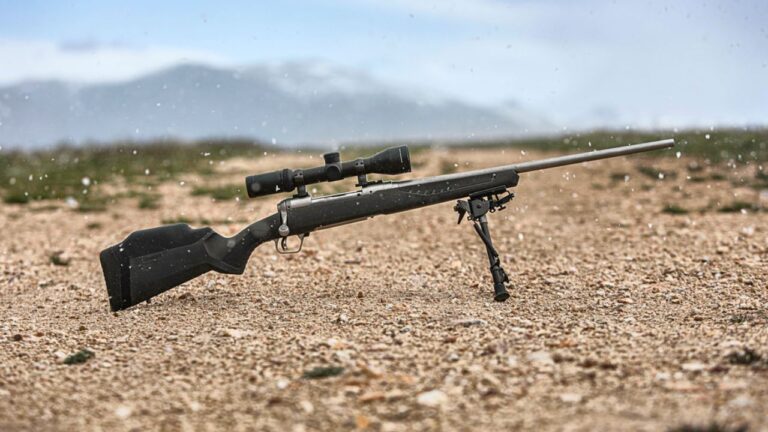
When a rifle you rely on for hunting, competition, or defense is subject to a safety recall, you are not just dealing with an inconvenience, you are confronting a potential hazard every time you pull the trigger. That is the situation facing owners of select SIG716, SIG516, and SIGM400 rifles after SIG Sauer acknowledged a defect in certain two-stage triggers that can create a significant risk of unintended discharge. If you own one of these models, you now have a responsibility to verify whether your serial number is affected and to follow the company’s repair process before you fire another round.
What SIG’s safety warning actually covers
The starting point for understanding this recall is SIG Sauer’s own SAFETY WARNING AND RECALL NOTICE, which spells out that SIG SAUER, Inc. has determined that a limited number of rifles in the SIG716 DMR, SIG516 Carbon Fiber, and SIGM400 Predator families may contain a defective trigger component. In that notice, the company explains that the issue involves specific two-stage match triggers and that only a subset of rifles within those product lines is affected, which is why you are instructed to confirm your serial number against the official rifle safety warning before taking further action. The language is unambiguous: this is a safety-driven recall, not a cosmetic upgrade or optional retrofit.
In its detailed guidance, SIG SAUER, Inc. states that it has identified a production problem that can create what it calls a “significant safety hazard” if the hammer fails in a particular way during operation. The company’s formal SAFETY, WARNING, AND, RECALL, NOTICE directs you to stop using any potentially affected rifle and to take the following two actions, which include checking your serial number and arranging for factory service if your gun is on the list. That process is laid out in a dedicated section of the recall page where SIG SAUER, Inc. has determined the exact scope of the problem and the steps you must follow to resolve it.
Which SIG716, 516, and M400 rifles are at risk
For you as an owner, the most pressing question is whether your specific rifle falls inside the recall window. The affected models are not every SIG716, 516, and M400 ever made, but rather particular configurations such as the SIG716 DMR, the SIG516 Carbon Fiber, and the SIGM400 Predator that were built with the two-stage match trigger at the center of the defect. Reporting on the recall notes that SIG Sauer Issues Safety Warning and Recall Notice on these DMR, Carbon Fiber and Predator variants, underscoring that the problem is tied to a particular trigger design rather than the entire product line. If you own one of these specialized models, you should treat your rifle as suspect until you have confirmed its status against the official list referenced in the SIG Sauer Issues Safety Warning and Recall Notice.
Independent coverage of the recall reinforces that the problem is confined to rifles with the two-stage trigger and that it affects certain SIG 516, 716, and M400 model rifles rather than every example of those platforms. One technical bulletin explains that Sig Sauer recently issued a safety recall for specific rifles with these triggers and that the defect is linked to the hammer, which can fail in a way that creates a risk of unintended firing. That same analysis notes that if your rifle is affected, you should stop using it immediately and follow the company’s instructions, a point that is echoed in guidance that warns, “If your rifle is affected, do not load or fire it” and directs you to the official recall portal for verification. Those warnings are captured in a detailed hammer issues advisory that walks through the risk and the need to check your serial number before you shoot again.
How the two-stage match trigger recall works
Once you confirm that your rifle is one of the affected SIG716 DMR, SIG 516 CF, or SIGM400 configurations, the recall process itself is straightforward but nonnegotiable. SIG SAUER, Inc. has framed this as a two-stage match trigger recall that applies to a limited number of rifles and has instructed owners to register their firearms for service through its recall portal. A detailed FAQ on the subject, labeled “FAQ – TWO-STAGE MATCH TRIGGER RECALL,” explains that if you own a rifle with the specified trigger, you must submit your serial number so the company can determine if your rifle is affected and, if so, arrange for repair. That guidance is summarized in a notice titled SIG SAUER SAFETY RECALL ISSUED – LIMITED NUMBER OF SIG716 DMR, SIG 516 CF, SIGM400 RIFLES, which underscores that the recall is targeted but serious and that you should not attempt to diagnose or fix the trigger yourself. The key procedural steps are laid out in the FAQ – TWO-STAGE MATCH TRIGGER RECALL, which you should read closely before shipping any firearm.
From SIG Sauer’s perspective, this recall is one entry in a broader pattern of Safety Warning and Recall Notices that the company maintains in a centralized Safety Center. That hub lists multiple product advisories, including the ROMEO5 Recall and the rifle trigger issue, and it is where SIG SAUER, Inc. aggregates instructions for owners who need to send in firearms or accessories for inspection. By consulting that Safety Center, you can confirm that your recall registration has been properly logged and that you are following the most current instructions for packaging, shipping, and tracking your rifle. The company’s broader Safety Warning and Recall Notices page is also a reminder that even premium manufacturers must occasionally correct defects and that your vigilance as an owner is part of the safety equation.
What SIG will repair and what it costs you
One of the most important assurances SIG Sauer has given owners is that the recall work will be performed at no cost to the customer. Technical coverage of the issue notes that Sig Sauer recently issued a safety recall for certain rifles with two-stage triggers and that the company will replace the defective components free of charge once your rifle is confirmed as affected. That commitment is critical, because it removes any financial barrier to doing the right thing and sending in a rifle that might otherwise appear to function normally. The same reporting explains that the recall centers on a hammer defect that can create a significant safety hazard, which is why the company is not leaving the fix to local gunsmiths or home tinkerers but instead handling it through its own service network as described in the no cost to the customer recall notice.
Additional reporting on the recall process emphasizes that SIG Sauer is treating this as a formal, structured campaign rather than an informal service bulletin. One detailed overview, framed under the heading Recall: Sig Sauer Issues Safety Warning and Recall, Limited Number of Rifles Affected, explains that the company is contacting registered owners, providing shipping instructions, and returning rifles with corrected triggers after inspection. That account notes that the recall is limited in scope but that the company is urging all owners of potentially affected rifles to check their serial numbers and not rely on assumptions about production dates or configurations. For you, the takeaway is simple: if your rifle matches the affected models, you should treat the recall as mandatory and follow the process laid out in the Limited Number of Rifles Affected guidance, rather than waiting for a problem to surface at the range.
Why this recall matters for gun owners beyond SIG
Even if you do not own a SIG716, 516, or M400, the way this recall has unfolded says a lot about how firearm safety issues are communicated to the public. One detailed account of the situation notes that SIG Sauer Rifle Safety Warning and Recall Notice was issued as a formal press release, signaling that the company recognized the seriousness of the trigger defect and the need to reach as many owners as possible. That notice reiterates that SIG Sauer has issued a recall notice for specific rifles and that the company is urging owners to stop using affected firearms until they have been inspected and repaired. For you as a gun owner, this is a reminder that manufacturer communications are not marketing fluff; they can be critical safety information that you should treat with the same seriousness you would give to a vehicle airbag recall or a child car seat defect. The key details are laid out in the Sauer Rifle Safety Warning and Recall Notice, which is worth reading even if your own rifle is not on the list.
At the same time, broader reporting on firearm recalls suggests that the industry’s communication practices often leave owners in the dark. One analysis points out that The German, American, Sig Sauer has issued its second notice in as many months advising customers of a potential safety risk, and uses that pattern to argue that gunmakers and regulators do not always provide the same level of transparency and follow-up that you might expect in other consumer product sectors. That critique highlights how difficult it can be for owners to track recalls across multiple brands and models, especially when notices are scattered across manufacturer websites and trade publications rather than centralized in a government database. For you, the lesson is that staying safe with any firearm requires more than reading the manual once; it means periodically checking for new advisories, signing up for manufacturer alerts, and paying attention when you see references to safety risks like those described in the gun recalls keep firearms owners dark report.
How to check your rifle and what to do next
If you own a SIG716, SIG516, or SIGM400, your next steps should be methodical and grounded in the official guidance. Start by unloading your rifle completely and verifying that it is clear, then locate the serial number on the receiver and compare it against the ranges listed in SIG Sauer’s SAFETY WARNING AND RECALL NOTICE. The company’s recall page explains that SIG SAUER, Inc. has determined which specific serial numbers are affected and that you must use that list to decide whether your rifle needs service. That same page also notes that the recall applies only to certain rifles and does not extend to other SIG MCX or SIG MPX products, a distinction that is spelled out in the section where SIG SAUER, Inc. has determined the exact models and product families that are not subject to this particular trigger issue.
Once you have confirmed that your rifle is on the recall list, you should follow SIG Sauer’s instructions for registering the firearm, arranging shipment, and tracking the repair. Coverage of the initial announcement notes that Sep, SIG, Sauer Issues Safety Warning and Recall Notice was part of a broader pattern of safety recalls and product recalls that the company has managed in recent years, and that owners who respond promptly can expect their rifles to be repaired and returned with corrected triggers. That context is important because it shows that the recall process is not improvised; it is a structured response that the company has used before to address safety defects. For you, the practical takeaway is clear: treat the recall as a nonnegotiable safety step, use the official channels to register your rifle, and do not return it to service until you have written confirmation that the trigger has been inspected and repaired in line with the safety recalls guidance that first brought this issue to light.
Like The Avid Outdoorsman’s content? Be sure to follow us.
Here’s more from us: