Photo credit: Savage Arms
Coyotes are tougher than they get credit for. If your round isn’t fast enough, flat enough, or doesn’t expand the way it should, you’re in for long tracking jobs, missed follow-ups, or flat-out runners. A lot of calibers that work fine on paper struggle in real field conditions — especially with wind, brush, or poor shot angles. You don’t need a howitzer, but you do need a round that gets in, opens up fast, and puts the dog down quick. Some of the cartridges listed here are fun to shoot. Some are easy to carry. But when it comes to clean kills on song dogs, they come up short more often than you’d like. These aren’t guesses or internet lore — they’re real-world letdowns, tied to specific rifles that didn’t pull their weight in the field.
Ruger 10/22 (.22 LR)

Everyone loves the Ruger 10/22, and there’s no denying it’s fun to shoot. But when it comes to coyotes, .22 LR leaves a lot to be desired. Sure, it can kill — but not reliably. You’ve got to be inside 50 yards, hit exactly right, and hope the hollow point does its job. More often than not, you’re looking at a wounded dog that runs off, or worse, one that turns aggressive.
The 10/22 doesn’t offer enough velocity or energy, and even with high-velocity loads, it lacks the shock to drop a coyote in its tracks. I’ve seen coyotes take a hit to the chest and still cover 100 yards before going down — if they go down at all. It’s a great gun for rabbits or plinking, but if you’re after ethical kills on coyotes, this is one rifle and caliber combo that should stay home.
Heritage Rough Rider (.22 WMR)

The .22 Magnum out of a revolver like the Heritage Rough Rider is still a rimfire, and still underpowered for clean coyote kills. Out of a rifle, .22 WMR starts to look better, but from a short-barreled handgun, you’re giving up too much velocity. Expansion becomes unreliable, and energy on target drops fast.
Plenty of folks carry this as a “truck gun,” and it’s fine for pests or snakes. But if you think a center-chest hit will anchor a coyote, think again. I’ve seen coyotes take a hit, roll, and get back up running. Even with critical defense ammo, the lack of penetration and energy is hard to ignore. The Rough Rider’s slow reloads don’t help either. You might land a lucky shot, but clean and consistent kills? Not likely with this setup.
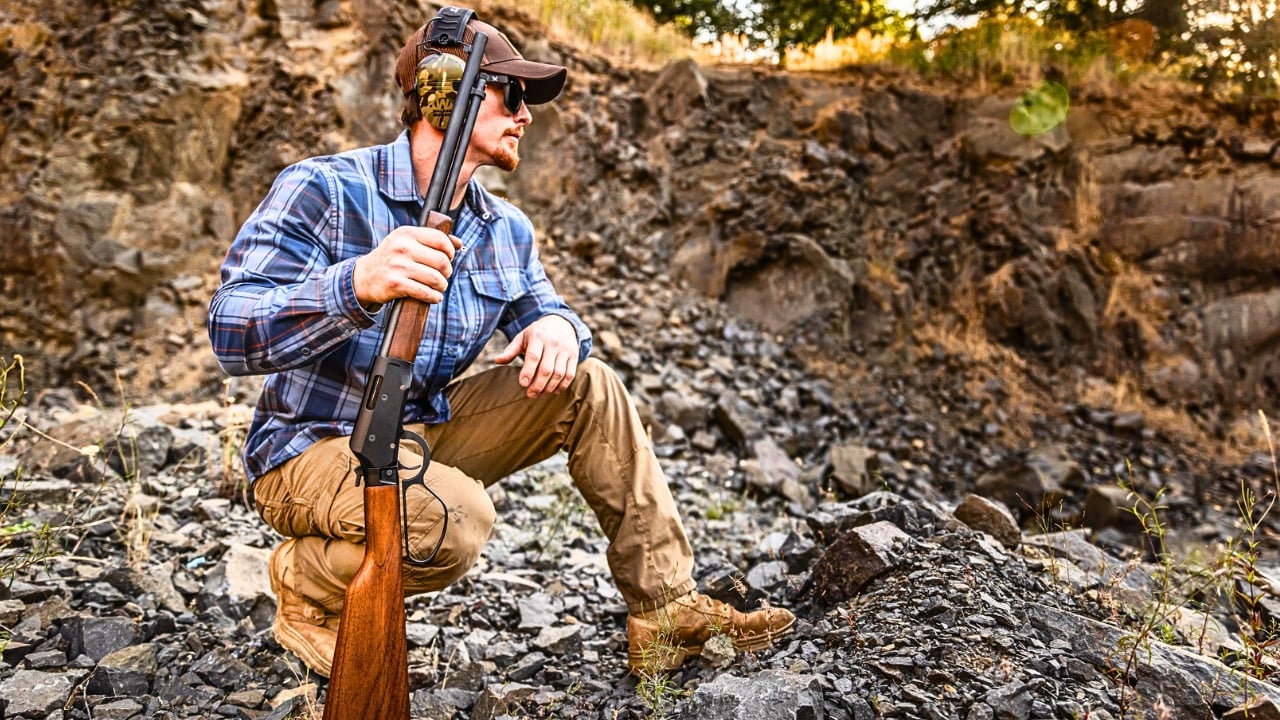
Henry Lever Action Carbine (.17 HMR)

The .17 HMR in a Henry lever action is a blast for varmints, but it’s right on the edge for coyotes—and often falls short. It’s fast, flat, and accurate, but the bullet’s too light to carry momentum past 100 yards. If your shot isn’t perfect, the coyote will run. Chest hits don’t always penetrate deeply enough, especially on larger winter dogs.
The cartridge fragments quickly, and while that’s great on prairie dogs, it doesn’t create reliable wound channels in tougher animals. The Henry’s smooth cycling and nostalgic feel make it fun to carry, but that doesn’t make up for a round that tends to wound more than it kills. If you’re hunting over a call or bait and taking close shots, it might work. But in real field use, especially at longer ranges or in wind, the .17 HMR lets too many coyotes walk off injured.
Kel-Tec Sub2000 (9mm)

The Kel-Tec Sub2000 gives you rifle-like stability in a pistol caliber, and it folds up small for convenience. But when you’re taking on coyotes, 9mm out of a 16-inch barrel still isn’t enough. You get better velocity than from a handgun, but the round’s still designed for short-range personal defense — not dropping a 40-pound dog on the run.
Even with +P loads, 9mm doesn’t offer the hydrostatic shock or penetration you need for consistent drops. FMJs over-penetrate and don’t do enough damage, while hollow points can expand too early and lose steam before reaching vital organs. The Sub2000 is great for backpack carry or plinking, but if you’re expecting it to perform like a .223, you’ll be disappointed. Coyotes hit with 9mm often make it 100+ yards before going down, and sometimes never get recovered. That’s not a result you want to see twice.
Beretta Cx4 Storm (9mm)

The Beretta Cx4 Storm in 9mm has a cool sci-fi look and decent ergonomics, but it runs into the same problem as other pistol-caliber carbines — not enough energy. At short range, it’s capable, but even then, expansion is unpredictable. You’re depending on handgun rounds to do rifle work, and coyotes tend to slip right through the cracks.
Whether you’re running FMJs or hollow points, the wound tracks are often shallow. I’ve seen dogs take a round, spin once, and bolt off like they weren’t hit at all. In calm, open country, you might be able to follow up, but in brush or at dusk, it’s a lost cause. For ranch work or predator control, a 9mm Cx4 won’t give you the performance you need for clean kills, and every coyote you don’t recover is one you’ll think about later.
Rossi R92 (.357 Magnum)

The Rossi R92 in .357 Magnum is a fun lever gun, and with the right ammo, it can do some serious work. But when it comes to coyotes, especially at range, it’s hit-or-miss—literally. You’re dealing with a round designed for revolvers, and once you stretch it past 75–100 yards, accuracy and energy start to fall apart.
Most soft points either punch through or fail to expand reliably. Lighter bullets don’t always penetrate deep enough, and heavier ones drop fast past 100 yards. The Rossi itself can be picky with feeding, and that hesitation costs you time on follow-ups. A clean head or spine shot will put a coyote down, sure — but center-mass hits tend to end in long tracking jobs. The rifle’s great for woods hunting hogs or black bear defense, but on quick-moving coyotes in open terrain, it struggles to keep up.
Hi-Point 995TS (9mm)

The Hi-Point 995TS is affordable, easy to shoot, and surprisingly reliable for the price — but 9mm remains the weak link. Even with a longer barrel, you’re still relying on pistol-caliber ballistics. For coyotes, that means marginal penetration and inconsistent expansion, especially at angles or through light brush.
Some folks swear by it for close-range work, and if your shots are under 30 yards, you might get lucky. But I’ve seen too many runners hit center-chest with quality ammo. The 995TS doesn’t give you the velocity or terminal performance of a proper varmint round, and the sights aren’t great for precise shots under pressure. Add in the clunky mag release and awkward ergonomics, and you’re not exactly set up for clean second shots. It’s a fun plinker, but not the tool you want when clean kills matter.
Marlin Model 60 (.22 LR)

The Marlin Model 60 is one of the most popular .22 rifles ever made — and for squirrels or cans, it’s great. But like other .22 LR platforms, it doesn’t pack enough punch for consistent coyote kills. Even with high-velocity ammo, you’re working with barely 100 foot-pounds of energy, and that’s assuming a good hit.
The tube-fed design slows down reloads, and the trigger isn’t exactly match-grade. More importantly, the round just doesn’t do the job unless everything goes perfectly. Marginal hits lead to wounded animals and long tracking jobs. I’ve watched coyotes take a hit from a Model 60 and act like nothing happened, only to find blood 100 yards away — if I found anything at all. It’s a great gun to own, but not one to count on when you need the dog to drop and stay down.
Rock Island M206 (.38 Special)

The M206 from Rock Island is a budget .38 Special revolver that’s surprisingly durable, but it’s not up to the task of cleanly stopping coyotes. Even with +P rounds, you’re still dealing with slow, low-expansion bullets that don’t deliver the kind of trauma needed for quick stops.
Accuracy is limited by the short barrel and basic sights, and recoil recovery isn’t quick with follow-ups. You’ve only got six shots, and reloading isn’t something you want to do mid-hunt with a pack of coyotes running. Out to 25 yards it might do okay if you place the shot right. Beyond that, it’s more wish than weapon. If you’re looking for something light to carry, there are better options chambered in faster, flatter rounds that actually get the job done. The M206 feels fine in the hand, but it’s not a coyote gun.
Taurus TX22 (.22 LR)

The Taurus TX22 is one of the best-feeling .22 pistols on the market — smooth trigger, good mag capacity, and solid ergonomics. But it’s still a rimfire pistol. That means low velocity, shallow penetration, and poor consistency when it comes to expansion. Even with the best hollow points, you’re looking at a round that fails to reach vital organs unless placement is perfect.
It’s fine for dispatching trapped animals or backyard pests. But for a fast-moving coyote at even 15–20 yards? You’re likely to see it spin and vanish into the brush. If you’re forced to use it in a pinch, go for headshots — otherwise, don’t expect clean kills. The TX22 is a great training tool, and fun to shoot all day, but it doesn’t belong in the field if you’re serious about stopping game quickly.
Ruger LCR (.22 Magnum)

The Ruger LCR in .22 Magnum is light, compact, and easy to carry — which makes it appealing for trail use. But even in magnum flavor, the round doesn’t carry enough velocity out of the short barrel to make a reliable wound channel on coyotes. You’re dealing with limited expansion, low energy, and a short sight radius, all of which combine to make effective shots tough.
The LCR has a decent trigger for a snub-nose revolver, but it’s still double-action only. That means you’re pressing through a long pull each time, which doesn’t lend itself to precision. For snakes, varmints, or dispatching critters in a trap, it’s fine. But ask it to stop a coyote on the move and you’ll be watching fur disappear into the woods more often than not. It’s a backup — not a main tool.
Chiappa M1-9 (9mm)

The Chiappa M1-9 looks like a classic M1 Carbine but runs on 9mm — and that’s where things fall apart. The design is fun, and it handles well, but again you’re trying to push a handgun round to do rifle work. The result? Wounded coyotes, lost blood trails, and a lot of second-guessing.
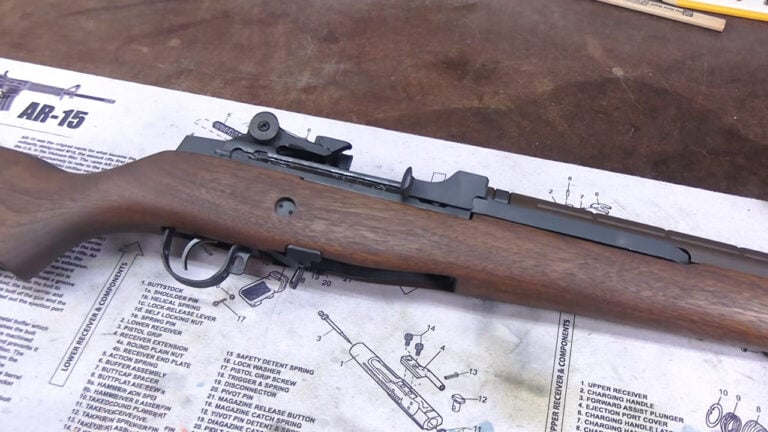
It might work at bow range with the right ammo, but even then, the expansion is unreliable. The platform doesn’t lend itself to fast follow-ups either, especially if you’re running irons. The M1-9 is a cool range toy, but it doesn’t offer anything close to the clean terminal performance you’d get from a .223 or even a fast .22 Magnum rifle. It looks like it should work, but in real-world predator hunting, it doesn’t hold up.
Thompson/Center HotShot (.22 LR)

The HotShot from Thompson/Center is marketed as a youth rifle, and that’s exactly what it is — a single-shot .22 with a short length of pull and basic sights. It’s perfect for teaching kids to shoot, but it doesn’t belong in the field for coyotes. You’ve got low muzzle velocity, limited sight radius, and one shot — which better be perfect.
Even when that shot hits, the terminal performance is marginal at best. Expansion is unreliable, and penetration is shallow. You’re likely to see the coyote flinch and run off, even with a solid hit to the vitals. The HotShot teaches the basics well, but when it comes to cleanly dropping predators, it falls short — literally and figuratively. Keep it on the range, not in the field.
*This article was developed with AI-powered tools and has been carefully reviewed by our editors.