Photo credit: Militarist/ShutterStock.com
A lot of talk in hunting circles revolves around big cartridges that hit hard, but plenty of hunters know the truth: shot placement and bullet choice matter more than raw size. Smaller calibers, when paired with the right rifle and loads, have been putting venison in freezers for generations. They may not have the bragging rights of magnums, but they offer accuracy, manageable recoil, and dependable performance. These are the rounds you won’t hear hyped in campfire debates, yet they keep showing up season after season with proven results. If you’ve ever wondered what hunters really lean on when the spotlight isn’t shining, here’s a list of the small calibers that quietly get the job done.
.22 Hornet

The .22 Hornet has been around since the 1930s, and while it doesn’t make headlines anymore, it’s still trusted for small game and varmints. It delivers mild recoil, letting you focus on precision instead of bracing for kick. That’s why many hunters carry it when they want to put fur on the ground without wrecking meat. It’s not a long-range powerhouse, but inside 150 yards it’s capable of clean, ethical kills with the right bullet.
Where it shines most is in controlling varmints or taking smaller predators. Hunters appreciate how quiet it is compared to larger centerfires, which helps when working around farms or rural homesteads. With modern ammunition improvements, the Hornet can perform better than most people expect. You don’t hear it talked about as much as flashy new calibers, but those who know it, trust it.
.218 Bee

The .218 Bee is another small cartridge that doesn’t get a lot of recognition but remains a favorite among hunters who want accuracy and efficiency. Chambered mostly in lever-action rifles like the Winchester Model 65, it offers a light-shooting alternative for varmints and small predators. Despite its modest size, it carries enough energy for clean kills on coyotes and foxes at moderate distances.
What hunters appreciate about the Bee is its combination of flat trajectory and low recoil. It doesn’t rattle you with blast or kick, so follow-up shots are smooth. While it never reached widespread popularity, those who have rifles chambered in it keep using them season after season. It’s one of those calibers that proves you don’t need raw horsepower if you can place your shots with confidence. Quiet, effective, and underappreciated, the .218 Bee has earned a quiet following.
.25-20 Winchester

The .25-20 Winchester is a cartridge that old-timers leaned on heavily for small deer and varmints. It doesn’t carry a big reputation anymore, but it still finds its way into the field for those who value accuracy and minimal recoil. With modern soft-point bullets, it’s capable of dropping whitetails cleanly at close ranges, especially when used in lever-action rifles.
Its performance isn’t going to compare with modern mid-range cartridges, but that’s not the point. Hunters who use the .25-20 appreciate how mild it is to shoot and how it teaches careful shot placement. You can spend all day practicing without beating up your shoulder, which means you’re more likely to make that first shot count. For hunters who stay within its limitations, it remains a trustworthy caliber with a long track record of success.
.22 WMR

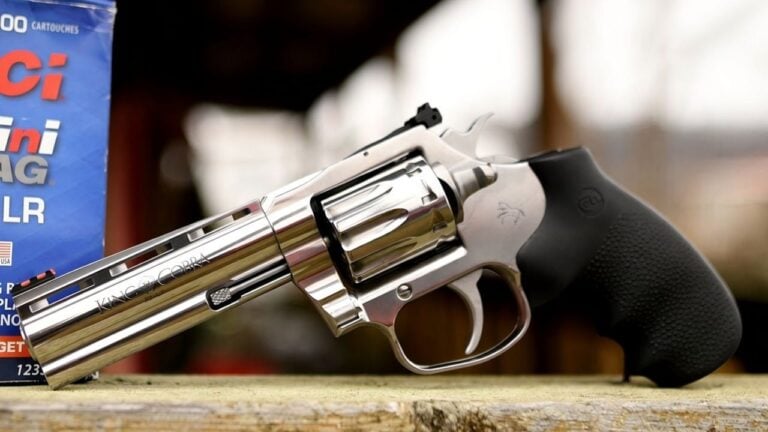
The .22 Winchester Magnum Rimfire, better known as .22 WMR, is a step above the standard .22 LR and has been putting down small predators and varmints cleanly for decades. It’s affordable, easy to shoot, and available in rifles that are lightweight and handy to carry. Hunters appreciate it for controlling pests around property or taking fur-bearing animals where centerfire rifles would be overkill.
While not a deer cartridge, it’s been used successfully on whitetails at very close ranges with precise placement. More often, though, it shines on coyotes, foxes, and raccoons. Its higher velocity compared to .22 LR gives it the punch needed for clean kills without excessive damage to pelts. For hunters who know its range and limitations, the .22 WMR is a caliber they keep coming back to.
.32-20 Winchester

The .32-20 Winchester is one of those cartridges that bridges the gap between pistol and rifle rounds. It was once marketed as an all-purpose farm cartridge, and that reputation has stuck with it. Out of a rifle, it delivers mild recoil and surprising effectiveness on small deer, varmints, and predators. Hunters who still carry rifles chambered in .32-20 know that it works best when you keep shots under 100 yards and aim carefully.
It’s not a modern powerhouse, but it doesn’t need to be. The .32-20 rewards accuracy and control, which is why it has lasted well beyond its heyday. While you won’t find it in every gun shop anymore, those who reload or hang on to classic lever actions continue to trust it. It’s one of those rounds that does the job quietly and without fanfare.
.221 Fireball

The .221 Fireball may not be common, but it’s earned respect among hunters who value precision. Originally designed for handguns like the Remington XP-100, it found a second life in rifles where it shines as a varmint and predator cartridge. Its flat trajectory and modest recoil make it easy to shoot accurately, which means clean kills when used responsibly.
What sets the Fireball apart is its efficiency. You get centerfire performance in a compact package without excessive muzzle blast or recoil. For hunters who value stealth and accuracy, it’s an ideal option. While not many rifles are chambered for it today, those who have one know exactly why it still deserves a spot in the field. It’s not flashy, but it’s effective, and hunters who use it don’t feel undergunned.
.243 Winchester

The .243 Winchester is probably the most popular “small” caliber trusted for clean kills, especially on deer-sized game. Its flat-shooting characteristics, mild recoil, and wide availability make it a go-to for younger hunters and seasoned veterans alike. With modern bullet technology, the .243 is more than capable of dropping deer, antelope, and coyotes with confidence.
Hunters like it because it’s easy to shoot accurately and doesn’t punish your shoulder. That means better practice and more reliable performance in the field. While it’s sometimes criticized as being “too small” for larger game, thousands of successful hunts prove otherwise. If you keep shots reasonable and use quality ammunition, the .243 will reward you with clean, ethical kills every time.
6mm Remington

The 6mm Remington is often compared to the .243 Winchester, and while it never gained the same popularity, it’s every bit as effective. Hunters who use it appreciate the slightly higher velocities and excellent accuracy. It’s a caliber that can drop deer, pronghorn, and coyotes cleanly when paired with the right loads.
The recoil is light, making it a comfortable option for extended practice and younger shooters. Its flat trajectory helps reduce guesswork at moderate distances, which means you’re more likely to land your shot exactly where you intend. While it may not get as much attention as other calibers, those who carry it know its value. The 6mm Remington proves that performance doesn’t always require a big name.
.257 Roberts

The .257 Roberts is one of those calibers that serious hunters know about but rarely boast about. It delivers excellent ballistics in a mild-recoiling package, making it ideal for deer and antelope. With modern bullet designs, it has more than enough power to ensure clean kills while still being easy to shoot accurately.
Hunters like the Roberts because it’s versatile without being overbearing. It bridges the gap between smaller calibers like the .243 and larger ones like the .270, offering a balance that makes it dependable in the field. Even though it’s been overshadowed by newer cartridges, the .257 Roberts continues to prove itself where it counts: in freezers filled with meat.
.25-06 Remington

The .25-06 Remington is another caliber that hunters trust, even if it doesn’t get the same attention as others. It’s fast, accurate, and effective on deer-sized game. The recoil is manageable, especially when compared to magnum calibers, which means you can shoot it comfortably and with confidence.
Its flat trajectory makes it a favorite for open-country hunts where longer shots are common. Hunters who use it appreciate how it delivers clean kills without excessive meat damage. While it’s not always the first cartridge mentioned in hunting conversations, those who know it respect it. The .25-06 has earned its place as a reliable and trusted caliber for clean kills.
.250 Savage

The .250 Savage, also known as the .250-3000, was once famous for being the first commercial cartridge to reach 3,000 feet per second. Today, it doesn’t get as much attention, but hunters who use it still appreciate its effectiveness. It offers mild recoil, excellent accuracy, and enough energy to take down deer and antelope cleanly.
What makes it attractive is its balance. You get the benefits of a flat trajectory without the punishment of heavy recoil. That combination means more accurate shooting and fewer bad habits. While it’s not as widely available as it once was, hunters who keep rifles chambered in .250 Savage continue to trust it season after season. It’s a quiet performer that still gets the job done.
7mm-08 Remington

The 7mm-08 Remington might be considered mid-size by some, but many hunters treat it as a “small” caliber because of its light recoil and versatility. It’s trusted for clean kills on deer, antelope, and even elk in the right hands. Its efficiency and accuracy make it a favorite among hunters who value results over reputation.
Hunters like it because it doesn’t beat you up in practice, which translates into better confidence in the field. Its ballistics are excellent for medium game, with enough energy to ensure quick, ethical kills without excessive recoil. The 7mm-08 may not dominate conversations around campfires, but those who use it know exactly why it works. It’s a caliber that continues to earn quiet respect.
*This article was developed with AI-powered tools and has been carefully reviewed by our editors.