Photo credit: ClassicFirearms/YouTube
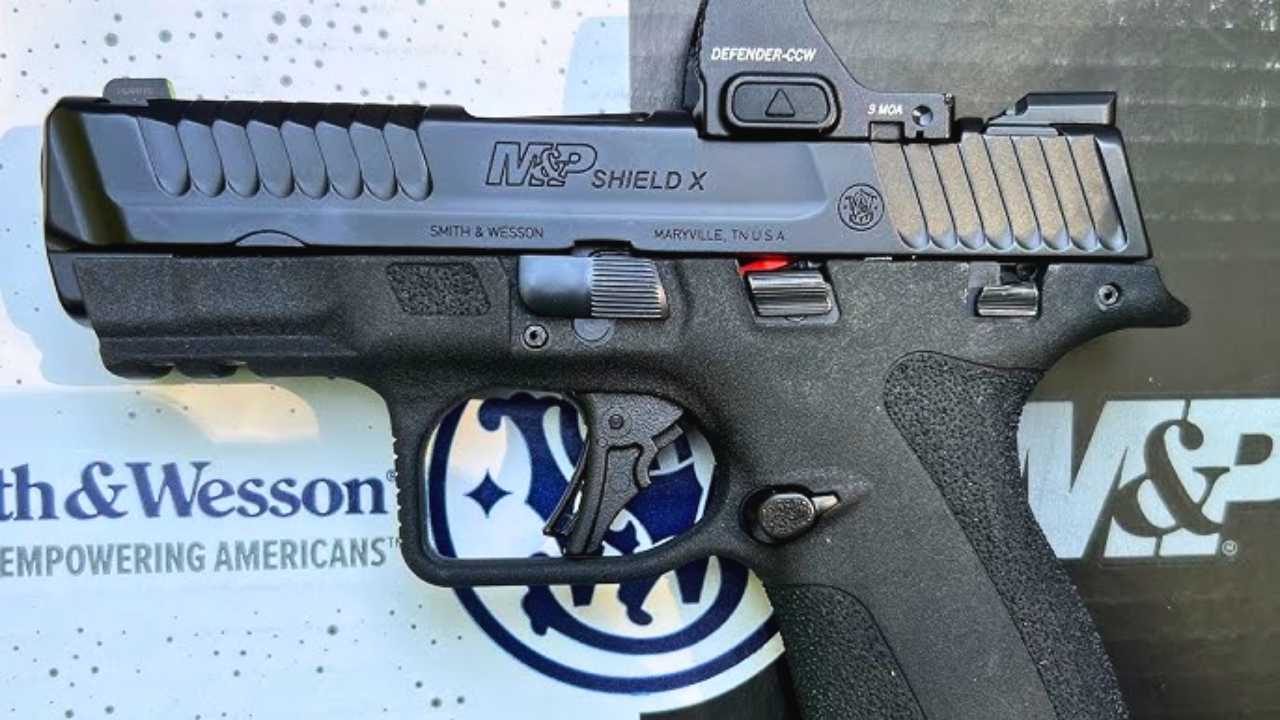
From the day the original Shield showed up, the gun sold because it was thin, simple, and easy to carry. It also baked in a gripe that never really went away: no real accessory rail. If you wanted a weapon light, you were stuck with trigger-guard clamps, oddball mounts, or no light at all. As other micro-compacts started shipping optics-ready with short rails for compact lights, Shield owners kept asking when Smith & Wesson was going to modernize the platform instead of relying on its name. With the Shield X, they finally did the obvious thing and put a proper rail on the frame. The new pistol uses a black polymer frame patterned after the M&P line, lengthens the grip for double-stack magazines, and builds in a railed dust cover that accepts normal compact weapon lights.
The original Shield gave up a rail to stay small—and shooters felt that trade
Back when the first Shields hit the market, the lack of a rail was easier to excuse. Slim single-stacks were still the trend, and people were willing to trade accessories for a pistol that was flat, light, and narrower than the double-stack duty guns they’d been carrying. Over time that choice aged badly. Lights got smaller, holster makers got better at accommodating them, and people started expecting their carry pistol to do double duty as a nightstand gun with a light and maybe a laser. The Shield line stayed slick through the original and M2.0 variants, then even through most of the Shield Plus lineup, which meant a huge slice of owners couldn’t mount the accessories they wanted without goofy work-arounds. You can see that frustration in forum posts and “if only it had a rail” comments stacked under just about every Shield discussion long before the X was announced.
Shield X finally brings a real accessory rail to the platform
Shield X’s frame doesn’t dance around the issue; it puts the rail front and center. The pistol is built on a reinforced polymer frame with a squared, undercut trigger guard and an honest railed dust cover designed for compact lights and accessories, not proprietary clamps. You don’t have to chase a niche mount or rely on tape switches stuffed into the trigger guard. A normal compact WML can bolt straight onto the rail, sit where it should, and survive daily carry. The gun still stays in the micro-compact category, but Smith & Wesson stopped pretending rail sections only belong on duty-size guns. That one change answers years of “Why won’t they give this thing a rail?” threads and turns Shield X into a more viable home-defense and low-light carry option out of the box.
Why a rail matters more today than when the Shield first launched
The average carry setup has changed a lot since the original Shield came out. More people are comfortable carrying appendix, more folks run dots on pistols, and weapon lights have gone from “tactical accessory” to standard equipment for anyone who uses the same gun around the house at night. That shift makes the old no-rail compromise harder to swallow, especially for people who live in neighborhoods where most problems happen in low light. A compact light on a railed micro-compact lets you keep both hands on the gun, manage recoil, and still identify what you’re aiming at before you press the trigger. With Shield X, Smith & Wesson finally lined the gun up with how people actually use them instead of the catalog idea of a pocket 9mm that never leaves a waistband during dark hours. The rail doesn’t turn Shield X into a duty pistol, but it does make it feel like it belongs in 2026 instead of 2012.
How Smith & Wesson added the rail without turning it into a brick
The big question anytime a company adds a rail to a small gun is simple: does this thing still carry, or did you bulk it up to the point it lives in a safe? Smith & Wesson tried to thread that needle by keeping the frame slim, borrowing the overall feel of the M&P line, and letting the extra length work double duty. The longer dust cover and slide give Shield X room for the rail and a 3.7-inch barrel, which helps with sight radius and recoil control, without blowing the width out beyond what a lot of people already tolerate from other micro-compacts. Reviews so far describe recoil as snappy but manageable, with some shooters actually finding the X softer and easier to control than their Shield Plus because of the longer grip and extra weight out front. In practice, that means the rail didn’t come from bolting a Picatinny boat anchor on the front; it came from a modest stretch that helps the gun shoot better as well.
What this means if you already own a Shield or Shield Plus
If you’ve been running a Shield or Shield Plus and grumbling about the lack of a rail for years, Shield X is the first factory answer from Smith & Wesson that doesn’t involve changing platforms entirely. You get higher capacity magazines, an optics-ready slide on most models, and the rail that lets you finally mount a proper compact light. That does not mean every Shield owner needs to sprint to the counter. If you carry deep concealment, never plan to hang a light, and your Plus already fits your hand and holsters perfectly, the rail is a nice-to-have, not a must-have. On the other hand, if you’ve been stuck choosing between a railed compact that feels big on the belt and a Shield that can’t carry the tools you want, Shield X gives you a third option that finally checks that box. The headline here isn’t magic accuracy or a wild new caliber; it’s something simpler: Smith & Wesson finally put a real rail on a Shield, and that fixes the complaint shooters have been repeating since the first ones came out.
Like The Avid Outdoorsman’s content? Be sure to follow us.
Here’s more from us: