Photo credit: Gavran333/Shutterstock.com
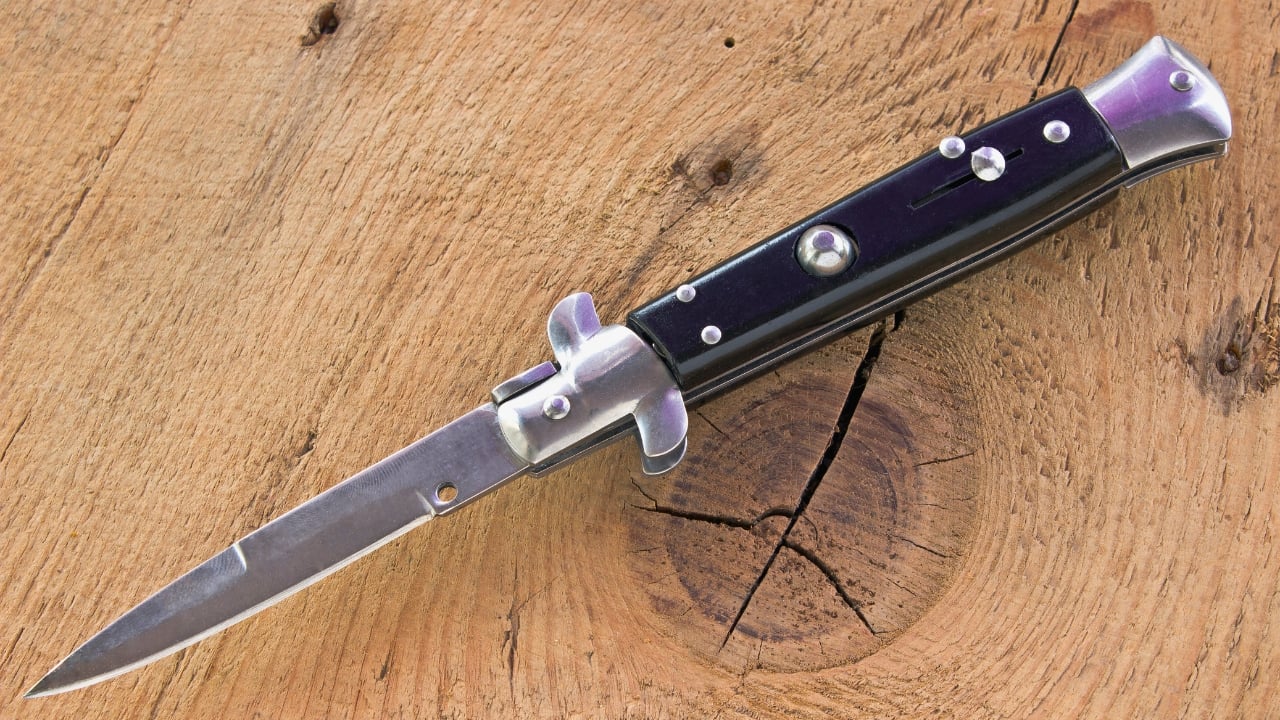
Switchblades have moved from movie props to the center of a constitutional fight that could reset how you carry knives in daily life. As courts and lawmakers revisit old bans, your pocketknife is suddenly wrapped up in the same legal theories that reshaped gun rights. The outcome of the current switchblade battles is poised to influence knife laws across the country, from what you can buy online to what you can clip inside your work pants.
The California switchblade fight that put knives on the constitutional map
You are watching a California case turn a once niche issue into a major Second Amendment test. In the Ninth Circuit, advocates for the group Knife Rights have argued that ordinary knives, including switchblades, are “arms” that you have a right to keep and bear, not exotic contraband that states can ban at will. Their lawyers told the court that knives are carried by Americans across the country for work, self defense, and everyday utility, and that California’s categorical prohibition treats millions of law abiding people as if they were gang members, simply for owning a spring assisted blade, a point reflected in the description of Knife Rights taking its case to the Ninth Circuit.
For you, the stakes are practical as well as symbolic. If the Ninth Circuit accepts that switchblades are protected arms, California’s ban could fall and other states in the circuit would gain a powerful precedent. If the court instead upholds the law, it will signal to legislatures that they can keep treating automatic knives as uniquely dangerous, even when you use them for the same tasks as a folding utility knife. That is why this single case, framed around a specific state ban, has become a national bellwether for how far your right to carry a blade actually extends.
How Bruen turned knives into the next Second Amendment frontier
You are seeing knives pulled into the constitutional spotlight because of a gun case. At the heart of the California arguments is the Supreme Court’s 2022 decision in New York State Rifle & Pistol Association v. Bruen, which told lower courts to judge modern weapons laws by historical tradition rather than by balancing public safety against rights. Lawyers in the switchblade litigation have leaned on that rule, arguing that there is no founding era tradition of banning common knives and that twentieth century panic over automatic blades cannot justify modern prohibitions, a framing that tracks the way New York State Rifle and Pistol Association v. Bruen now anchors these disputes.
That shift matters for you because it changes what courts are allowed to consider. Instead of asking whether a switchblade ban might reduce stabbings, judges must ask whether similar restrictions existed when the Second Amendment was adopted. Advocates have stressed that switchblade bans originated in the 1950s, well outside the relevant constitutional framing period, and that lawmakers then were reacting to sensationalized fears rather than data, a point echoed in coverage noting that They emphasized the mid century origins of these laws. If courts accept that history, you could see a wave of challenges to knife restrictions that once seemed politically untouchable.
Why judges are skeptical that switchblades are really for self defense
Even with Bruen on the books, you still face judicial skepticism about whether a spring loaded knife is truly a self defense tool. During recent Ninth Circuit arguments, several judges pressed advocates on why anyone would need an automatic blade instead of a standard folder, and whether the quick opening mechanism makes the weapon particularly dangerous. Reporting on the hearing noted that some members of the panel doubted that switchblades are commonly used for lawful protection and suggested they might be more associated with criminal violence, a theme captured in coverage headlined Switchblade Use for Self Defense Doubted by Ninth Circuit Judges, which cited Maia Spoto and even referenced the time 46 minutes past the hour in its timestamp.
That line of questioning matters because it shapes whether your knife is seen as “in common use” for lawful purposes or as “dangerous and unusual,” the legal label that can justify bans. If judges accept the idea that switchblades are mostly tools of crime, they may be more willing to uphold restrictions even under a history focused test. If, instead, courts recognize that you might carry an automatic knife for the same reasons you carry a compact pistol or a one hand opening folder, the legal ground under long standing bans begins to crack.
State courts and legislatures are already rewriting the rules
While federal judges wrestle with theory, state level decisions are already changing what you can carry. In Massachusetts, the state’s highest court ruled that residents can legally carry a switchblade, holding that such knives are protected by the Second Amendment and cannot be categorically banned. That decision means you, as a Massachusetts resident, can now lawfully possess an automatic knife that was previously off limits, a shift that was explained in a video report noting that massachusetts residents can now legally carry a switchblade after the ruling.
Legislatures are moving too, often in response to the same constitutional arguments. In Vermont, advocates celebrated when “Vermont Switchblade Ban Repeal Passed,” a milestone highlighted in Legislative Updates from Knife Rights that described how the Vermont Switchblade Ban Repea cleared the legislature. Shortly afterward, “Vermont Switchblade Ban Repeal Signed” was added to the group’s Legislative Updates June Front Page, confirming that the governor had approved the change and that you in Vermont are no longer barred from owning an automatic knife, as reflected in the separate entry titled Vermont Switchblade Ban Repeal Signed.
Congress and the Federal Switchblade Act are under direct attack
Even if your state loosens its rules, the federal Switchblade Act still shapes what you can buy or ship across state lines, and that law is now under heavy fire. Knife Rights has filed a federal suit arguing that the act violates the Second Amendment by banning a category of arms that ordinary people use for lawful purposes. In an appeal brief, the group stressed that the Supreme Court has made clear that the “Second Amendment” protects all bearable arms in common use and that the federal government cannot sidestep that rule by labeling switchblades as contraband, a position summarized in an update inviting readers to Download the Full Excerpts of the appeal.
Gun rights organizations have joined that fight, signaling that your knife rights are being folded into the broader Second Amendment movement. The NRA Files Amicus Brief in Fifth Circuit Case Challenging the Federal Switchblade Act, arguing that the lower court’s reasoning strayed from the proper constitutional inquiry and that the act cannot survive under Bruen’s history and tradition test. For you, that means the same legal energy that reshaped concealed carry rules is now aimed at the federal knife regime, as reflected in the description that the NRA Files Amicus Brief in that Fifth Circuit Case Challenging the Federal Switchblade Act.
California’s ban and the “dangerous and unusual” debate
California’s statewide prohibition on automatic knives has become the prime testing ground for whether your blade can be labeled “dangerous and unusual.” In a separate case focused on that law, the National Rifle Association has again stepped in, arguing that California cannot treat switchblades as if they were exotic weapons when they are widely owned and used for lawful purposes. The group’s filing stresses that under Supreme Court doctrine, only weapons that are both highly dangerous and not in common use can be banned outright, and it contends that automatic knives do not fit that category, a position laid out in an update noting that the NRA Files Amicus Brief in Challenge to California Switchblade Ban and disputes that these knives are “dangerous and unusual.”
For you, the outcome will help decide whether lawmakers can single out specific knife mechanisms for prohibition while leaving functionally similar tools untouched. If courts accept California’s framing, states could continue to draw sharp lines between what you may carry and what is off limits based on perceived risk. If judges instead agree that switchblades are simply one more type of folding knife in common circulation, the “dangerous and unusual” label will be harder to apply, and your ability to choose the tool that fits your needs, rather than the one politicians prefer, will expand.
How sportsmen and outdoor users are reshaping the narrative
Knife politics are no longer just about urban crime; they now run through your hunting camp and fishing boat. In Delaware, Senate Bill 108 (SB 108) has been promoted as “pro sportsmen” knife legislation that would repeal restrictive definitions and make it easier for you to carry practical blades for field dressing, camping, and other outdoor tasks. The measure amends existing law so that a knife does not have to meet a narrow design requirement to be legal, a change that supporters say will benefit shooting, hunting, and camping enthusiasts, as described in a briefing on Senate Bill 108 heading to the governor’s desk.
National advocacy groups for hunters and anglers have also pushed a broader “knife ban repeal” agenda, arguing that your ability to carry a reliable blade is essential to safe and ethical outdoor activity. They point to Points of Interest showing that Court cases in California, Illinois, Michigan, and Texas have all ruled that assisted opening and one hand opening knives are not switchblades, undercutting efforts to lump your everyday folder into the same legal bucket as prohibited automatics. That legal trend is captured in a policy overview on Knife Ban Repeal, which highlights how those Court decisions in California, Illinois, Michigan, and Texas are reshaping the landscape.
The Trump administration’s stance and the federal government’s role
Even as courts expand protections, the federal executive branch has taken a harder line that directly affects what you can carry. The Trump Administration Argues Second Amendment Doesn’t Protect Pocket Knives in ongoing litigation, signaling that the White House believes knives fall outside the core of the right to keep and bear arms. In a case known as Knife Rights v. Bondi, federal lawyers have maintained that pocket knives and automatic blades can be regulated more aggressively than firearms, a position detailed in coverage explaining how the Trump Administration Argues Second Amendment Doesnt Protect Pocket Knives.
For you, that stance creates a tension between the Supreme Court’s broad language about “bearable arms” and the federal government’s narrower view of what counts. If courts ultimately side with the administration, agencies could continue to enforce strict rules on knives in federal buildings, national parks, and interstate commerce, even as state laws loosen. If judges reject that argument, you could see a more uniform standard where your right to carry a pocketknife is treated as seriously as your right to carry a handgun, at least in constitutional terms.
Why this wave of cases could reset knife laws nationwide
When you step back from the individual lawsuits, a clear pattern emerges: knives are being pulled into the same constitutional framework that transformed gun policy. Earlier decisions have already recognized that the Second Amendment includes the right to be armed for self defense outside the home, a principle that advocates say applies equally to the blade in your pocket. One California decision tied to National Knife Day leaned on Bruen to strike down a local restriction, noting that, broadly, in NYSRPA v. Bruen the Supreme Court held that the Second Amendment protects ordinary weapons in common use, a point summarized in an update that explained how Broadly, NYSRPA and Bruen the Supreme Court expanded the Second Amendment.
As more courts adopt that reasoning, your local knife code becomes vulnerable if it rests on mid century fears rather than founding era practice. Advocates argue that if a tool is widely owned for lawful purposes, whether it is a compact pistol or a one hand opening knife, it should receive the same constitutional respect. With Knife Rights pressing its cases, the NRA aligning its amicus strategy, and state legislatures from Vermont to Delaware rewriting statutes, the switchblade fight is no longer a niche dispute. It is a test of whether your right to carry the tools you rely on every day will be treated as a core liberty or a privilege that can be revoked whenever lawmakers rediscover an old panic about sharp edges.
Like The Avid Outdoorsman’s content? Be sure to follow us.
Here’s more from us: