
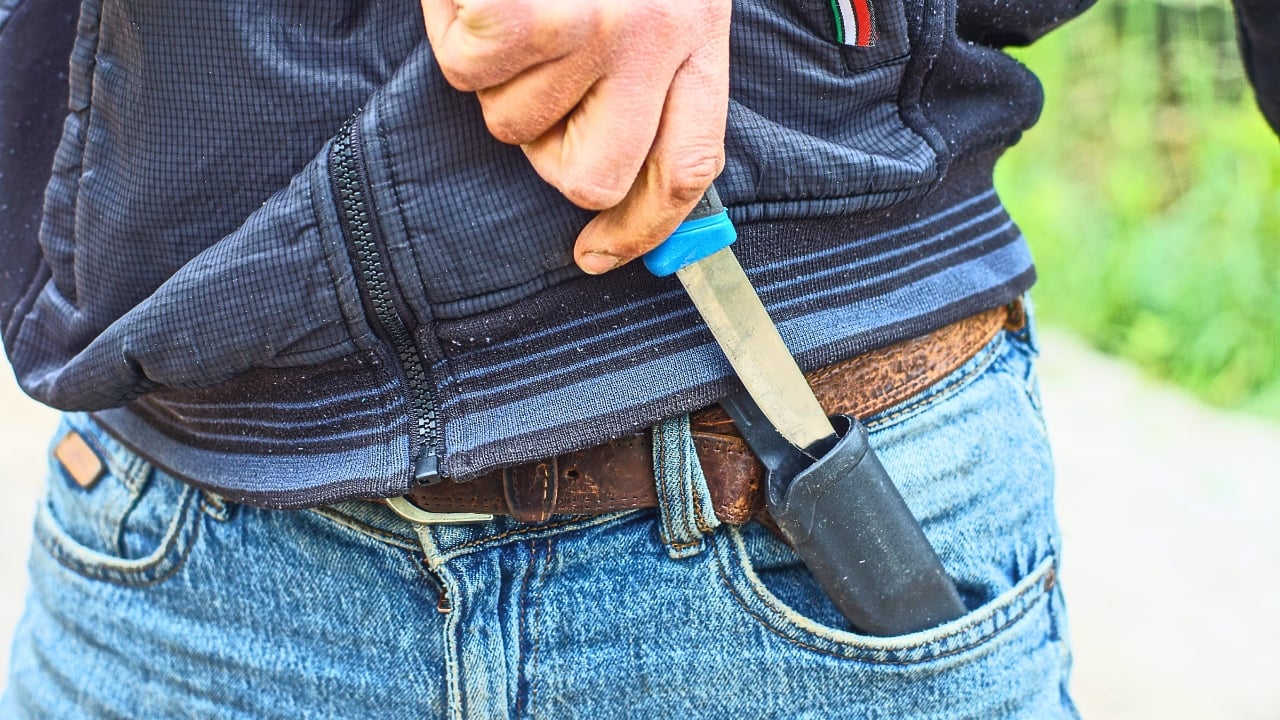
Photo credit: REDCHYTS FEDIR/Shutterstock.com
Texas has spent the past decade tearing down old knife restrictions, yet the way those rules are enforced on the ground still depends heavily on where you clip your folder or strap on a fixed blade. You now live in a state that promises uniform rights on paper, while local politics, business policies, and venue rules quietly redraw the lines city by city. That tension is exactly where enforcement can start to feel strange, especially in the next wave of fast‑growing urban areas.
If you carry a knife for work, self‑defense, or everyday utility, you are walking into a legal landscape that is technically settled but practically unsettled. The statutes look clear, but the mix of state preemption, private property rules, and evolving reforms means the next “weird” enforcement story is likely to come from a city that thinks it understands the law, until a traffic stop or stadium gate proves otherwise.
The big picture: Texas is knife friendly, but not friction free
From a distance, Texas looks like one of the most permissive knife jurisdictions in the country, and in many ways that reputation is deserved. Lawmakers have rolled back bans on categories of blades, broadened what you can carry, and tried to make sure your rights do not evaporate when you cross a city limit sign. If you are used to juggling different rules in neighboring states, the promise of a single, statewide standard feels refreshingly simple.
Up close, however, you still face a patchwork of practical constraints that can turn a lawful knife into a problem depending on who is enforcing the rules. The statutory framework described in a detailed Texas knife law overview looks clean, but your experience at a courthouse metal detector or in a downtown bar can be anything but. That gap between the law on the books and the law in your daily routine is where the next round of confusing enforcement is likely to surface.
How Texas got here: a decade of reform and preemption
The modern knife landscape in Texas is the product of a deliberate campaign to unwind older, more restrictive rules. Advocates pushed to repeal bans on the manufacture and sale of specific designs, and legislators responded with a series of reforms that steadily expanded what you can legally own and carry. A key milestone was the adoption of a statewide framework that treats knives less like contraband and more like ordinary tools, a shift that underpins the current sense that Texas is broadly knife friendly.
That shift was reinforced when the state embraced a clear definition of what counts as a knife and how different categories are treated. In a detailed timeline of changes, a Nov analysis of the Texas Knife Law Overview describes how a critical reform enacted statewide definitions of knives in Texas, replacing vague local language with a single standard. You now operate under a system that was consciously rebuilt to be more predictable, even if the day‑to‑day enforcement still has rough edges.
State Preemption: why cities cannot simply write their own knife codes
If you want to understand where enforcement can and cannot get strange, you have to start with preemption. Earlier in the reform wave, Texas enacted State Preemption so that local governments could not quietly re‑criminalize what the legislature had just legalized. The idea was simple: you should not need a lawyer every time you drive from Houston to San Antonio just to know whether your pocketknife is legal.
The key provision, Local Government Code 229.001, limits the ability of cities and counties to regulate knives in ways that conflict with state law. That statute is the backbone of uniformity, but it does not stop every form of local friction. Police departments still set enforcement priorities, city attorneys still interpret gray areas, and private venues still layer on their own restrictions, which means you can feel the impact of local attitudes even when the ordinance books are technically aligned with Austin.
The preemption origin story: organized advocacy and HB 905
The preemption framework did not appear out of thin air, and if you carry a knife today you are living with the results of a very specific political push. Advocacy groups focused on blade rights argued that the only way to protect owners from a maze of conflicting local rules was to lock in a single statewide standard. That argument resonated with lawmakers who were already skeptical of city‑by‑city gun regulations and saw knives as the next frontier.
One of the pivotal steps was the introduction of the Knife Rights Knife Law Preemption bill, HB 905, by Texas state Representative John Frullo. That proposal was framed as a way to rid Texas of a confusing patchwork and bring it in line with other preemption states such as New Hampshire, Tennessee, and Utah. When you see a city hint at reviving old knife restrictions today, it is that legislative history that sets the outer boundary of what local officials can actually do.
Recent reform momentum: what the latest bills really changed
Even after preemption, lawmakers kept tinkering with the details, and you are now living through the tail end of that reform cycle. One of the more visible pushes focused on cleaning up the last pockets of prohibition that still treated certain knives as inherently suspect. The goal was to stop treating blade length or design as a proxy for criminal intent and instead focus on how a knife is used.
That effort came into focus when Knife Rights celebrated the passage of a major reform through the Texas House, crediting bipartisan sponsors such as Representatives Harold Dutton and Marc LaHood and co‑sponsors including Brisc for moving the bill. The measure, described in a legislative update on Texas knife law reform, targeted remaining bans on items like trench knives and the like. For you, that means categories that once lived in a legal gray zone are now more clearly protected, although the cultural baggage around them has not disappeared.
Where enforcement still bites: businesses and “sensitive” venues
Even with preemption and reform, you still face a separate layer of rules whenever you step onto private property or into a high‑security venue. State law might say your blade is legal, but a bar, stadium, or theme park can still decide it does not want knives on site and can back that up with trespass enforcement. That is where you are most likely to encounter the kind of inconsistent, personality‑driven decisions that make enforcement feel arbitrary.
Guidance aimed at everyday carriers highlights how Business and Public Venue Restrictions work in practice. Certain businesses face knife restrictions based on their primary source of revenue, and some public venues layer on additional screening rules even when state law would otherwise allow you to carry longer knives. You might be perfectly legal walking down the sidewalk with a large fixed blade, then find yourself turned away at the door of a concert hall that has its own zero‑tolerance policy.
The next hot spots: fast‑growing cities with nervous gatekeepers
When you look ahead to where enforcement could get strange next, the pattern is less about geography and more about growth and image. Cities that are trying to brand themselves as tech hubs, convention magnets, or family tourism destinations often lean on aggressive security theater to reassure visitors. That can translate into over‑zealous screening at arenas, transit hubs, and entertainment districts, even when the underlying state law is permissive.
In those environments, you are more likely to encounter security staff or off‑duty officers who default to “no knives” regardless of what the statutes say. The legal framework that grew out of the Texas knife laws reforms still applies, but the people at the gate may not know or care about the finer points of preemption. That disconnect is where you see odd outcomes, like a small slipjoint being confiscated at a festival while a larger multitool in the same pocket goes unnoticed.
How local politics and policing culture shape your experience
Even though cities cannot rewrite knife law outright, they can shape how aggressively it is enforced. Police chiefs answer to mayors and city councils, and if local leaders are under pressure to “do something” about violent crime, knives can become a symbolic target. You might see more stops justified by vague claims of suspicious behavior, with a visible blade used as the hook for a deeper search.
That is where the spirit of State Preemption in Local Government Code 229.001 collides with the reality of street‑level discretion. A department that embraces the intent of preemption will train officers to treat lawful carry as normal, while a more skeptical agency might quietly encourage a harder line. For you, the difference shows up in small moments, like whether an officer treats your clipped‑in folder as a nonissue or as the starting point for a lecture and a pat‑down.
Staying ahead of “weird” enforcement: practical steps for carriers
You cannot control how every officer, security guard, or business owner interprets knife law, but you can stack the odds in your favor. The first step is to know the statewide rules well enough to explain them calmly if you are challenged, including the basic definitions and the fact that Texas has a preemption framework. Having that knowledge in your back pocket will not win every argument, but it can defuse some confrontations that are driven more by misunderstanding than malice.
It also helps to understand the political and cultural context of the places you move through. A rural hardware store that sells hunting knives at the counter is likely to treat your everyday carry very differently from a downtown music venue with a strict bag‑check policy. By tracking how reforms like the Nov Texas Knife Law Overview and the advocacy behind HB 905 have reshaped the legal landscape, you can make more informed choices about what you carry, where you carry it, and how you respond when enforcement starts to feel out of step with the law.
Like The Avid Outdoorsman’s content? Be sure to follow us.
Here’s more from us:


