
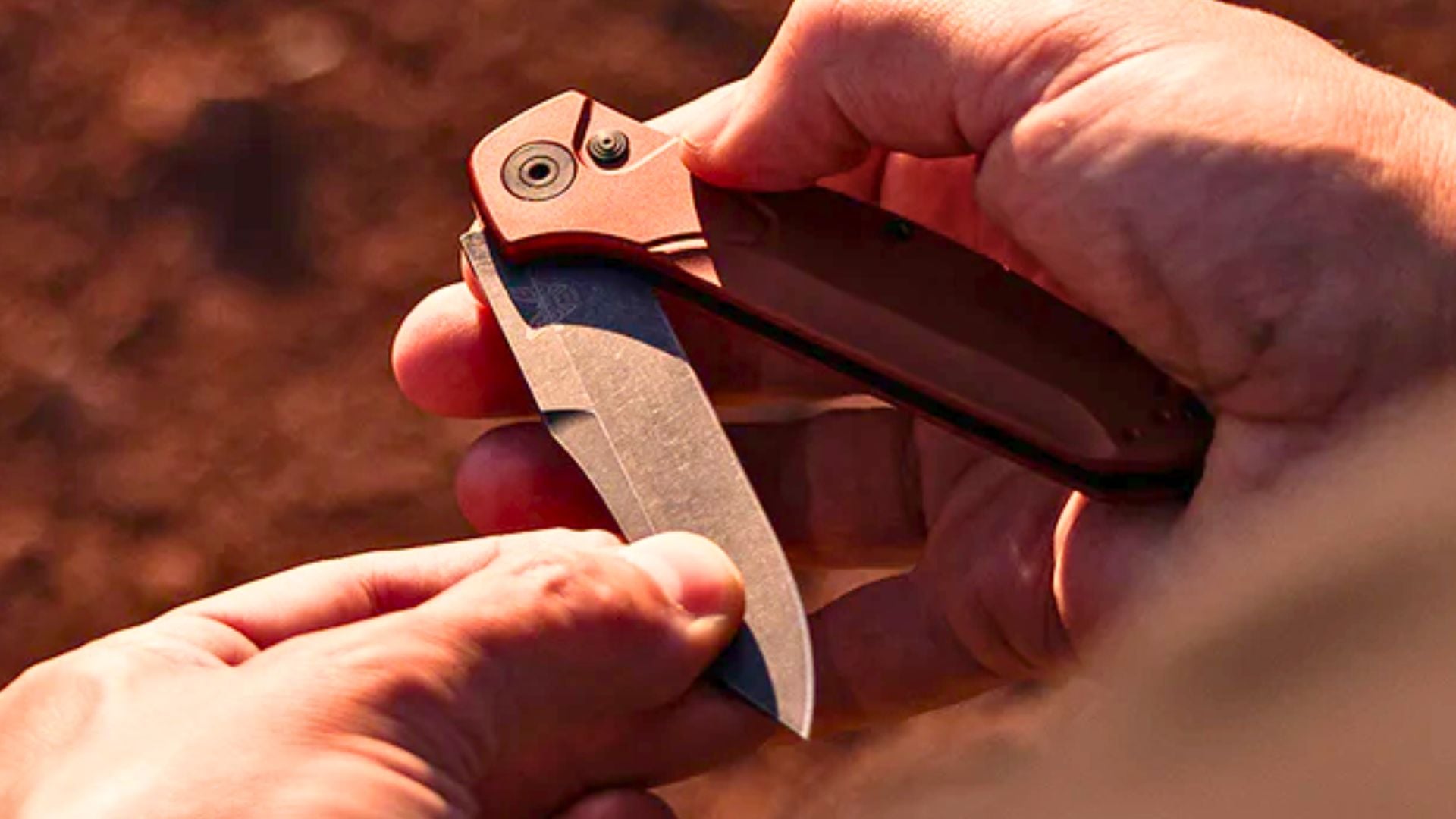
Photo credit: Benchmade Knives
Workplace rules about knives are often treated as a minor HR detail, yet the wrong blade in the wrong setting can move from policy violation to criminal allegation with surprising speed. If you carry tools for your job, manage a team that does, or simply keep a pocketknife in your bag, you are closer to that legal line than you might think.
Understanding how employment policies intersect with state weapons laws gives you a chance to fix problems before they escalate into a police report, a charge, or a career-ending incident. The “work knife” you barely notice can, under the right circumstances, be treated as a weapon that triggers serious consequences.
Why a simple work knife is treated like a weapon
From a legal perspective, a knife is not defined by how you use it on a typical day but by what it is capable of doing. You may think of your folding blade as a box cutter or a fishing tool, yet prosecutors and security officers are trained to look at length, design, and how quickly it can be deployed. That is why a blade that feels like part of your uniform can suddenly be described as a “dangerous weapon” once an incident occurs, even if you never intended to threaten anyone.
When people think of weapons laws, they often picture firearms or explosives, not the utility knife in a maintenance cart or the chef’s knife in a catering kit. Legal guidance stresses that certain knives can lead to criminal charges even when they are purchased for work, sport, or certain hunting or fishing activities. Once a blade meets a statutory definition, the law does not care that you bought it at a hardware store or that it has been in your toolbox for years.
The “knife rule” most workplaces quietly rely on
Most employers fold knives into broader bans on weapons, often in a single line of policy that prohibits “firearms, explosives, and other dangerous weapons on company property.” You are expected to understand that this includes knives that are not obviously kitchen tools or safety cutters, even if the policy never lists blade types. In practice, that means HR and security have wide discretion to decide when a pocketknife is a harmless accessory and when it violates the rule.
Because the language is broad, the same policy can be used to address a chef’s eight inch blade in a restaurant kitchen and a folding knife clipped to a belt in an office parking lot. The ambiguity is intentional, since it lets managers respond to context, but it also means you may not realize you are on the wrong side of the rule until someone complains. Once a supervisor documents that you ignored a weapons policy, that internal violation can become a key fact if police are later called to the scene.
How state knife laws turn policy breaches into criminal cases
Workplace rules sit on top of state and local weapons laws, not instead of them. If your employer discovers a prohibited knife, they can choose to handle it as a disciplinary matter, but they can also decide to involve law enforcement, especially if there is an argument, a threat, or an injury. At that point, the question is no longer whether you broke company policy, but whether the blade you carried fits a statutory category that carries criminal penalties.
In some jurisdictions, the law distinguishes between folding knives and fixed blades, between short utility cutters and longer knives designed for combat or concealment. Legal commentary notes that possessing or selling certain knives can be charged as a misdemeanor or a felony, with consequences that include jail time and fines. If your workplace is in a state with strict definitions, a blade that seems like a routine tool can match the elements of an offense the moment it is found in your locker, vehicle, or desk.
Fixed blades, folding knives, and why design details matter
From a safety standpoint, you might focus on whether a knife is sharp or dull, but the law pays closer attention to whether it folds, locks, or is permanently fixed. Fixed blades are often treated more harshly because they are ready to use without unfolding and are associated with hunting or combat rather than casual utility. That is why a sheathed knife on a belt can draw more scrutiny than a small folding blade in a pocket, even if the fixed blade is rarely used.
In some states, fixed blade knives must be carried openly, not concealed, and carrying them in the wrong way can itself be a violation. Legal analysis explains that when a jurisdiction requires fixed blades to be visible, failing to comply can turn simple possessing into conduct that supports a misdemeanor or felony charge. For you, that means the difference between a legal work tool and an illegal weapon can come down to whether the knife folds, how long the blade is, and where you keep it during your shift.
Everyday scenarios where a work knife crosses the line
The most common path from policy violation to criminal charge is not a dramatic attack, but an argument that spirals. Two co workers clash in a warehouse, one already has a knife for cutting shrink wrap, and a heated gesture suddenly looks like a threat. Even if no one is hurt, witnesses may tell security that a weapon was “pulled,” and by the time police arrive, the focus is on the blade, not the original disagreement.
Another frequent scenario is a routine search that uncovers a knife that is illegal under local law. That can happen during bag checks at a stadium, security screenings at a corporate campus, or inspections after an accident on a construction site. Once the knife is in the open, officers will compare it to statutory definitions that, as legal guidance on certain knives makes clear, can apply even when the blade was purchased for work or for certain hunting or fishing activities. What began as a safety check can end with you cited or arrested for possessing a prohibited weapon on the job.
Why “I use it for work” is not a legal defense
Many workers assume that if a supervisor once saw their knife and said nothing, that silence amounts to permission. In reality, neither your manager nor your company can authorize you to violate state weapons laws. If a statute bans a particular type of knife or limits where it can be carried, your explanation that it is part of your toolkit will not erase the elements of the offense once police are involved.
Courts and prosecutors focus on the objective features of the knife and the circumstances of possession, not your personal reason for carrying it. Legal commentary on certain knives emphasizes that even blades purchased for lawful purposes, including certain hunting or fishing activities, can still trigger charges if they match a prohibited category. Your best protection is not a story about why you needed the knife, but a clear understanding of whether the law allows you to carry that specific design in that specific way.
How a charge can reshape your job, license, and future
Once a knife related incident becomes a criminal case, the fallout extends far beyond the immediate arrest. A misdemeanor conviction can limit your ability to work in schools, healthcare, security, or any role that requires a clean background check, while a felony can close the door on professional licenses and many corporate positions. Even if you avoid jail, probation conditions and a record in public databases can follow you every time you apply for a job or a promotion.
Legal analysis of knife statutes notes that penalties for possessing prohibited blades can include jail time and fines, and those sanctions often come with mandatory reporting to licensing boards or regulatory agencies. For you, that means a single lapse in judgment about what you carry into work can ripple into lost income, stalled career progress, and long term restrictions on where and how you are allowed to work.
Practical steps to keep your work knife on the right side of the law
You can reduce your risk dramatically by treating knife rules with the same seriousness you would bring to lockout tagout procedures or fall protection. Start by reading your employer’s weapons policy closely, then compare it to the statutes in the state and city where you actually work, not just where the company is headquartered. If the rules are vague, ask HR or safety managers for written clarification on what types of knives are allowed, where they can be stored, and who is authorized to carry them.
On a personal level, choose the least aggressive tool that still lets you do your job, such as a safety box cutter instead of a long folding blade, and avoid carrying any knife on company property unless it is clearly required for your duties. Keep work knives in designated tool bags or lockers rather than on your person when you are off the clock, and never bring hunting or fishing blades onto the premises just because they are in your vehicle. If you are unsure whether a particular design is legal, consult local statutes or seek legal advice before you clip it to your belt.
What to do if your workplace knife becomes a legal problem
If security or management confronts you about a knife, your first priority is to stay calm and avoid any behavior that could be interpreted as threatening. Comply with instructions to surrender the blade or leave the area, and do not argue about your intent or how often you have carried it in the past. If police are called, remember that anything you say can be used later, so it is usually wiser to provide basic identification and then ask to speak with an attorney before giving a detailed statement.
Once you are facing an investigation or a charge, treat it as seriously as you would any other criminal allegation, because knife offenses can carry the same kind of penalties as other weapons crimes. Legal guidance on certain knives and on the consequences of possessing prohibited blades underscores that these cases can result in fines, jail time, and a record that affects your livelihood. The sooner you understand the specific statute you are accused of violating, the better your chances of protecting both your legal position and your career.
Like The Avid Outdoorsman’s content? Be sure to follow us.
Here’s more from us:


