Photo credit: Fellers Photography/Shutterstock.com
Carrying a gun has a way of making some people feel more prepared than they really are. They buy the pistol, pick a holster, maybe run a few magazines at the range, and figure they’re good. Then real life adds stress. A stranger gets loud in a parking lot. Someone closes distance too fast. An argument starts near the truck. A normal errand suddenly feels wrong. That’s when weak habits show up fast.
The carry mistake that gets exposed in tense moments is carrying without a plan to avoid conflict. A gun is not a confidence booster. It is not a reason to stay in an argument. It is not a tool for winning a stare-down. The people who carry responsibly understand that being armed should make you more careful, not more willing to stand your ground over pride, parking spaces, insults, or somebody acting stupid.
Carrying should make you less interested in arguments
A lot of trouble starts when someone carrying a gun forgets that every argument now has higher stakes. If you’re armed, you don’t get to act like the loudest guy in the parking lot. You don’t get to trade insults with a stranger just because he’s being rude. You don’t get to step closer because you want him to know you’re not scared.
Responsible carry should make you boring in public. You leave sooner. You speak calmer. You ignore more nonsense. You let little things go because you understand what’s on your belt and what could happen if a dumb disagreement turns physical. The goal is not to prove you’re tough. The goal is to never let a pointless argument get anywhere near the point where the gun matters.
Pride is the first thing that gets tested
Most tense situations don’t start with a clear threat. They start with disrespect. Somebody cuts you off, mouths off, bumps into you, blocks your truck, crowds your space, or acts like he owns the place. That’s where pride gets loud. It tells you to say something. It tells you not to back down. It tells you walking away makes you look weak.
That’s exactly the kind of thinking that gets armed people into trouble. If you carry, you have to be able to swallow a little pride. A stranger’s opinion of you does not matter. Winning a verbal exchange does not matter. Getting home without legal trouble, injury, or regret matters. Pride is cheap. Your freedom and reputation are not.
A bad holster gets obvious under stress
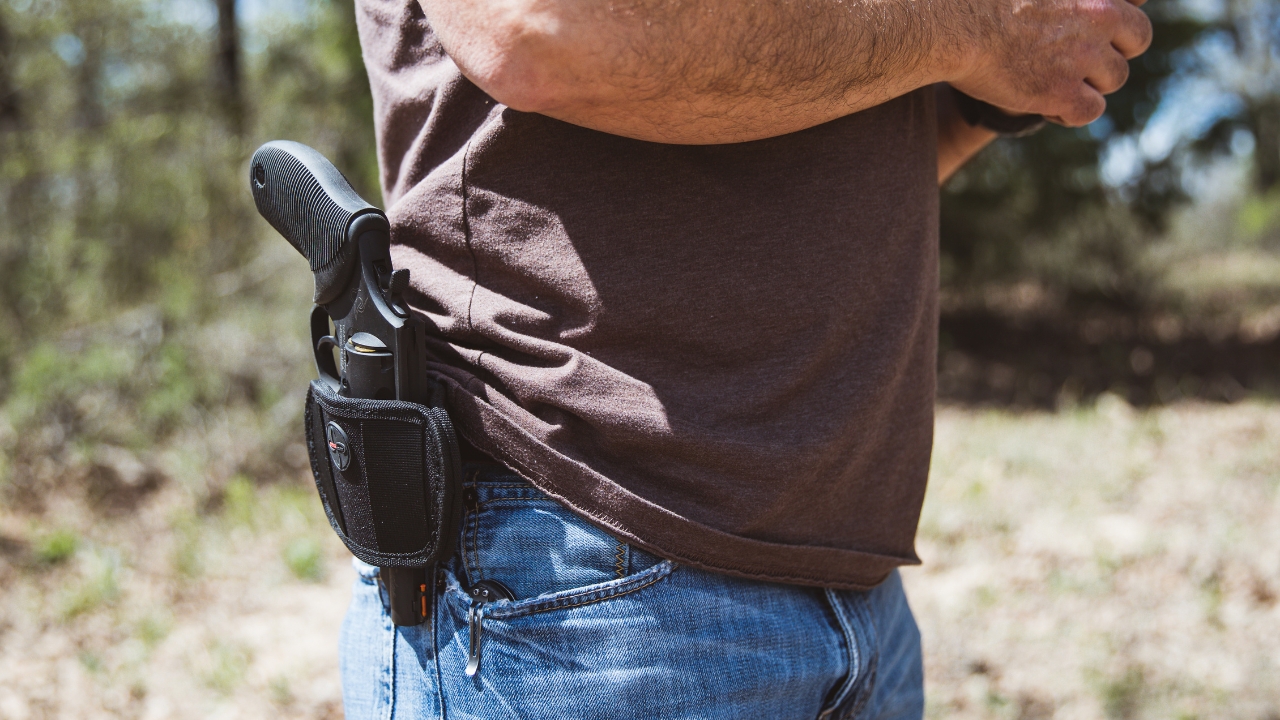
A tense moment can also expose gear problems. A cheap, loose, floppy, or poorly fitted holster may seem fine when you’re standing in front of the mirror. But when you’re moving quickly, getting in and out of a truck, bending over, or trying to keep distance from someone, bad gear shows itself.
A proper carry setup needs to hold the gun securely, cover the trigger guard, stay in place, and work with your normal clothing. If you’re constantly adjusting, printing badly, shifting the holster, or worrying that the gun might move, that’s not a good setup. You should not be fighting your gear while also trying to read a tense situation. Good gear doesn’t make decisions for you, but bad gear can make everything harder.
Carrying without training leaves gaps
Standing at a range and shooting slow groups is useful, but it is not the same as knowing how to handle stress, movement, close distance, low light, verbal commands, or judgment calls. A lot of people can hit paper just fine and still have no idea what to do when someone is yelling three feet away from them.
Training should go beyond basic marksmanship. You need to understand safe handling, holster work where legal and supervised, retention, situational awareness, de-escalation, and when not to touch the gun at all. The last one matters most. Many carry situations are won by leaving early, creating distance, or saying less. If the only tool you’ve practiced is shooting, you’re missing most of the equation.
The gun should not enter the conversation
One of the biggest mistakes is letting the other person know you’re armed to make a point. That can mean saying, “I’ve got something for you,” touching your shirt near the holster, flashing the gun, turning your hip so they can see it, or making some tough-guy comment about what might happen next. That is reckless.
If the situation is still verbal, keep the gun out of it. Do not reference it. Do not gesture toward it. Do not use it to scare someone away. A firearm is not a warning sign for people who annoy you. If things are bad enough to justify defensive action, that is one kind of moment. If you’re just trying to win an argument, the gun has no place in it.
Distance is usually your best tool
When someone is aggressive, your first useful tool is usually space. Step back. Move around a vehicle. Get behind a barrier. Walk toward light, people, or an exit. Put your family in the truck and leave. Distance gives you time to think and makes it harder for a loudmouth to turn into a hands-on problem.
Too many people carrying a pistol act like they need to stand in place. You usually don’t. If someone is angry but not blocking your escape, leave. If you can safely drive away, drive away. If you can avoid being cornered, avoid it. A gun may be your last-resort tool, but distance is often the thing that keeps you from needing it.
Verbal discipline matters more than people think
Words can either cool a situation or light it up. If you carry, you need a few plain sentences ready before you ever need them. “I don’t want trouble.” “I’m leaving.” “Stay back.” “We’re done here.” “Call the police.” Those sentences are simple, clear, and easy to remember under stress.
What you don’t need are insults, threats, dares, or sarcastic comebacks. “Try me” and “You picked the wrong guy” may sound tough in somebody’s head, but they sound terrible later when witnesses, cameras, police, or attorneys are involved. Speak like someone trying to end the problem, not star in it.
Your family changes the decision
Carrying around your family brings another layer of responsibility. If your wife, kids, parents, or friends are with you, your first job is not to look brave. It is to get them away from the problem. That may mean leaving a cart, backing out of a line, driving off, or letting some loud stranger think he won.
A tense moment feels different when a child is watching from the truck or your family is standing nearby. Their safety matters more than your ego. If you can create distance and remove them from the situation, do it. There is no shame in choosing the exit when people you love are with you.
Parking lots expose bad habits fast
Parking lots are where a lot of carry mistakes show up. People are distracted, boxed in by vehicles, walking with hands full, loading groceries, getting gas, or moving between light and shadow. A stranger can close distance quickly. An argument can start over something dumb. A bad parking job can turn into a shouting match.
If you carry, parking lots deserve attention. Keep your head up. Don’t sit in your truck buried in your phone. Don’t load gear with all your valuables spread out and your back turned to everything. Park where you can leave. Notice who is hanging around. None of that means acting scared. It means you’re not letting the first warning sign be someone already at your door.
Know the law before you need it
A lot of people carry without really understanding the laws where they live and travel. That’s a serious problem. Self-defense laws, carry rules, prohibited places, duty to retreat, stand-your-ground provisions, vehicle carry, brandishing laws, and defensive display rules can vary by state. Guessing is not good enough.
Responsible carry includes knowing the legal side before a tense moment happens. You don’t want your first real thought about the law to happen after something goes wrong. Take a reputable class. Read current state resources. Understand what is allowed, what is not, and what prosecutors or investigators may care about after an incident. Carrying without that knowledge is asking for trouble.
The best outcome is usually nothing happening
Some people imagine a carry gun as the thing that solves a dramatic moment. In reality, the best carry outcome is usually boring. You noticed the problem early. You moved away. You kept your mouth shut. You got your family in the truck. You left. Nobody saw your gun. Nobody called the police. Nobody got hurt. The whole thing ended before it became a story.
That may not sound exciting, but it is exactly what responsible carry should look like most of the time. A good day is not proving you were ready. A good day is never needing to prove anything at all.
Carrying demands more self-control, not less
The carry mistake that gets exposed when things turn tense fast is thinking the gun makes you more capable of handling conflict. It doesn’t. It makes your judgment more important. If you were already quick to argue, quick to challenge, or slow to walk away, carrying will expose that weakness.
A pistol can be part of a responsible safety plan, but it cannot replace discipline. Avoid the argument. Create distance. Use calm words. Know your gear. Know the law. Train beyond slow fire at the range. And most of all, remember that carrying a gun should make you the least interested person in the room when trouble starts looking for company.
Like The Avid Outdoorsman’s content? Be sure to follow us.
Here’s more from us: