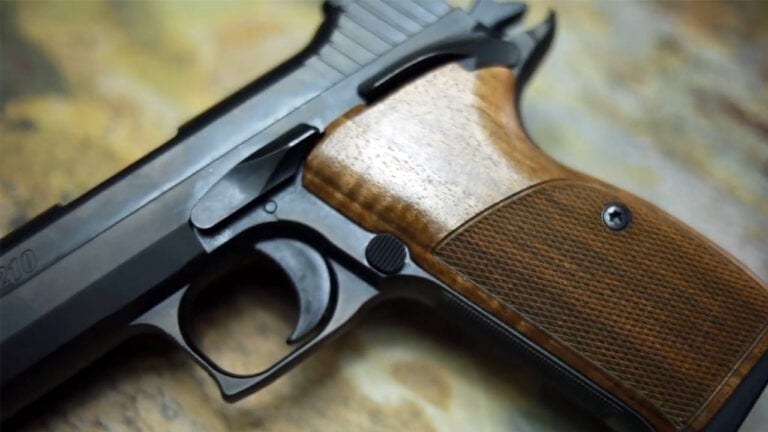
Photo credit: Tactical Toolbox/YouTube
A lot of handgun buyers get pulled toward the same trap: a feature sounds expensive, technical, or “upgraded,” so it must make the gun shoot better. Sometimes it does. A lot of times, it does not. Better shooting usually comes down to boring things people do not want to hear about—grip fit, trigger control, sight tracking, recoil management, and how much honest practice you have behind the gun. Fancy hardware can support that, but it cannot replace it.
That is where premium-sounding features get overvalued. They look impressive in product listings, and they give people something concrete to point at when they want to justify a higher price tag. But a feature can be well-machined, expensive, and still do very little for your actual speed, accuracy, or consistency. If you want to shoot better, you need to separate what feels high-end from what truly helps once the timer, distance, or pressure starts exposing the truth.
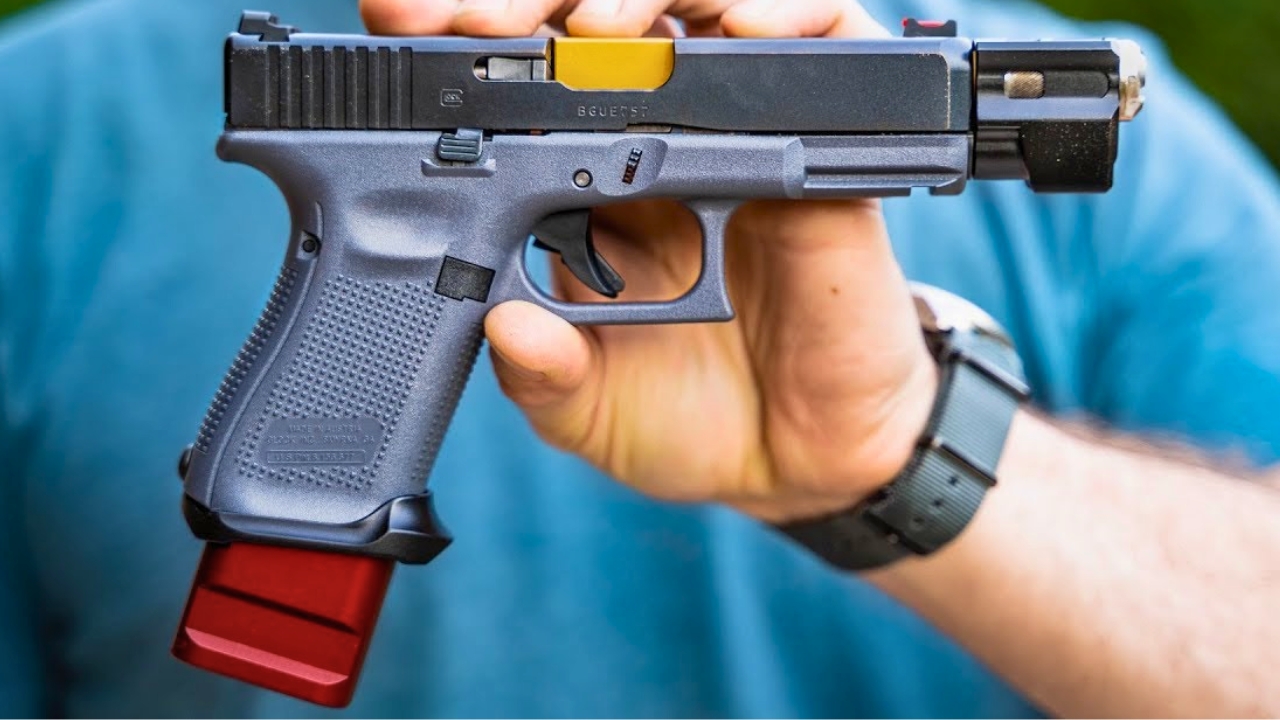
Gold-colored barrels
Gold-colored barrels get treated like proof that a handgun is somehow more refined or more capable than the standard model sitting beside it. They catch the eye fast, and manufacturers know that. The look suggests custom-shop attitude, extra polish, and a step above ordinary production. The problem is that the color itself does nothing to help you press the trigger better, track the sights more cleanly, or recover faster between shots.
A coated barrel can offer real corrosion resistance depending on the finish, but that is a durability conversation, not a shooting-performance one. The gold tone is mostly visual. It makes the gun look more expensive and more “special,” which is exactly why it sells. But if you are hoping that a flashy barrel somehow translates into tighter groups or cleaner fast strings, you are chasing appearance, not useful improvement.
Slide window cuts on carry pistols
Slide window cuts get sold as a serious performance touch because they sound connected to lighter reciprocating mass and faster cycling feel. On a purpose-built competition gun, there can be a narrow case for carefully tuned cuts. On most carry or general-use handguns, though, these cuts are usually more styling than substance. They give the gun a more aggressive look without doing much for the average shooter’s real performance.
What actually helps you shoot better is a pistol that tracks predictably, stays reliable, and gives you a clean sight picture under speed. Decorative windows in the slide do not automatically improve any of that. In some cases, they simply add more openings for dirt, lint, and general grime to collect. They look advanced, and that is the point. But for most shooters trying to make better hits, they solve very little that matters.
Flat-faced triggers on guns with average trigger systems
A flat-faced trigger can absolutely feel different, and on some platforms it can help certain shooters press more consistently. But too often, flat triggers are treated like a guaranteed premium upgrade even when the rest of the trigger system remains ordinary. If the pull is still mushy, inconsistent, or poorly timed, changing the face shape alone is not going to turn the gun into a better shooter.
This is where people get fooled by visible parts. A flat trigger stands out immediately, so it is easy to believe the gun has been improved in a meaningful way. But the real work happens in the break, reset, pull weight, and overall consistency. If those things are not better, then the flat-faced shoe is mostly a different feel and a stronger visual cue. It may look more serious, but it does not automatically make you any more accurate.
Optics-ready cuts on pistols that will never wear a dot
An optics-ready slide cut sounds like the kind of premium feature nobody should pass up. It suggests flexibility, modernity, and future-proofing. That sounds great until you look honestly at how most buyers use the gun. A lot of pistols get bought with optics-ready slides and spend their whole lives wearing a cover plate. In that case, the feature did not help you shoot better. It only made the gun sound more current.
If you actually plan to mount and learn a red dot, then the cut matters. If you do not, it often adds cost and nothing else. It does not improve your iron-sight skill, your grip, your trigger control, or your ability to see the front sight under pressure. Buyers often treat “optics-ready” like a built-in performance gain when it is really only a capability upgrade if they follow through and use it properly.
Extended magazine wells on general carry pistols
A flared magwell looks like the kind of upgrade serious shooters use, and in certain competition settings, it can absolutely help speed reloads. The problem is that many handgun buyers bolt that same idea onto a carry pistol and assume it must make the gun shoot better overall. It does not. A magwell may help guide a reload, but reloading is not the same thing as shooting, and many people barely practice reloads enough to see much benefit.
In the meantime, the added flare can increase bulk, print more under clothing, and change how the grip feels in the hand. That may be worth it in a match gun built around fast stage work. On a general defensive handgun, it often becomes one more premium-sounding add-on that looks serious while doing little to help your actual shot-to-shot performance. It can make the gun more complicated without making you noticeably better.
Match-grade barrel labels on ordinary defensive pistols
“Match-grade barrel” is one of those phrases that instantly sounds expensive and meaningful. It tells buyers the pistol is supposed to be more precise, more refined, and somehow above the standard version. The truth is that for most defensive and general-purpose handguns, barrel quality is rarely the limiting factor in how well you shoot. The limiting factor is almost always the shooter, not the barrel’s marketing label.
At normal handgun distances, practical accuracy depends far more on trigger control, sight management, and how well you can run the gun under pressure. A slightly tighter or more carefully marketed barrel does not overcome poor fundamentals. It may matter in a rested accuracy test or on a dedicated target pistol, but many shooters pay extra for the phrase and never see a meaningful difference in real use. It sounds premium because it is supposed to.
Front slide serrations that add style more than function
Front slide serrations are easy to sell because they look modern and imply better control during press checks or manipulations. On some guns, they can be useful. But they also get treated like a premium feature simply because they make the slide look more detailed and tactical. A lot of buyers see them and assume the pistol is more advanced, even when the practical gain is small for how they actually run the gun.
Most shooters are not losing points or fights because their pistol lacked extra serrations near the muzzle. They are losing time because of grip issues, missed sights, or poor trigger work. If the serrations help you personally, fine. But in many cases, they are more visual reassurance than real shooting aid. They do not improve recoil control, they do not sharpen your sight picture, and they do not make a sloppy trigger press any cleaner.
Skeletonized hammers on pistols that are not tuned for performance
A skeletonized hammer has long been used to signal that a handgun is built with performance in mind. It looks lighter, more mechanical, and more deliberate than a standard hammer. That visual effect is exactly why it keeps showing up on pistols that want to look premium. The problem is that a cutout hammer by itself does not magically improve the trigger, shorten lock time in any meaningful user-noticeable way, or make you shoot better.
Unless the rest of the action is tuned around actual performance improvements, the skeletonized hammer is often more styling than substance. It can make the gun look like it belongs in a custom case, but your groups will still be determined by fundamentals. A premium-looking part is not the same as a premium-performing system. Many buyers pay for the suggestion of refinement when what they really need is a handgun they can run consistently and well.
Custom grip textures that look expensive but do not fit your hand
Aggressive custom textures and elaborate stippling patterns often get marketed as serious upgrades because they look handcrafted, specialized, and more committed than a factory grip surface. Sometimes they are useful. But a lot of expensive grip work is sold on appearance first. If the frame still does not fit your hand well, or if the texture is too sharp, too shallow, or poorly placed, it may not help you shoot better at all.
Grip texture matters, but grip shape and fit matter more. A pistol that naturally points well for you and lets you build a repeatable hold will usually outperform a bad fit wearing expensive texture work. Some premium grip jobs look fantastic in photos and do almost nothing once the gun starts moving in recoil. Others actually make carry more annoying without improving control enough to justify the trade. Fancy texture is not the same thing as useful ergonomics.
Like The Avid Outdoorsman’s content? Subscribe to our newsletter so you never miss an article.
Here’s more from us: