
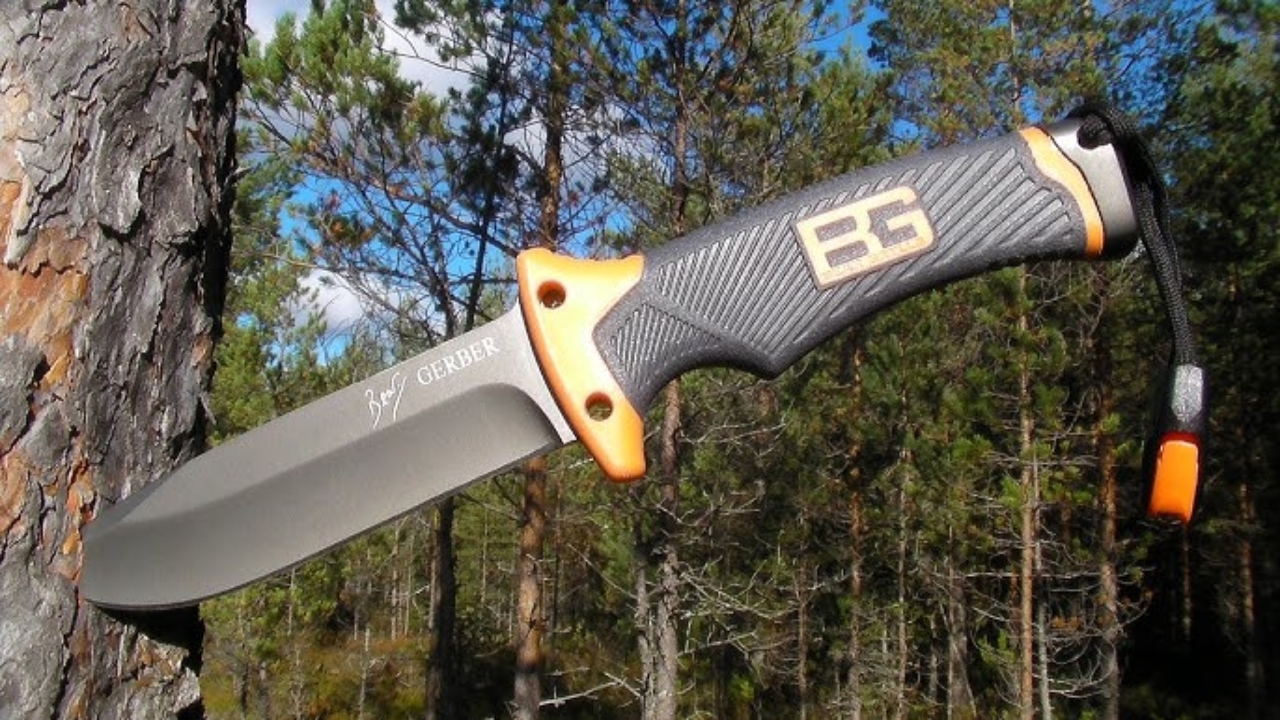
Photo credit: NorthSurvival/YouTube
A lot of knife “features” exist because they look good in product photos and sell the idea of capability. In the field, the stuff that matters is simple: edge geometry you can maintain, a handle that stays put when it’s wet, and a blade you can trust when your hands are cold and you’re tired. The features below aren’t always bad, but they’re commonly oversold, and they usually don’t add real performance for hunting, camp chores, or daily hard use.
Sawback spines that don’t actually saw

Most sawbacks are decoration. They’re too shallow and too rounded to bite like a real saw, and they clog instantly if you try to cut anything with sap or moisture. What they do change is your spine utility: you lose a clean surface for thumb pressure, you lose an efficient ferro-rod striker surface, and you make batoning more annoying because the saw teeth chew up your baton and hang up in the split. A real saw is a real saw. A “knife saw” is usually a marketing checkbox that makes the knife worse at the things knives are actually used for in camp. If you want cutting teeth, carry a folding saw or a multitool saw that’s meant to do the job.
“Blood grooves” sold like performance upgrades

Fullers get called blood grooves because it sounds tough. In reality, a fuller is a structural feature that can reduce weight while maintaining some stiffness, depending on the design. On most modern knives, especially shorter blades, it’s mainly cosmetic. It doesn’t help cutting. It doesn’t help field dressing. It doesn’t magically make a blade penetrate or slice better. What it does do is add another contour that can trap gunk and make cleaning slightly more annoying if you actually get the knife dirty. If you like the look, fine. Just don’t pay extra thinking it’s some real-world advantage for hunting or camp work, because the performance gain is usually imaginary.
Glass breakers on knives that never touch glass

A glass breaker sounds “prepared,” but most people never use it, and on many knives it creates pocket and carry problems. It can chew up pockets, poke you when you sit, and snag on gear. In the field, it’s also a dirt magnet, and it’s one more hard point that can scratch optics, phones, or anything else you throw in the same pocket. If you actually need glass-breaking capability, there are dedicated rescue tools that do it better and safer. On a normal field knife, I’d rather have a clean butt that doesn’t snag, doesn’t print weird, and doesn’t beat up everything around it.
Aggressive “tactical” coatings that sell durability

Coatings get sold as protection and stealth, but the truth is most coatings show wear fast once you actually use the knife. They scratch, they rub shiny on contact points, and they can add drag in wood or food prep compared to a clean finish. Some coatings do help corrosion resistance, and some reduce glare, but the way they’re marketed often implies “hard use armor,” and that’s not how it works. In the field, I care more about the steel’s corrosion resistance and how easy it is to maintain than I do about whether the blade is matte black. If a coating chips and starts looking rough, it doesn’t mean the knife is ruined, but it also doesn’t mean you got extra performance.
“Military grade” steel labels with no real info

If the listing says “military grade steel” and doesn’t tell you what steel it is, that’s marketing, not a feature. Steel choice matters, but heat treat and edge geometry matter just as much, and you can’t evaluate any of it from a vague label. In real use, this is where people get burned: they think they bought a premium knife, then it chips, rolls, rusts, or won’t hold an edge, and there’s no meaningful spec to track down why. A legit knife company tells you the steel, the hardness range, and ideally what the knife is designed to do. “Military grade” is a phrase that sells confidence without providing proof.
Overly complex “multi-tool” spines and cutouts

Cutouts, wrench holes, cord slots, and random notches get marketed like they add capability. In the field, they usually add weak points, snag points, and extra edges that bite your hand during real work. They also make batoning worse because the knife doesn’t split as cleanly and can bind in the cutout area. If you need a multitool, carry a multitool. A knife’s job is to cut, carve, trim, and survive ugly work. The more a blade tries to be a toolbox, the more it tends to do everything halfway while compromising the main job. Most of those cutouts look cool and don’t help when you’re actually trying to get something done.
Serrations marketed as “survival” on general-purpose blades

Serrations have a real use for cutting rope and fibrous material. The marketing problem is acting like serrations turn a knife into a survival miracle. In the field, a fully serrated edge is a pain to maintain, and a partial serrated edge often steals the most useful part of your blade for wood carving and controlled slicing. If your actual day-to-day involves rope, straps, and synthetic cord, serrations can make sense. If your day-to-day is game processing, camp chores, and general utility, a plain edge you can touch up anywhere is usually the smarter pick. Serrations aren’t bad; they’re just oversold and often put on the wrong knife for the wrong user.
“Deep carry” clips marketed like they improve performance

A deep-carry clip is a carry preference, not performance. Brands talk about it like it’s a feature that makes the knife better in use, but it just changes how the knife rides in your pocket. In real conditions, a deep-carry clip can actually make retrieval slower with gloves or cold hands, and some deep-carry setups reduce the amount of handle you can grab, which matters when you’re trying to pull the knife out quickly and safely. Clips also bend and loosen depending on design. If the clip is too tight, it tears pockets. If it’s too loose, you lose the knife. Carry matters, but it’s not “field performance,” and it shouldn’t be priced like a performance upgrade.
“Titanium everything” marketed like it’s automatically better

Titanium is awesome in the right places, but titanium doesn’t automatically make a knife better at cutting or surviving field work. Titanium handles can be slick, especially when wet, and titanium liners/frames can be more about weight and corrosion resistance than real strength gains for your use. A lot of guys buy titanium expecting “hard use,” then realize they paid for a material flex that mostly helps on paper. In the field, handle shape and texture matter more than whether the handle is titanium. And for blades, titanium isn’t the cutting material anyway. If titanium makes you happy, run it, but don’t confuse material hype with real-world advantage.
Ceramic bearings marketed like they make a knife “better”

Bearings can make a knife feel smooth and fast, and that sells knives. In real conditions—dirt, grit, pocket lint, mud—bearings can become more maintenance than washers, depending on design and tolerances. Some bearing knives run great forever, and some get crunchy the first time they’re carried hard. The marketing pitch acts like bearings are “premium,” but premium in the field usually means consistent function when things aren’t clean. A washer pivot can be boring and still be the better choice if you’re outdoors a lot. Smooth action is nice. Reliable action when filthy is nicer.
“Combat” finger rings and oversized choils on working knives

Finger rings and huge choils look serious, but they can limit cutting edge length and create hotspots in real work. Rings can also catch on gear and make the knife annoying to carry. Big choils can be useful for control, but some designs overdo it and sacrifice too much edge, especially on smaller knives. In camp chores and processing, you want usable edge and a grip that stays comfortable for hundreds of cuts. A ring can force your hand into one position and make the knife feel locked-in for styles of use most hunters and campers don’t actually do. If you love it, fine, but it’s usually a style feature first.
“High polish razor edge” as a selling point

A scary-sharp, high-polish factory edge sells knives because it feels impressive out of the box. In real use, that edge is often too thin for wood, bone contact, and rough cuts. That’s when you see microchips and guys blame the steel. It’s usually geometry. A working edge with a small micro-bevel often outperforms a show edge the moment real material shows up. The marketing says “razor sharp,” but a razor edge is built for a razor’s job. A field knife edge should be built for a field knife’s job. I’ll take an edge that holds together over an edge that just looks impressive on day one.
“Heat treated to 62+ HRC” marketed like it’s always a win

Hardness numbers sell because they’re easy to compare, but pushing hardness doesn’t automatically mean better performance. Past a point, you can lose toughness and gain chipping, especially if the knife has thin geometry or you’re doing impact-y work like hard carving or accidental bone contact. In the field, I’d rather have a knife that rolls slightly and touches up fast than a knife that chips and takes forever to repair. A high HRC can be great for a dedicated slicer. It’s not automatically great for a do-everything knife. When brands market hardness like it’s the only spec that matters, that’s a sign they’re selling numbers more than real use.
Oversized lanyard holes marketed like “retention”

A lanyard can help in specific situations—boats, deep water, certain work environments—but the way it’s marketed on field knives is often exaggerated. Most guys don’t actually run lanyards in hunting and camp chores because they snag, get dirty, and swing around near a blade. Oversized lanyard holes can also create sharp edges on the handle or reduce handle strength on small knives if the design is thin. If you genuinely need a lanyard, cool. If not, it’s usually just a spec-sheet bullet point. Retention is better solved with a good sheath, good pocket clip design, and good handling habits.
“Survival” gimmicks that replace real tools

Firestarter slots, tiny compass caps, “signal mirrors,” and other add-ons on a knife package get marketed like you’re buying a survival kit. In reality, those parts are often low-quality, easy to lose, and rarely used. If you want survival capability, build a small kit with tools that are meant for their jobs: a real ferro rod, a real compass, a real whistle, and a small saw. A knife should be a knife. The more it tries to be a gimmick survival system, the more you end up paying for stuff you don’t trust when you actually need it.
Like The Avid Outdoorsman’s content? Subscribe to our newsletter so you never miss an article.
Here’s more from us:


