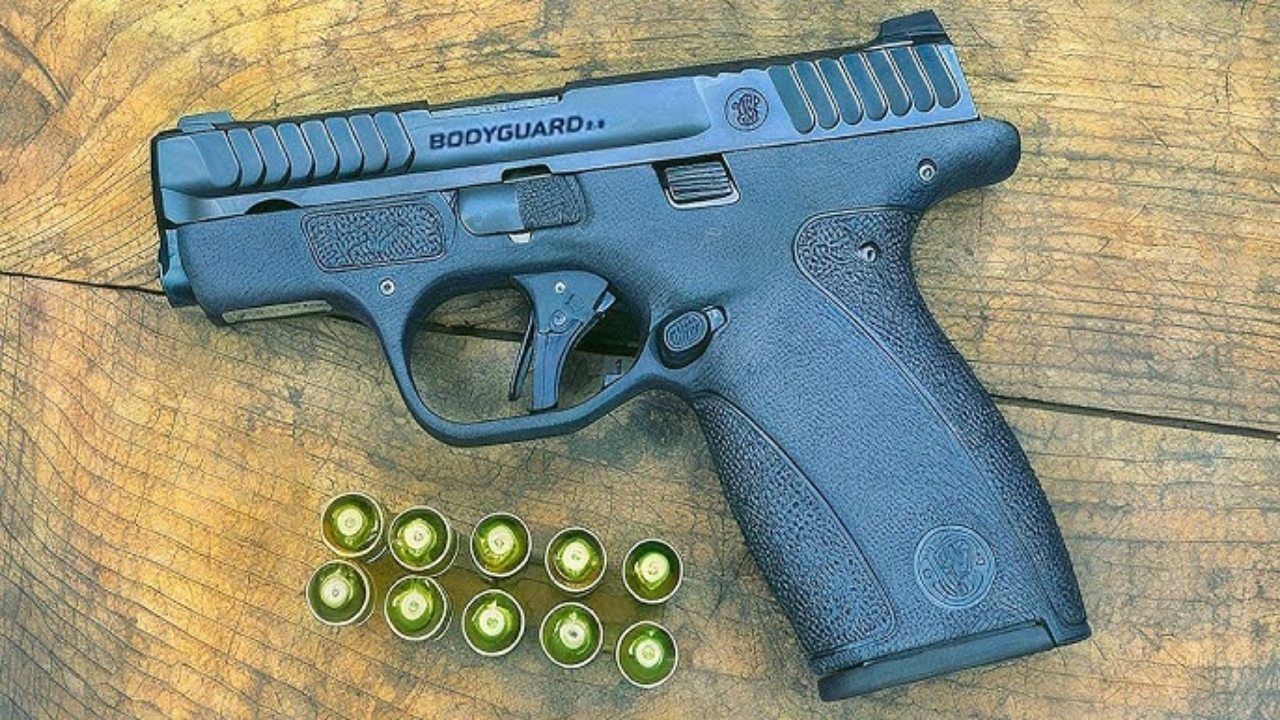
Photo credit: Ballistik/YouTube
The argument over .380 for self-defense never really cools off, because it is not just about ballistics on paper. It is about what you can actually carry, control, and shoot well when your heart rate spikes and your hands are shaking. You are weighing a smaller, softer shooting cartridge against the raw power and track record of bigger rounds, and that tradeoff keeps dragging the same questions back into the spotlight.
If you strip away the forum drama, the real fight is not “.380 good or bad,” it is “.380 in what gun, with what ammo, in whose hands, and under what conditions.” Once you look at it that way, the endless debate starts to look less like noise and more like a set of practical choices you have to make for yourself.
Why this little cartridge stirs up such big feelings
You hear the same arguments on repeat because .380 sits right on the line between “enough” and “not quite” in a lot of shooters’ minds. On one side you have people who insist anything less than a service 9 mm or .40 is irresponsible, pointing to the clear gap in case length and power between the 380 ACP and 9 mm, which shows up in velocity and energy numbers in every comparison of The Differences Between the two. On the other side you have people who actually carry tiny pistols daily and care more about what they can conceal in gym shorts than what looks impressive on a ballistics chart.
That split is not new. Shooters have been arguing over platform and caliber forever, from AR vs. AK to 9 mm vs. .40 S&W, Colt vs. Smith & Wesson and every other tribal matchup you can name, and .380 simply inherited that energy once it became a common concealed carry choice. Some argue the round is too weak to reliably and efficiently stop a lethal threat, others counter that modern loads and better gun designs have changed the equation, which is why the .380 ACP for defense is still framed as a never ending debate among Shooters.
What .380 actually brings to the table
Before you can decide if .380 is “enough,” you need to be clear on what it is. The .380 ACP, spelled out as Automatic Colt Pistol, is a compact handgun cartridge that was designed from the start to work in small, easy to carry pistols. It is also known as 9mm Short, which tells you a lot about its role: you are getting a shorter, lower pressure version of the classic 9 mm concept, tuned for concealment and controllability rather than maximum power, and that is why it is often described as ideal for self-defense and concealed carry in modern reviews of ACP.
That design choice shows up in how it shoots. Compared with 9 mm, the 380 has a shorter case and less powder, which means less recoil and a softer push in the hand. That reduced kick is not just about comfort, it directly affects how quickly you can get back on target and how accurately you can place follow up shots, especially in very small guns. Some trainers point out that this more manageable recoil improves shot to shot accuracy potential, and that is one of the most common reasons people consider the small “nine” when they look at how the 380 stacks up against 9 mm for self defense in pieces that ask How Does the round Beat The 9mm For Self Defense in terms of More controllable recoil.
Where .380 falls short, and why that still matters
The flip side is simple physics. When you shorten the case and lower the pressure, you give up speed and energy, and that shows up in penetration and expansion, especially through clothing or intermediate barriers. When you compare the 380 ACP and 9 mm directly, the 9 mm typically throws a heavier bullet faster, and that extra momentum is exactly what people are talking about when they say the bigger round has a wider performance envelope in ACP versus 9 mm tests.
Critics of .380 lean hard on that gap, arguing that if you can carry a gun of similar size in 9 mm, you should, because you are getting more margin for error when things do not go perfectly. Some writers frame it as a choice between a 28 percent heavier bullet moving 30 percent faster and a lighter, slower option, and then ask which you would choose to save your life, using simple water jug demonstrations to drive home the difference between a more powerful round and a less powerful one in side by side Here are the numbers style comparisons that end with “Which would you choose” and show how Water jugs react.
When the “small nine” can actually be the smarter call
Even with that power gap, there are situations where .380 is not just acceptable, it is arguably the better choice. The most obvious is when the only gun you will actually carry all day, every day, is a tiny pistol that simply does not exist in 9 mm or becomes miserable to shoot in that caliber. In that context, a .380 you have on you beats a 9 mm you left in the safe, and some trainers explicitly argue that there are times when the smaller offering beats the bigger one, pushing back on the common wisdom that the .380 does not have much going for it and you should not bother with the smaller offerings, a line of thinking that gets challenged in pieces that open with “Just Because It is Common Doesn not Make It Wisdom” and then walk through when a 380 can beat a 9 mm.
Recoil sensitivity is another big factor. If you have smaller hands, arthritis, or you are simply not going to put in the reps to master a snappy micro 9, the softer shooting .380 can let you run the gun faster and more accurately. Some instructors have even compared nearly identical pistols in both calibers and found that, with everything basically the same but slightly different springs, the .380 version is easier for many shooters to control, which is the kind of real world observation you see in side by side tests that ask if Jan .380 can be better than 9 mm when the guns are the same size.
Why bullet choice makes or breaks .380 performance
If you decide to run .380, the specific load you pick matters more than it does with hotter calibers, because you have less energy to work with and less room for error. Traditional hollow points that work well in 9 mm can struggle in .380, either failing to expand at all or expanding so aggressively that they under penetrate. That is why some experts stress that what applies to a 9 mm, like a 9 by19 or the 9 millimeter Luger, does not automatically carry over to .380, and they walk through how different bullet designs behave in gel and other media in detailed breakdowns of why bullet choice matters for Sep .380 ACP for self-defense, especially when you compare it directly to Luger performance.
Modern .380 loads try to solve that problem in a few different ways. Some use very light, fast non expanding copper or brass bullets that create a proprietary bullet profile to maximize tissue disruption while still penetrating deeply enough, and extensive experimentation with those designs has shown they can work within the limits of the cartridge, even though the laws of physics always apply and you cannot magically turn .380 into 9 mm, a point that gets hammered home in discussions of how Nov Extensive testing has shaped modern .380 ACP loads.
What the gel tests and experts actually show
When you look at controlled tests instead of internet arguments, you start to see a more nuanced picture. Some .380 loads, especially the newer fluted or solid designs, are hitting penetration depths that line up with common defensive standards, even out of very short barrels. One example is a 60 g Xtreme Defense style bullet from Black Hills that has been tested out of a 2.75-inch barrel and still managed to reach respectable velocities and penetration in gel, which is why some evaluators single out that specific 60 g load and note that even out of a 2.75-inch barrel it does over the minimum they want to see in Sep tests of Black Hills Xtreme Defense, pointing out that Even in tiny guns it can perform.
Seasoned instructors also tend to land in the middle ground. They rarely call .380 ideal, but they also do not dismiss it outright if you understand its limits and choose your gear accordingly. In one widely watched discussion, Msada Yub and other trainers on the Wilson Combat channel walk through scenarios where .380 is a reasonable compromise, stressing that shot placement, reliability, and realistic expectations matter more than caliber alone, and that context is why you still hear people asking if .380 is enough for self-defense when they listen to Apr Wilson Combat segments featuring Msada Yub and similar voices.
How to decide if .380 fits your life, not someone else’s
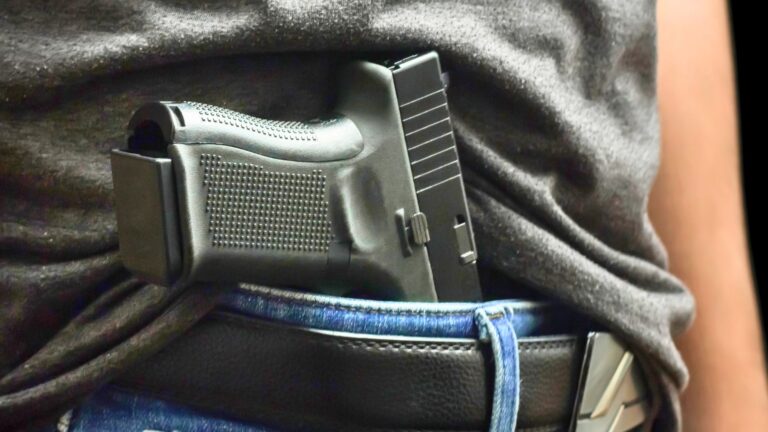
At some point you have to stop reading arguments and start matching the cartridge to your actual lifestyle. If your daily wardrobe, job, or local climate makes deep concealment non negotiable, a slim .380 might be the only thing that disappears under a T shirt or into a pocket holster without printing. That is why so many people who live in shorts and T shirts or work in environments where any hint of a gun is a problem end up looking hard at 380 options and asking if the ACP caliber is good for self-defense, especially when they see that There has been large debate in the gun community for years about whether the 380 ACP caliber is good for self-defense and that many reviewers still call it an option for self-defense when they break down how effective it is in pieces that open with Jan and note that There is still a place for ACP in modern carry.
Your own skill level and willingness to train should weigh just as heavily. If you shoot a compact 9 mm well and can conceal it, you are getting more performance for the same or slightly more effort, and the case for .380 gets weaker. If, on the other hand, you find that you can run a .380 faster, with tighter groups and less flinch, that advantage in control might outweigh the raw power deficit, especially if you back it up with a carefully chosen load and regular practice. The real debate over .380 never dies because it is not a simple yes or no, it is a sliding scale of tradeoffs that only you can balance once you understand what the cartridge is, where it shines, and where it simply cannot compete based on the limits laid out in the available sources, and anything beyond that is Unverified based on available sources.
Like The Avid Outdoorsman’s content? Be sure to follow us.
Here’s more from us: