Photo credit: Poppy Pix/shutterstok.com
A lot of people blame the gun way too early. The real reason some pistols start failing before they should usually comes down to a handful of boring things shooters put off until the problems finally show up at the range. Glock says pistols should be cleaned and lubricated regularly, including before first use, after firing, at least monthly if unused, and after exposure to rain, sweat, salt water, dirt, or dust. Glock also warns that too much lubrication can hurt performance, which is a good reminder that neglect and overdoing it can both create trouble. In other words, a pistol usually does not go from “fine” to “junk” overnight. A lot of them get dragged there slowly by bad maintenance habits.
Neglect adds up faster than people think
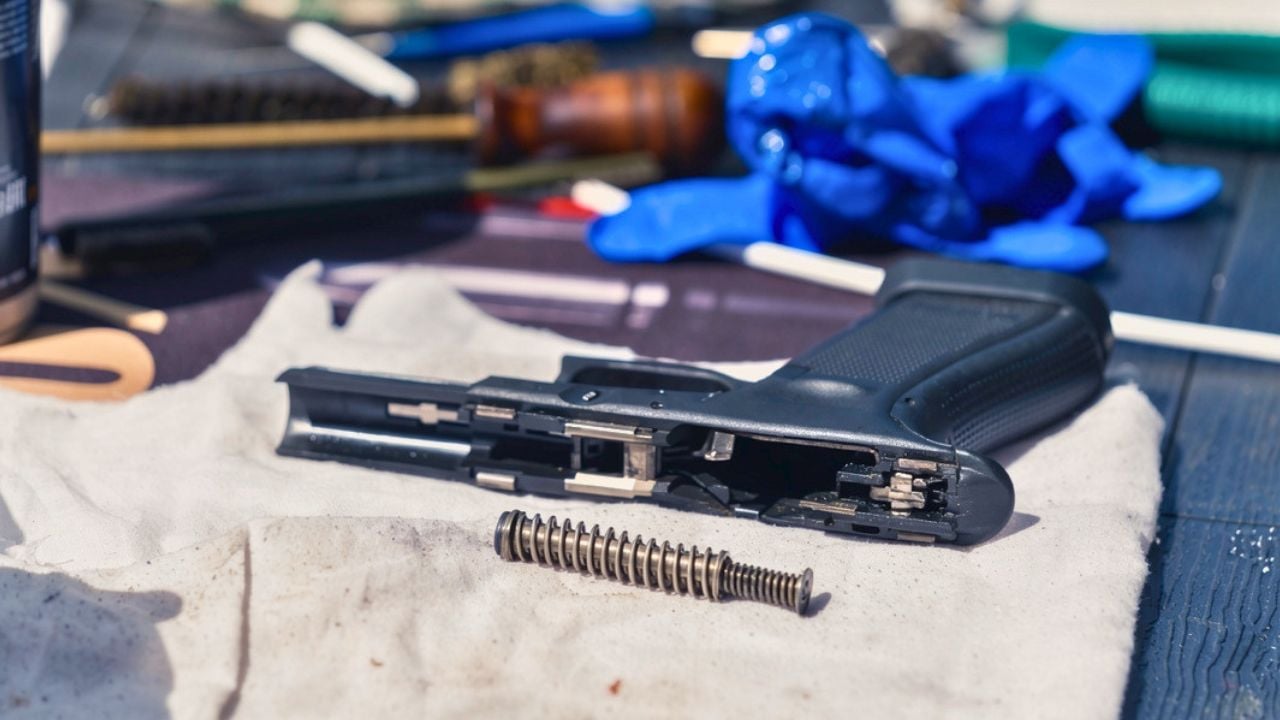
This is the least exciting answer, but it is probably the biggest one. Powder residue, grit, dried oil, pocket lint, and plain old dirt can start interfering with how a pistol cycles long before the owner thinks the gun is “dirty enough” to matter. Glock says regular cleaning and lubrication help prevent corrosion and remove debris that can affect operation, while Beretta’s current 90-series manual specifically tells owners to clean fouled areas, lightly oil the recoil spring and guide, and lightly lubricate the rails and moving parts. That tells you something pretty simple: pistols are not meant to run forever on neglect just because they survived a few filthy range trips.
Worn springs quietly cause a lot of grief
A pistol can look fine on the outside and still be heading toward reliability problems if the springs are tired. SIG’s factory replacement recoil-spring page says recoil spring assemblies are essential to maintaining performance and reliability, and SIG’s service plan specifically includes replacement of recoil and other springs as part of factory inspection and maintenance. That is not glamorous, but it matters. Springs are wear parts. If somebody shoots a lot, carries a lot, or just assumes the gun will run forever without periodic parts replacement, the pistol can start acting “mysteriously unreliable” when the real problem is that normal wear was ignored too long.
Aftermarket tinkering can shorten a pistol’s useful life fast
A lot of pistols start having problems because somebody could not leave well enough alone. Glock flatly says it does not offer aftermarket parts for its pistols and recommends against altering or modifying them because changes can negatively affect function and safety and may void the warranty. NSSF gives the broader version of the same warning, saying firearms are designed to function properly in original condition and that changes by unqualified people can make them dangerous and subject to wear problems that require service. That does not mean every accessory ruins a pistol. It does mean the more people stack unvetted parts, trigger work, and homebrew modifications into the gun, the less shocking it should be when reliability starts slipping earlier than expected.
Bad ammo and bore issues can do real damage, not just cause a hiccup
Sometimes what looks like a “failing pistol” is really an ammunition or barrel problem waiting to get worse. NSSF warns that even a small bore obstruction like mud, snow, excess lubricant, or a lodged projectile can cause dangerously increased pressure, including a bulged or burst barrel. The same guidance says that if recoil or report seems weak or just not right, shooting should stop immediately and the bore should be checked. That matters because some shooters keep firing through warning signs, assume a weak shot was nothing, and turn a fixable problem into real damage. A pistol that gets fed bad ammo or fired with an obstructed bore is not aging normally at that point. It is being abused.
The gun is not the only thing that needs attention
One reason pistols “start failing early” is that shooters focus on the gun and ignore the support parts that keep it running. SIG’s service plan calls for inspection of critical components and spring replacement, and its parts catalog also treats items like recoil springs and magazine-related springs as core reliability parts rather than afterthoughts. The practical lesson is pretty obvious: if the parts that control cycling, retention, and feeding are worn, weak, or damaged, the pistol may start showing failures that look like a gun problem even when the bigger issue is that the system around the gun has not been maintained. That is part of why two identical pistols can age very differently depending on how seriously the owner treats upkeep.
What actually keeps a pistol running longer
The answer is not fancy. Clean it. Lubricate it correctly. Replace wear parts before they become a problem. Do not treat questionable aftermarket mods like free performance. Stop shooting when ammo behavior feels off. And pay attention to the full operating system, not just the frame and slide. The official guidance from Glock, SIG, Beretta, and NSSF all points the same direction: pistols hold up best when they are maintained like machines instead of treated like indestructible talismans. When they start failing early, the real reason usually is not some hidden curse from the factory. It is months or years of small, avoidable decisions finally showing up where the shooter can no longer ignore them.
Like The Avid Outdoorsman’s content? Subscribe to our newsletter so you never miss an article.
Here’s more from us: