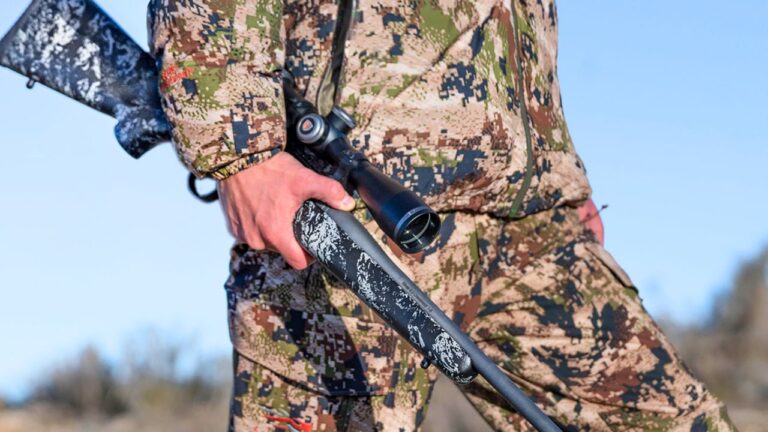
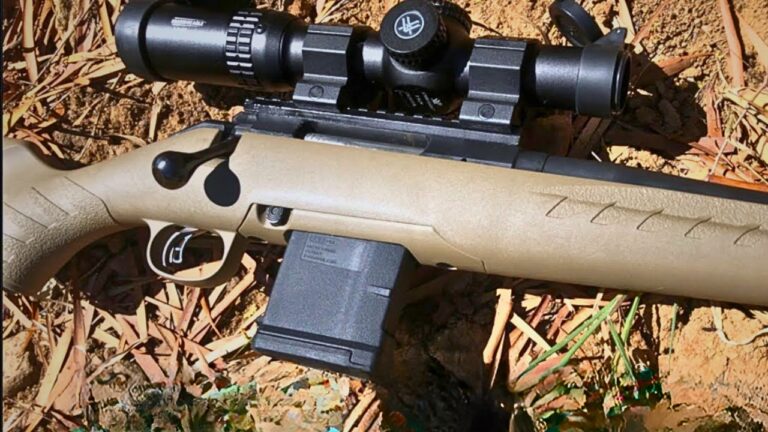
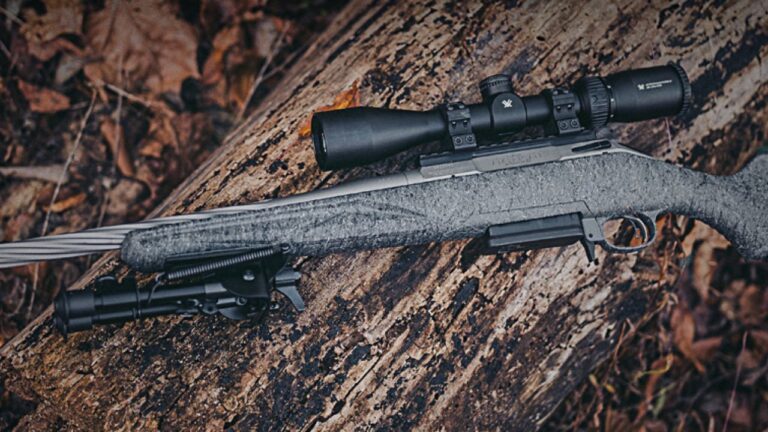
A close-range shoulder shot can be a great way to anchor a deer. It breaks the on-side shoulder, disrupts the top of the lungs, and keeps the animal from running into the next county. But it’s also the shot that exposes bad bullet choices faster than almost anything else. At under 60 yards, impact speeds are high, bones are thick, and your bullet has to hold together long enough to reach the vitals.
When people say a round makes shoulder shots “risky,” they usually mean one of three things: the bullet grenades on bone and doesn’t penetrate, the bullet pencils through with a small wound channel, or the cartridge has enough recoil or noise that the shooter rushes the shot. Here are the rounds where shoulder shots deserve extra thought, especially at woods distances.
.223 Remington with varmint bullets

The .223 can kill deer cleanly with the right bullet and good placement, but shoulder shots at close range get risky fast when people run thin-jacket varmint loads. At 40 to 60 yards, impact velocity is still high enough that a fragile bullet can come apart on the scapula or upper leg bone. That can mean shallow penetration and a nasty surface wound instead of a quick kill.
If you’re hunting with .223, you want a deer-capable bullet that’s built to hold together and drive. Even then, the cartridge doesn’t give you a lot of extra margin when bone is involved. The smarter move is often a behind-the-shoulder lung shot that lets the bullet do its work in soft tissue. If you insist on shoulders, choose a tough bullet and keep angles broadside.
.243 Winchester with light, fast bullets

The .243 has probably filled more freezers than some people give it credit for, but the common mistake is using very light, fast bullets meant for varmints and then trying to “bang flop” deer through the shoulder. At close range, those bullets can expand violently on bone, shedding weight and losing the penetration you need to reach the off-side lung.
The .243 can handle shoulder shots when you load it like a deer rifle, not a coyote rifle. That means controlled-expansion bullets in sensible weights and a clear understanding of angles. Quartering-to shoulder shots are where the .243 can get you in trouble, because you’re asking a small-diameter bullet to break heavy bone and still travel deep. If you hunt thick timber and love shoulder shots, it’s worth choosing bullets designed for that exact job.
.22-250 Remington

The .22-250 is a laser, and that’s part of the temptation. People see flat trajectory and assume it’s a deer hammer, then they try to drive it through shoulder at woods range. The problem is that .22-250 is typically pushing lighter bullets at high speed, and close-range impact on bone can cause dramatic fragmentation.
When it works, it can look impressive. When it doesn’t, you get shallow penetration and a deer that leaves little blood. If you’re using a .22-250 for deer where it’s legal, bullet choice is everything, and the shoulder shot is the one you earn, not the one you assume. A broadside lung shot gives you more forgiveness. If you want shoulder confidence, move up in caliber or at least move up in bullet construction and weight.
.17 HMR

There’s no polite way to say this. The .17 HMR is not a deer cartridge, and a shoulder shot at under 60 yards is not “risky,” it’s irresponsible. The bullet is small, light, and designed for small game and varmints. On bone, it’s going to fragment or fail to penetrate in any meaningful way.
The danger here is not only wounding. It’s the false confidence that comes from how accurate the cartridge is and how dramatic it looks on smaller animals. Deer are built differently, and shoulder bone is not optional. If you’re talking about ethical shots, the .17 HMR belongs nowhere near a deer shoulder. Save it for what it was built for. If you want a small-bore that can do bigger work, you step up to a cartridge and bullet that can actually penetrate.
.357 Magnum from a handgun

A .357 Magnum revolver can kill deer at close range, and plenty of hunters have done it, but shoulder shots can be a bad bet depending on bullet choice and barrel length. Out of a handgun, velocity is limited, and if you use a lighter, fast-expanding bullet, it can expand early and stop short on heavy bone. That’s especially true on quartering angles where you need more depth.
The .357 shines when you use heavy-for-caliber bullets that penetrate and you keep your shots disciplined. A behind-the-shoulder lung shot is often the higher-percentage play, because it lets the bullet work through soft tissue. If you’re hunting with a handgun, you also have to be honest about your ability to place the shot under pressure. Shoulder shots demand precision, and the revolver doesn’t forgive shaky fundamentals the way a rifle does.
.44 Magnum with soft hollow points

The .44 Magnum is often seen as a shoulder-breaker, and it can be, but the wrong bullet can turn it into a mess at close range. Soft, wide-mouth hollow points designed for defense or rapid expansion can flatten hard on shoulder bone and dump energy early without driving deep. You’ll get a loud impact and sometimes a dramatic reaction, but not always the penetration you need to reliably reach both lungs.
A good .44 hunting load uses a bullet built for controlled expansion and deep penetration. That’s where the cartridge earns its reputation. If you’re using a lever gun, you often get enough velocity that bullet construction matters even more at 30 to 60 yards. The shoulder shot can be excellent with the right load, but don’t assume all .44 ammo is the same. Pick a bullet that stays together and keeps moving.
12 gauge birdshot

Some of the worst shoulder-shot stories start with birdshot. At close range, birdshot can look devastating on the surface, especially on small targets, and that leads to dangerous assumptions. On a deer shoulder, it usually fails to penetrate deeply enough to reach vital organs reliably. You might break skin, destroy meat, and cause horrible suffering, but not get an ethical kill.
The shoulder is dense bone and thick muscle. It demands penetration. Buckshot or a proper slug is a different conversation, because those loads can reach the vitals and break bone with enough mass. Birdshot is for birds. If you’re carrying a shotgun for deer, make sure your ammo matches your purpose and your local regulations. The “it’ll do up close” myth has caused enough wounded animals already.
.410 with light defensive loads

A .410 can be effective with the right slug or buckshot at very close ranges, but a lot of people try to make it work with light defensive loads and then aim for the shoulder like it’s a 12 gauge. That’s where risk stacks up. Pellets may not penetrate deep enough through shoulder bone, and small slugs can be marginal if the shot isn’t placed perfectly.
The biggest issue is that the .410 gives you less room for error. You need the right load, the right distance, and a clean angle. Shoulder shots are the opposite of forgiving. If you want to use a .410 on deer, treat it like a specialized tool and keep shots tight, broadside, and into the lungs rather than trying to break the shoulder like you’re swinging a sledgehammer. Better yet, carry a gauge that gives you a wider safety margin.
7.62×39 with thin-jacket soft points

The 7.62×39 can be a solid woods cartridge, but shoulder shots can get dicey when people use cheap soft points with inconsistent construction. Some of those bullets expand too fast, shed weight, and don’t penetrate well after smashing bone. Others behave better, but the variability is the problem, especially when you’re relying on a shoulder break to anchor an animal.
At under 60 yards, impact speed is plenty to stress a weak bullet. If you’re using this cartridge, choose a hunting bullet that’s known for penetration and controlled expansion. And pay attention to your rifle’s accuracy with that load. A shoulder shot demands exact placement. The 7.62×39 is at its best when you put a good bullet through the lungs and let the animal tip over within sight. Don’t ask bargain ammo to do the hardest job.
.300 Blackout with light, fast expanding bullets

The .300 Blackout is popular in thick cover, especially in short rifles, but shoulder shots can be risky with the wrong load. Light supersonic bullets that expand violently can dump energy early on shoulder bone and fail to reach the off-side lung. Subsonic loads are an even bigger problem for shoulders unless you’re running a bullet designed specifically for deep penetration at low velocity.
The cartridge can be very effective on deer, but only when you treat it like what it is, a close-range tool with a narrow performance window. The safe play is usually a lung shot, broadside, inside realistic distances. If you want shoulder confidence, you choose a heavy, controlled-expansion bullet for supersonic use and confirm it performs in your rifle. Don’t assume any .30-caliber bullet will behave the same at Blackout speeds.
.30-30 with thin-jacket bullets at very close range
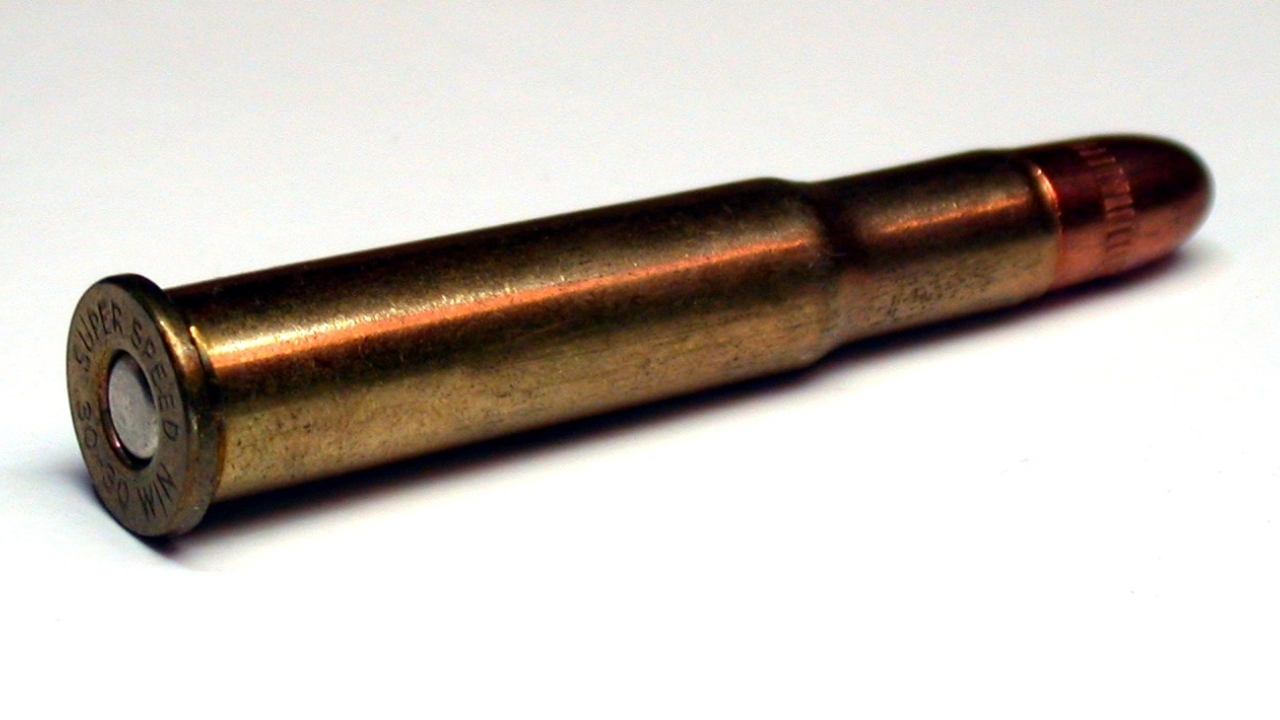
The .30-30 is a classic woods round, but shoulder shots can still be risky if you’re using bullets that expand too fast or if you hit the heavy knuckle instead of the scapula. At 20 to 60 yards, impact velocity is still high enough to stress a softer bullet, especially on steep angles. Most of the time, the .30-30 does fine, but the failures usually come from bullet construction and shot angle, not the cartridge.
A lot of hunters do better by aiming just behind the shoulder and taking both lungs. You still get excellent penetration and a quick kill, and you avoid the heaviest bone. If you want to break shoulders reliably with a .30-30, choose a bullet designed to hold together and don’t take marginal quartering-to shots. The cartridge’s strength is fast handling and dependable performance, not brute force through bone on bad angles.
.270 Winchester with very frangible bullets

The .270 is not “underpowered,” but at close range it can be hard on bullets. If you choose a very frangible design and then drive it into shoulder at woods distance, you can get explosive expansion and shallow penetration. That’s the opposite of what you want when bone is the first obstacle. You might break the shoulder and still fail to reach both lungs, which can lead to long tracking jobs.
With a controlled-expansion hunting bullet, the .270 can handle shoulder shots better, but you still need to respect impact speed under 60 yards. The safer move for most hunters is to put it through the lungs and let that bullet do its job in the chest cavity. If you like the .270 for open country and occasionally hunt thick timber, confirm your bullet choice is built for closer impacts, not only long-range expansion.
.25-06 Remington

The .25-06 is another cartridge that performs wonderfully in the lungs but can become less predictable on shoulder bone at close range if you use light, rapid-expansion bullets. It runs fast, and that speed is great for flat trajectory. It’s less great when the first thing your bullet hits is hard bone at 40 yards. Some bullets will behave, others will come apart.
This is where being deliberate pays off. If you hunt with a .25-06, select a bullet designed for controlled expansion, and resist the urge to take a tight-angle shoulder shot just because the deer is close. A behind-the-shoulder shot gives you a big target, deep penetration, and a short tracking job in most cases. The cartridge is plenty for deer, but the shoulder shot is where bullet construction becomes the whole story.
.338 Lapua and similar magnums at close range

Big magnums can make shoulder shots risky in a different way. It’s not that they lack power. It’s that at under 60 yards, impact velocity can be extreme, and that can cause violent bullet behavior and unnecessary meat damage. Even with good bullets, you can end up with a cratered shoulder and a lot of wasted venison. With the wrong bullet, you can get over-expansion and weird wound paths.
Another risk is shooter behavior. Heavy recoil and blast can make you rush the shot, especially in tight timber when a deer appears suddenly. The best use of a big magnum is when distance and wind matter, not when you’re shooting inside bow range. If you carry a magnum in the woods, pick a tough bullet and consider taking the lungs instead of trying to break shoulders. You’ll kill deer just as dead with far less drama.
6.5 Creedmoor with match bullets

The 6.5 Creedmoor is an excellent deer cartridge with proper hunting bullets, but match bullets are a different animal. Some can work, some can fail, and the shoulder shot is where that gamble shows up. A match bullet may fragment on bone and fail to penetrate the way a controlled-expansion hunting bullet would. That can turn a close-range shoulder attempt into a bad hit.
If you hunt with a Creedmoor, use bullets designed for hunting and confirm they shoot well in your rifle. The cartridge gives you mild recoil and great accuracy, which makes good shot placement easier. Don’t undermine that advantage with a bullet that isn’t meant for the job. If you’re in thick woods under 60 yards, a lung shot is still the highest percentage play. Shoulder shots can work, but only when the bullet is built to hold together through bone.
Like The Avid Outdoorsman’s content? Be sure to follow us.
Here’s more from us: