Photo credit: Savage Arms
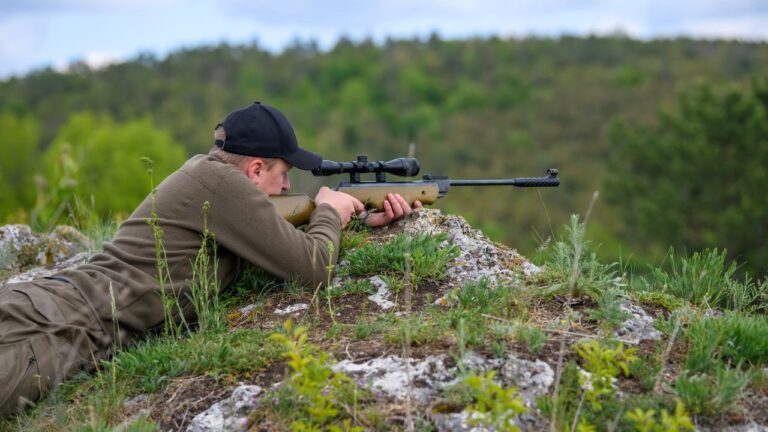
Fast shooting in the field isn’t the same as fast shooting off a bench. In real positions—kneeling in wet grass, sitting with a pack as a rest, or standing around a tree—you’re managing wobble, breathing, and an awkward rifle angle. Recoil doesn’t just “hurt” in those moments. It moves you off target, breaks your cheek weld, and forces you to rebuild your position before you can send a clean follow-up.
The calibers that feel easiest to shoot fast are the ones that let you stay in the scope, spot your own hits, and run the bolt without the rifle jumping off your support. You’re looking for manageable recoil, predictable muzzle rise, and enough performance for the game you’re hunting. These rounds won’t make you a better shooter by themselves, but they make it a lot easier to keep your shooting together when the window is short.
.223 Remington (with hunting bullets)

With a good hunting bullet, .223 is one of the easiest rounds to run fast from field positions because recoil is almost a non-issue. You can stay in the scope, see the hit, and cycle the action without your shoulder getting shoved out of position. That’s a big deal when you’re kneeling or sitting and can’t absorb recoil like you can from a bench.
It’s not a do-everything cartridge, and it’s not legal for deer everywhere. But for predators, varmints, and small game, it’s hard to beat when speed and control matter. The light recoil also helps you call shots honestly. When you miss, you know it was you—not recoil throwing your sights off target before the bullet even got there.
.22-250 Remington

The .22-250 is another cartridge that lets you shoot fast without the rifle beating you up. In real positions, that means you’re less likely to blink, flinch, or lose the animal in the scope after the shot. Coyotes don’t wait around, and being able to send a second round without rebuilding your whole position matters.
Because it runs at higher velocity, the .22-250 can be a little louder and sharper than .223, but recoil is still mild. You can spot impacts, make quick corrections, and keep shooting with confidence. It shines when you’re working open country and need a flat trajectory without stepping up into heavier recoil and slower recovery.
.243 Winchester

The .243 is a classic “shoot it well” deer cartridge for a reason. From kneeling or sitting, it’s easy to keep your sight picture intact, and it doesn’t punish you for imperfect body position. That’s what makes it fast in the field—your follow-up shot feels like a repeat of the first, not a reset.
You also get real hunting performance for deer-sized game with much less recoil than the .270/.30 class. That lets you stay calmer when the shot is rushed or the animal is moving. If you want a round that helps you stay smooth and accurate under pressure, the .243 has been doing that job for generations.
6mm Creedmoor

The 6mm Creedmoor is built around shootability, and it shows when you’re trying to shoot fast from awkward positions. Mild recoil makes it easier to stay on target, and the cartridge tends to perform well with modern bullets that hold accuracy and consistency at distance. That helps when the “field position” is sitting with a pack and you’re trying to correct quickly after the first shot.
It’s also a cartridge that doesn’t demand a heavy rifle to be comfortable. In a practical hunting rifle, recoil stays manageable, and your sight picture doesn’t get wrecked. For deer and predators where legal, it’s a solid option when you want speed without feeling like you’re hanging on for dear life between shots.
6.5 Creedmoor

The 6.5 Creedmoor has become popular because it’s easy to shoot well without giving up practical hunting performance. From real field positions, recoil is mild enough that you can usually stay in the scope and keep the animal in view. That alone speeds you up more than people want to admit.
It’s also forgiving when your position isn’t perfect. A cartridge that doesn’t yank you off target helps you keep your fundamentals intact—press, follow-through, run the bolt, press again. On deer-sized game, it carries enough energy and penetration to be taken seriously, while still letting you shoot fast and stay composed when you’re breathing hard and the animal is trying to leave.
.250 Savage

The .250 Savage is old-school, but it’s sneaky good for fast field shooting. Recoil is light, muzzle rise is modest, and it’s easy to keep your cheek weld and sight picture. That’s exactly what you want when you’re shooting from sitting or kneeling and trying to send a second round before the deer hits cover.
It’s not as common on store shelves as modern Creedmoors, but the performance is real. With the right bullet, it handles deer cleanly while staying very pleasant to shoot. A lot of hunters who’ve spent time with one will tell you the same thing: you shoot it better because it doesn’t bully you. In the field, that translates into speed.
.257 Roberts

The .257 Roberts sits in a sweet spot: enough cartridge for deer, but mild enough to shoot fast without losing your sight picture. From field positions, you’ll notice that you don’t get knocked out of the scope and you don’t have to rebuild your entire hold after each shot. That helps when you’re trying to confirm a hit and decide whether you need another round.
It’s also a cartridge that tends to be easy on the shooter over a long day. When you’re practicing from real positions, you can put in more reps without getting beat up. That practice pays off when the moment happens. If you’re the type who values shootability and clean execution, the .257 Roberts deserves more respect than it gets.
7mm-08 Remington

The 7mm-08 is one of the best examples of “enough gun without the drama.” In the field, it gives you a noticeable step up in authority over the small 6mms, but recoil stays very manageable. That means you can shoot fast from kneeling or sitting and still keep your sight picture close enough to spot the animal’s reaction.
It’s also a cartridge that behaves well in practical hunting rifles. You don’t need a heavy rig to make it comfortable, and you’re not taking a big recoil penalty when you shoot from awkward angles. For deer, black bear, and similar game, it’s a confident choice that still lets you run the rifle quickly and stay composed.
.308 Winchester (in a well-set-up rifle)

The .308 isn’t “light recoil,” but it can still be easy to shoot fast if your rifle fits and the setup is sane. In real field positions, a .308 with a good stock fit and reasonable weight tends to recoil straight back instead of hopping. That helps you keep the scope picture and run the bolt without the rifle leaving your support.
The other advantage is familiarity. A lot of hunters shoot .308 well because they’ve shot it a lot. When you’re practiced, speed comes from confidence and rhythm, not from being underpowered. You won’t recover as instantly as you would with a .243, but you can still shoot quick, accurate follow-ups without feeling like the rifle is punching you out of your position.
.30-30 Winchester

A lever gun in .30-30 is often one of the easiest ways to shoot fast in the woods from messy positions. Recoil is mild, the rifles handle quickly, and you’re usually shooting inside ranges where you can keep the target in your sight picture. From standing or kneeling, that quick handling matters more than raw ballistics.
The .30-30 also encourages practical shooting. You’re not waiting for perfect conditions, and you’re not overthinking holdovers. You mount the rifle, press the shot, and if you need another, the follow-up comes naturally. In thick cover, that’s real-world speed. It’s not a long-range cartridge, but it’s a fast field cartridge where it counts.
.350 Legend

The .350 Legend is easy to shoot fast because recoil is mild and the rifles are often handy and compact. In straight-wall states, it’s become a practical tool for deer hunters who want controllability without giving up a legitimate deer cartridge. From sitting or kneeling, the gun stays put and follow-ups come quickly.
You also tend to get a smooth shooting rhythm because you’re not dealing with sharp recoil. That matters when you’re shooting from an awkward angle and your body can’t brace the way it wants to. It’s not built for long-range work, but in the ranges where most deer are actually killed, it’s easy to run fast and keep your shots honest.
6.5 Grendel (in an AR platform)

In an AR, 6.5 Grendel is a very fast, controllable setup because recoil is light and the platform stays flat. From field positions, you can keep the optic on the animal and make quick corrections without losing your place. That’s exactly what you want when you’re shooting at coyotes or taking a follow-up shot on a deer where legal and appropriate.
The Grendel also offers better downrange performance than the smaller .223 class while staying easy to manage. You can shoot it fast without feeling rushed, and you can keep your fundamentals cleaner because recoil isn’t demanding your attention. The cartridge’s real advantage is that it lets you stay in control while still carrying enough authority for practical hunting distances.
.300 Blackout (supersonic)

With supersonic ammo, .300 Blackout is controllable and quick, especially in compact rifles. Recoil is mild, muzzle rise is limited, and the whole setup tends to feel “steady” from kneeling and sitting. That helps you shoot fast without the rifle bouncing around when your position is less than perfect.
You’re not choosing .300 Blackout for long-range work. You’re choosing it for real-world distances where handling, speed, and shot placement matter more than flat trajectory. In thick cover or when you’re hunting from blinds and tight windows, a controllable rifle that you can run quickly is a big advantage. Supersonic loads keep it effective inside its lane.
.44 Magnum (carbine)

A .44 Mag carbine is a surprisingly fast field setup because recoil is more of a push than a snap, and the rifles are usually short and handy. From sitting or standing, you can mount the gun quickly, get on target fast, and send a second shot without the rifle jumping out of your hands.
Like other straight-wall and big-bore carbine options, it’s not built for stretching things out. But inside typical woods ranges, it’s very shootable. The big advantage is that you can stay aggressive and keep the rifle moving with the animal. When your shooting position isn’t perfect, a handy carbine that doesn’t punish you is often faster than a heavier rifle that makes you fight recoil.
.45-70 Government (in a heavier lever gun)

This one depends on the rifle, but a heavier .45-70 lever gun can be surprisingly manageable in the field because recoil often comes back as a strong shove instead of a sharp crack. In real positions, that shove can be easier to handle than a lighter rifle that snaps and jumps. When the gun doesn’t hop, you can get back on target faster.
You’re still dealing with real recoil, so it’s not the first choice for everyone. But in the ranges where .45-70 shines—thick cover, big-bodied game, short windows—you can run it decisively. A well-balanced lever gun lets you stay on the animal, cycle quickly, and deliver a follow-up without the whole rifle trying to climb out of your shoulder.
Like The Avid Outdoorsman’s content? Subscribe to our newsletter so you never miss an article.
Here’s more from us: