Photo credit: TheFirearmGuy/YouTube
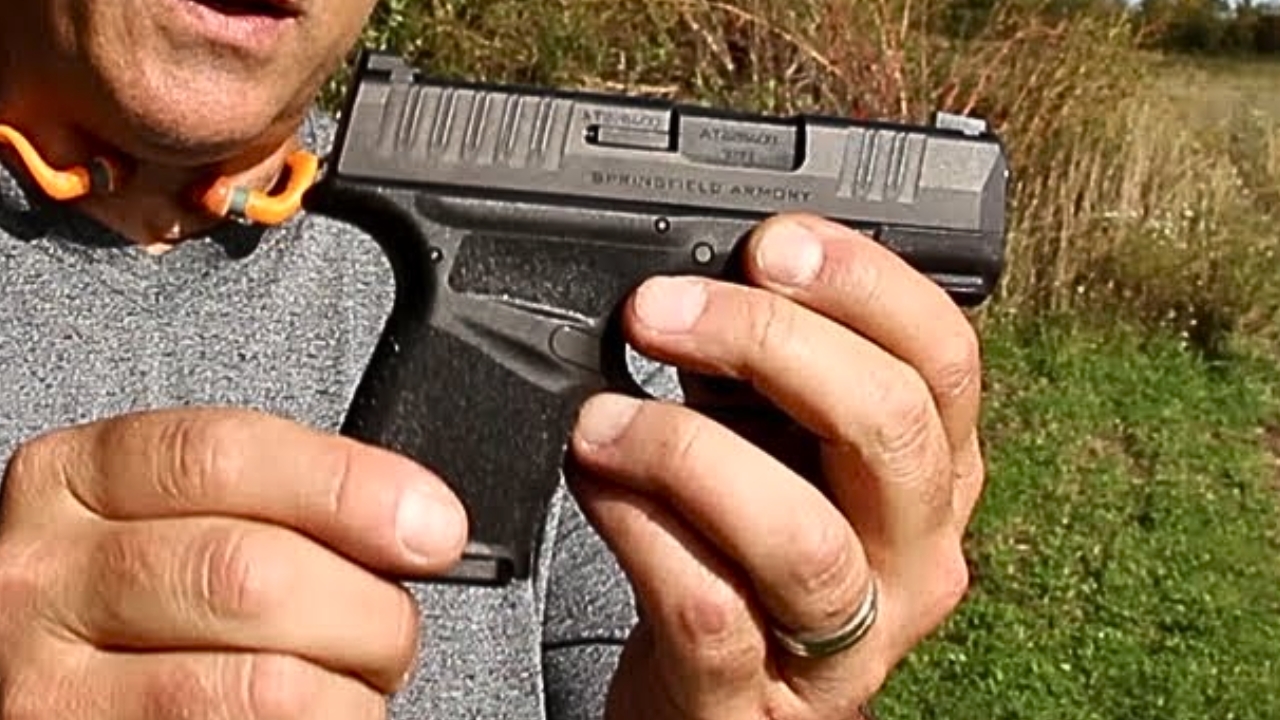
The Springfield Hellcat earned its reputation the honest way. When it hit the market, it gave people a very small pistol with very real capacity, and that immediately mattered. Springfield still describes the original 3-inch Hellcat as a 1-inch-wide micro-compact with 11+1 capacity using the flush magazine and 13+1 with the extended magazine, all in a pistol around 18.3 ounces empty. That was a serious answer to the old carry problem of choosing between hideability and firepower.
But that is not the same thing as saying it is the carry gun most people shoot best. Those are two different questions, and they get blurred together all the time. The Hellcat absolutely helped define the modern micro-compact category, and even early American Rifleman coverage framed it as a notable blend of high capacity and very small size. Still, once you get past the sales pitch and start talking about what ordinary people actually run best on the range, the answer gets more complicated fast.
Why the Hellcat got popular so quickly
The Hellcat took off because it solved a real problem instead of inventing one. A lot of people wanted a pistol they could carry every day without dressing around a bigger gun, but they were tired of the old tiny-gun formula that usually meant low capacity and a miserable shooting experience. Springfield gave them a gun that stayed genuinely small while still offering full-power 9 mm and double-digit capacity. That kind of change was always going to get attention.
That part of the reputation is deserved. The original Hellcat is still small enough that most people can conceal it without much drama, and that matters in real life more than gun people sometimes want to admit. A carry gun that is easier to keep on you every day has a built-in advantage over a better-shooting pistol that gets left at home. That is the strongest case for the Hellcat, and it is a real one.
The problem with tiny pistols never really went away
This is where the honest answer starts. The Hellcat may be a very good micro-compact, but it is still a micro-compact. Springfield’s own numbers tell you exactly what kind of gun it is: 6 inches long, 4 inches tall with the flush magazine, and right around 18 ounces empty. That is great for concealment. It is not automatically great for making average shooters perform their best. Smaller guns are simply less forgiving when grip, recoil control, and fast follow-up shots enter the conversation.
That is not a knock on Springfield specifically. It is just how these guns work. A short grip gives your hands less to hold. A light pistol moves more. A small sighting window and small working area make little mistakes show up faster. The Hellcat may be one of the better guns in that class, but the class itself still comes with compromise. For most people, “easy to carry” and “easiest to shoot well” are not the same title.
Most people usually shoot a little more gun a little better
That is exactly why the Hellcat Pro exists. Springfield did not create the Pro version for no reason. The company describes the Hellcat Pro as offering 15+1 capacity in a larger format, and American Rifleman’s coverage of the Pro flatly notes that it is taller, longer, and heavier than the original Hellcat, while also emphasizing that those increases bring more capability and balance. That tells you something important by itself. Even the people selling the micro-compact idea know many shooters want just a little more pistol once real shooting enters the picture.
This is usually where the average shooter lands if he is being honest. He may love the idea of the smallest gun that still carries enough rounds, but once he starts practicing regularly, he often discovers that a slightly bigger grip and a little more slide make a noticeable difference. The Hellcat Pro keeps much of the concealment advantage while giving shooters more control, and Springfield’s own marketing language for the Pro leans hard into “balance” for a reason. That is usually the word companies use when they know the smallest option is not the easiest one to run well.
Capacity does not automatically equal best performance
This is where a lot of carry conversations get stupid. People see 11+1 or 13+1 in a tiny gun and act like the argument is over. Capacity matters. No serious person should pretend otherwise. But carry performance is not only about how many rounds fit in the gun. It is also about how well the shooter can draw it, control it, recover the sights, and make good hits when the pace goes up. A micro-compact that carries a lot of rounds but gets shot poorly is not some kind of miracle. It is still a compromise.
That is why I think the Hellcat is often more impressive on paper than it is in the hands of the average buyer. Not because it is bad, but because many average buyers are not skilled enough to wring the best out of a tiny, lively pistol. They usually shoot something slightly larger better, even if they do not want to admit it at first. The gun that wins the size-and-capacity contest does not always win the real-world shooting contest.
The best option depends on what “most people” actually means
If “most people” means people who prioritize deep concealment, light weight, and a gun they are actually willing to carry every day, then the original Hellcat makes a very strong case for itself. It is still one of the smartest answers in that lane. Springfield built it to be exactly that, and it still delivers.
If “most people” means the average concealed carrier trying to find the pistol he will actually shoot the best while still concealing it reasonably well, then I think the answer is usually no. For that person, a slightly larger gun like the Hellcat Pro often makes more sense because it keeps most of the carry benefit while giving back some control and confidence. Even American Rifleman’s recent take on the Pro lands in that direction, calling it a great option for those who want a little more capacity while still carrying easily. That is a polite way of saying more shooters tend to run that kind of gun better.
So is it really the carry gun most people shoot best?
No, probably not.
The Springfield Hellcat deserves the praise it gets for capacity, size, and the way it helped move the concealed-carry market forward. It is a genuinely smart micro-compact and still a very valid carry choice. But the original Hellcat is not, in my view, the carry gun most people shoot best. It is the carry gun many people carry easiest. Those are not the same thing.
The better answer for most shooters is usually a little more gun than they think they need at first. That is why the Hellcat Pro exists, why it keeps getting highlighted as the “balance” option, and why so many shooters eventually drift toward slightly larger carry pistols once they spend enough time practicing honestly. The original Hellcat changed the game. It just did not erase the old truth that most people tend to shoot a bigger pistol better.
Like The Avid Outdoorsman’s content? Subscribe to our newsletter so you never miss an article.
Here’s more from us: